Tag: startups

  • Business Angels – motivation and protection

    Business Angels – motivation and protection

    The issue of the financing of startups has been covered in our previous article. In a previous article, we were given the opportunity to approach and, to a large extent, better understand the operation and importance of Business Angels for startups, in particular, operating in Europe, the US and in our country. In the present article we will focus on the incentives provided by the Greek state for the development of the relevant institution and, through it, for the development of entrepreneurship and the Greek economy. Also, to put it bluntly, in protecting what Business Angels and Businesses should enjoy.


    Attracting investment funds from Business Angels-the incentives

    Generally

    The investment culture in our country is not at all typical for the US, nor for the European one. The presence, therefore, of Business Angels in our country could probably be characterized as non-existent. However, their importance in the economies in which they operate is quite obvious. In this context, it seemed necessary to have incentives to attract and involve them.

    For a year now, albeit belatedly, there has been the appropriate legislation (: art. 49, law 4712/2020), which would create the necessary incentives for those who would be interested in acting as Investment Angels. With this legislative regulation, the necessary provision was added to the Income Tax Code (: art. 70A law 4172/2013).


    The tax incentives

    The specific provision, therefore, provides (: §1), that when a taxpayer-natural person contributes capital to a capital company, which is registered in the National Register of Startups, an amount equal to 50% of their contribution is deducted from their taxable income. -in fact, within the year in which the contribution was made.

    It also provides (: §2), that:

    (a) the specific tax reliefs may relate to contributions up to a total of € 300,000 per investor and per tax year;

    (b) capital injections are made to a maximum of three (3) different start-ups; and

    (c) up to the amount of € 100,000 per business.

    Finally, in order to avoid problems, it records as necessary (: §3) the deposit of the financing through a bank. It also imposes severe administrative sanctions in the event that there is an intention to circumvent the law and obtain a tax benefit without a real intention to finance.


    The long-awaited CMO and the way of capital injection

    The problem with this legislation, however, was that a prerequisite for the start of its implementation, was (: §4) the issuance of a CMO for the necessary details. This CMO was finally published with a delay of one year (!). This is the CMO No. 39937 / 5.4.21 (Government Gazette B 1415 / 9.4.21), which indeed determines the necessary details for the implementation of the aforementioned provision. The provision of §2 of article 3 is interesting, as it stipulates that:

    «2. The capital contribution to a start-up company is made through an increase of its share or corporate capital with the issuance of new shares or corporate shares, respectively, in accordance with the provisions of the existing regulations that regulate the capital increase process of SA, LTD and Private Limited Company”.


    Restrictions on tax reliefs

    The way in which Business Angels provide financial support is therefore important to them from a tax point of view. In order to achieve the tax reliefs mentioned above, it is necessary to carry out the financial support of the startups through, exclusively, a contribution to their share capital. More specifically, through an increase in share or corporate capital with the issuance of new shares or corporate shares. An increase which (in whole or in part) will be covered by the Business Angel.

    It follows, by contrast, that the Business Angel do not qualify for tax relief when, among other things, they undertake to cover the financial needs of the startup in another way. Indicatively, through:

    (a) a bond loan convertible into shares;

    (b) common loan or bridge financing.

    Let us clarify, moreover, that of course such a form of financing by the Business Angel is not excluded. They will simply be deprived of the tax advantages, which in case of acquisition of a part of the share capital they would be entitled to.


    The protection of Business Angels and startups

    The tax incentives provided by the relatively recent above-mentioned CMO for Business Angels’ investments are consistent with the legislation mentioned in the introduction. This is because only contributions to a capital company (: SA, LTD and Private Limited Company) provide tax incentives to Investment Angels. However, their participation in the share / corporate capital of startups is what calls for both the owners of start-ups and the Business Angels themselves to be alert (of course also from a legal point of view).

    From the point of view of the first (: entrepreneurs) it should be completely understood that the involvement of a direct “partner” in the corporate capital means also their participation in the operation of the bodies of their company. It means running a company that is fairly formal and based on some, minimal, corporate governance rules – even if they are not formally subject to them. It means transparency and tolerance of monitoring. It means separation of the company’s finances from those of the entrepreneur. It means, in the end, that there should be a transition to a new mode of operation, different from the one that was, until recently, familiar to them.

    From the point of view of the latter (: Business Angels) it should be understood that the necessary audits should take place (legal and other). Also they should review the statutory provisions (and possibly require adjustments) on a number of issues. Among them: those concerning the decision-making process, minority rights, quorum and majority percentages, management, transfer of shares or, as the case may be, corporate shares.

    The binding recording of the initial agreement’s individual parameters, the manner of exit of the Business Angels from the investment as well as the safeguarding of both sides (legal and not only) is, of course, up to the provisions of their initial agreement,


    The data regarding the role of Business Angels worldwide is impressive. Particularly important, therefore, is their assistance to the economies of the countries where their presence is expanding.

    It is in this context that they were provided with the (mentioned in the introduction) – recent tax incentives. We hope, therefore, in the confirmation of the assessment for: “… revitalization of this institution, which will contribute to the strengthening of entrepreneurship and the economy of our country ” of the late President of EVEA-Konstantinos Michalos.

    But the tax incentives, although they do not cover all the potential contingencies, do not seem enough. Nor is the absolutely necessary safeguarding of those involved (investors and businesses).

    The first thing that should happen is to activate and change the perception of domestic investors-potential Business Angels. (Unless they fall behind and ultimately follow, as is usually the case, foreign Investment Angels, who will be the first to make a move – taking advantage of relevant business opportunities).

    We will see…

    Stavros Koumentakis
    Managing Partner


    P.S. A brief version of this article has been published in MAKEDONIA Newspaper (September 12th, 2021).


    Disclaimer: the information provided in this article is not (and is not intended to) constitute legal advice. Legal advice can only be offered by a competent attorney and after the latter takes into consideration all the relevant to your case data that you will provide them with. See here for more details.

  • Business Angels

    Business Angels

    The importance and value of Business Angels (: Angels Investors or Business Angels) in the development of entrepreneurship and the economy is well known worldwide. However, as the business and investment culture differs from country to country, the supply and use of funds from Business Angels appear different, respectively. We hope that the recent, albeit small, push of the relevant institution by the State will contribute to its (desirable) development. It is worth, on the occasion of the resurgence of the relevant discussions, to take a deep dive into the institution.

    Who are the Business Angels?

    Business Angels are, according to the European Commission, independent individuals with business experience, who choose to invest part of their fortune in new and promising (in their opinion) private companies. They invest individually or, alternatively, as part of a consortium, where one (possibly) most usually takes the lead.

    Business Angels do not only offer funds to the business. They also offer their experience, skills and contacts, in order to expand the business activity and, of course, their personal benefit.

    Business Angels and startups

    Business Angels play an important role in the global economy. In many countries they have a significant position as external financing sources for startups.

    In fact, they are proving to be increasingly important as providers of venture capital, contributing to economic growth and technological progress.

    It is well known that startups hope for and aim to the financing of Business Angels – not unjustly, as the data shows.

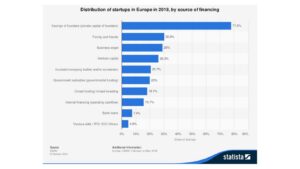
    The degree of penetration of Business Angels in the financing of startups in Europe is interesting as it results from a survey conducted on behalf of EBAN (: European Business Angels Network) and concerns the year 2018. The data presented in the table below are from this survey:

    Based on the data of the reference year (: 2018), almost 1/3 of the startups in Europe (more precisely: 29% of the total) utilized the financing and assistance of Business Angels. It is noteworthy that the latter (: Business Angels) fall short only of those cases in which the founders contributed the necessary funds (77.8% of the total), while a respective percentage of funding derived from investors in the category “Family and Friends” (: 30.2% of the total).

    The participation of Venture Capital in the financing of startups is significantly lower (: 26.3% of the total) while bank lending is rather negligible (: 7.4% of the total).

    Business Angels: how many are there?

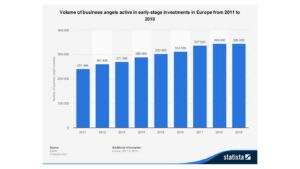
    It is interesting, however, to focus on the numerically growing presence of Business Angels, over the years, in terms of the early stage of investment in Europe. Relevant research of the same Organization (EBAN) deals, among other things, with this issue. Hence the data in the table below.


    From the above table we come, based on the available data, to two main conclusions: (a) that the approximately 240,000 Business Angels that were active in 2011 in Europe gradually reached 345,000 in 2018 & 2019 and (b) that their increase in numbers has been gradually halted in recent years.


    Business Angels, Large, and Small and Medium Enterprises

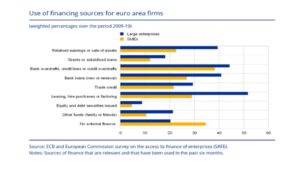
    And once we see the significant presence of Business Angels among the sources of funding for startups in Europe, it is worth taking a similar, quick look at Large and Small and Medium Enterprises (looking for them, respectively, among their sources of funding). Our source: The European Central Bank and its related research. Let’s focus on the table that lists their sources of funding:


    So, although Business Angels are, as we have already seen, significantly involved in startups, their involvment in larger companies (Small and Medium and Large) is completely non-existent. This fact is logically expected: the needs of these companies are extremely high and, in any case, inversely proportional to the capabilities of the Business Angels.


    The Business Angels in the USA

    The investment culture that characterizes the USA is of course different from the corresponding European one – much more the corresponding one of our country.

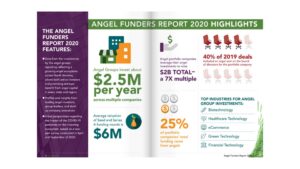
    The data from the Angel Funders Report 2020 seem very interesting:


    According to the Angel Capital Association: (a) Business Angels invest approximately $ 2.5 million each year in various businesses in the United States, (b) Business Angels business and financial assistance generates the background for achieving total funding of 2 billion USD from startups, (c) the total funding of 25% of startups comes from Business Angels and (d) in 40% of the new agreements that took place in 2019, Business Angels held a position in the management of the companies with which they came to an agreement.


    Business Angels in our country

    From what has been mentioned above, the importance of Business Angels worldwide, in Europe, of course in our country as well, seems absolutely obvious. Efforts to create a relevant Network in our country but also to encourage investors to operate as such have already emerged, with the most important one coming from the Athens Chamber of Commerce and Industry, created by the Network of Business Angels.

    However, in the context of the broader effort of the Athens Chamber of Commerce and Industry to restart the interest for the activation of Business Angels, it became the head of the Gazelle project. This project was created within the Interreg-Balkan Med Program and several countries participate (Greece, Cyprus, Bulgaria, Northern Macedonia). Its purpose: “the development and pilot implementation of a coherent framework for the design and implementation of joint sustainable measures aimed at creating, improving and accelerating the market of Business Angels in the Balkan-Mediterranean region”.

    According to the assessment of the recently deceased Mr. Kon. Michalou (President of the Central Association of Chambers of Greece and the Athens Chamber of Commerce and Industry), who shared with the signatory-just before his unexpected loss: “With the activation of the recent, favourable, tax measures, regarding the investments by the Business Angels, we expect the revitalization of this institution, which will contribute to the strengthening of entrepreneurship and the economy of our country”. We look forward to confirming his prediction.


    The investment culture in our country is not at all equivalent to the corresponding US and European one. The presence, therefore, of Business Angels in our country could be characterized as rather non-existent. However, their importance in the economies where they operate is obvious. In this context, it seemed necessary to provide them with incentives in our country, to attract and utilize them.

    For a year now, albeit belatedly, there has been the appropriate legislation in place (: article 49 law 4712/2020) with significant tax incentives for those who would be willing to act as Investment Angels. Unfortunately, its coming into force was not quick, as a Joint Ministerial Decision was required, which was issued almost a year later.

    The content of the specific provisions and, above all, the issues on which the owners of startups but also, of course, the Business Angels should focus on for their protection, will concern us in an article of ours to follow.

    However, the substantial development of this institution and the assistance of its utilization is desirable for everyone, in the context of the (much desired) development.

    The baton has already passed into the hands of the Business Angels.-


    Stavros Koumentakis
    Managing Partner


    P.S. A brief version of this article has been published in MAKEDONIA Newspaper (August 22nd, 2021).


    Disclaimer: the information provided in this article is not (and is not intended to) constitute legal advice. Legal advice can only be offered by a competent attorney and after the latter takes into consideration all the relevant to your case data that you will provide them with. See here for more details.
  • Startups: Financing, Risk and Sustainability

    Startups: Financing, Risk and Sustainability

    [vc_row][vc_column][vc_column_text] Startups: business ventures (emerging and usually promising) in the early stages of their operation. In Startups the subject of activity is almost always highly original, pioneering but also high risk-high reward.

    Startups Financing

    A business idea, as innovative, dynamic and promising as it may be, needs capital to be translated into a business venture and profit. Such capital, sometimes less and other times more important, may come from the savings of the “startupper” or from its close environment.

    Thus, the case of financing coming from the startupper’s close environment is not the most common one. Alternatively, financing comes from:

    (a) Business Angels. “Angel investors” are the ones who, first and above all will believe in the innovative idea and will agree to fund it. Angel investors will undertake high risk, acting individually or organized into an angel fund.

    (b) Venture Capitals. It is an organized fund of investors, with high-level professionals. In addition to capital, experience and knowledge in strategic, development, sales, administration, operation, marketing, and other issues, are also provided.

    (c) The Crowdfunding platforms. The “crowd” funding will come from the use of an on-line platform. The participants fund the idea with small amounts each. In Greece there is a relevant legislative provision thus with limited implementation to date.

    (d) Banks. This is not a common ase in our country, as banks typically look to finance existing businesses long established and with good-standing financial data.

    (e) The European Union. These funds are channeled directly or through programs managed at national level.

    (f) Business Incubators. Business Incubators usually provide support at a practical level (premises, furniture, equipment, administrative support, contacts) or/ and short – term support and financing.

    startups-funding

    Risk

    It is not reasonable for a young, optimistic and promising entrepreneur to expect the financing and support of an investor (or of a simple lender) without being ready to take the risk. And the specific risk concerns the provision of adequate collateral (personal or real – when available). It also refers, most commonly, to the commitment of an important part of the business and of his business freedom. This can be translated into a transfer to the investor of a part of the company’s share capital, into accepting drastic restrictions on making business decisions etc.


    Startups’ Sustainability

    The interests of the contributor / investor and the entrepreneur are partly identical and partly conflicting. The sustainability of the start-up is a common goal. The rapid and lucrative exploitation of the business idea as well. What will happen, however, if there are conflicts over the range of powers of each party? How to deal with the investor’s claim for collateral or with the pressure to restrict the business freedom of the startuper who is also the owner of the idea?

    In a country where 50% of startups fail within three years, the assistance of appropriate consultants is proving critical. Especially from a legal perspective.

    stavros-koumentakis

    Stavros Koumentakis
    Senior Partner


    P.S. This article has been published in Greek in MAKEDONIA Newspaper and portal makthes.gr  (September 30, 2018)

This site is registered on wpml.org as a development site. Switch to a production site key to remove this banner.