Tag: legal advisors

  • Earnouts: Opportunity for Business Agreements or a “stumbling block”?

    Earnouts: Opportunity for Business Agreements or a “stumbling block”?

    [vc_row][vc_column][vc_column_text] To its basic structure, earnouts are agreements concluded between (usually) a seller and a buyer of a company. It is mainly found in M&A agreements or as a tool to promote startup financing.

    When an earnout is agreed on, the buyer agrees to pay, in addition to the cost of acquiring a company itself, a “bonus” – under certain conditions.

    The necessity

    When there are strongly conflicting interests (and usually there are), a deal is almost never easy to be achieved. The seller will always claim that its company is worth more, while the buyer will claim the exact opposite. Of course, no one is able to prove the company’s “actual” value. Earnout comes in to solve this problem.

    Earnouts

    The logic is simple: The sale of a company, if an earnout is included, is agreed at a price closer to what was offered by the buyer. Nonetheless, the seller will not suffer a loss in case the company is actually worth more than what the buyer was initially offering. To achieve that, both the buyer and the seller set specific targets for the company. In case the targets are achieved, the seller will have “proved” that its company is worth more than what it has already received, and therefore will be entitled to receive a beforehand agreed upon bonus.

    This bonus will not necessarily be a specific amount: Its type and method of calculation are left to the discretion of the parties (e.g. it can be agreed that if the sold company has a certain revenue in z years, the seller of the company shall remain its CEO for x years with a salary amounting to y).

    Examples:

    • The seller will receive a percentage (e.g. 2%) of the company’s profits for the next three years.
    • The seller will be the company’s CEO for four years following its buy-out, during which, if certain revenue goals are achieved, the seller will get a bonus for every 10% the company’s revenue has exceeded that of the previous year.

    It truly can be anything. If the seller is confident about the capabilities of its company, it is easy to take the risk that his fee be dependent on his company’s performance.

    This is, of course, a simplified approach.

    Risks and Opportunities

    While earnouts seem to be simple and attractive, they entail many risks. What if, in our first example, the buyer makes sure that the profits of the company for the first few years after the buy-out are hidden, by exaggerating, say, the costs? One solution would be for the seller to remain in the company’s management, as in our second example. Another would be that the earnout will depend on other factors such as, for example, the company’s turnover or it position in the market.

    Earnouts are introduced as an attempt to solve the problem of pre-sale moral hazard. Prior to the sale, the seller will try to inflate the value of the company, while the buyer will try the exact opposite. Earnouts successfully, in my opinion, address this matter. But earnouts themselves will introduce a “new” moral hazard, after the sale of the company. After the sale, the buyer will try to “hide” the factors that will trigger the earnout while the seller will try to highlight them.

    It is obvious that earnouts have to be tailored to any case, in order for all parties involved to be as secured as possible. Nevertheless, with the right planning (when negotiating as well as drafting the agreement), earnouts can solve problems that may otherwise prevent a deal from closing.

    I believe we all agree that the most important job lawyers have is to close the deal their clients want closed, while, of course, protecting them. Earnouts are a good way to save an otherwise “dead” deal: when without an earnout the buyer and the seller do not have the same perspective, earnouts give both parties time to “look through each other’s eyes”. And, ultimately, make profitable business transactions.

    Lida Koumentaki
    Junior Associate

    Υ.Γ. The article has been published in MAKEDONIA Newspaper (December 9, 2018).
  • Digital Employability: Two Years of Offer!

    Digital Employability: Two Years of Offer!

    [vc_row][vc_column][vc_column_text] The Alliance for Digital Employability (AFDEmp) has recently celebrated the anniversary of the two-year offer to young and unemployed people; KOUMENTAKIS & ASSOCIATES participates in this Alliance by offering Legal Support. To date, more than 200 unemployed graduates have been recruited and are now working as Developers!

    Two Years Of Offer To Young And Unemployed People

    The Alliance for Digital Employability is being implemented with the Vision of reducing unemployment in Greece through the creation of new jobs in the IT sector. The actions of the initiative aim to (a) accelerate the training of candidates in high-quality digital skills, (b) certify the skills they have acquired, and (c) the absorption of the candidates by the labor market.

    Today, through Alliance For Digital Employability (AFDEmp) actions, more than 200 unemployed graduates have been re-qualified. People with a different educational background (from mathematicians and physicians to theologists and nurses) have gained access to IT knowledge that is in high demand and have already been hired as well-paid developers in major Greek companies participating in the program.


    The Contribution of KOUMENTAKIS & ASSOCIATES Law Firm

    KOUMENTAKIS & ASSOCIATES Law Firm participated from the very beginning and continues to provide full legal support to this important for our country initiative. The two-year anniversary event was attended by Stavros Koumentakis, Senior Partner and by Lambros Timotheou, Partner of the firm.

    In his statement, Stavros Koumentakis said “We fully identify the Vision of the Alliance For Digital Employability (AFDEmp). Improving the capabilities of human resources and acquiring modern knowledge as a means to improve employability form one of the pillars of our Social Solidarity Program. In KOUMENTAKIS & ASSOCIATES Law Firm we believe in Lifelong Learning and we are committed to supporting all those who create access to it. I warmly congratulate Mr. Byron Nicolaides, President of the BoD of the Council of European Professional Informatics Societies (CEPIS) for his tireless efforts in recent years to help reduce the digital divide and thereby reduce unemployment. I also thank Mrs. Eleni Nicolaides, Head of Action and founding member of AFDEmp, who gives us the opportunity to contribute in practice to the implementation of the actions and the achievement of the objectives of this initiative”. 


    The Alliance for Digital Employability

    AFDEmp is a voluntary initiative of the President of the BoD of the Council of European Professional Informatics Societies (CEPIS), Mr. Byron Nicolaides, of the distinguished academics of the Athens University of Economics and Business, Mr. Giorgos Doukidis, Mr. Diomidis Spinellis, Mrs. Katerina Pramatari, Mr. Panos Louridas, of the President of HePIS, Mr. Nikos Faldamis, of the Director of HePIS, Mrs. Eleni Nicolaides, along with the participation of more than 200 companies and business entities.

    The objective of AFDEmp is to help tackle unemployment while at the same time help also all those who want to change their career through their rapid training in high-quality digital skills. The idea for the initiative was born out of a special study conducted – under the aegis of CEPIS – by the Athens University of Economics and Business, ALBA and HePIS. According to the findings of the study, youth unemployment as well as the gap between supply and demand for technological skills can be addressed through re-training.


    “The Private Initiative To Help Tackle Unemployment”

    This was the central message of Mr. Byron Nicolaides, President of the BoD of the Council of European Professional Informatics Societies (CEPIS) and Head of PeopleCert Group, worldwide, who stated, among other things, “A European need, a Greek opportunity took shape thanks to the alliance of the European Informatics, their Greek colleagues, of academics and of the most important Greek companies. It is now necessary for a company to be able to manage and make full use of the tools offered by new technologies. In this context, we, through AFDEmp, train young professionals by encouraging them to broaden their professional horizons. I am sincerely proud of what we have done together so far. I think that, we, as a private initiative, are laying another brick to shape the next day in the country by tackling the phenomenon of unemployment “.

    HePIS President Mr. Nikos Faldamis said that through AFDEmp an institution has been created that overturns the existing path and turns digital skills into a major opportunity for growth and employment of the new workforce”. Mr. George Doukidis, Professor at the Athens University of Economics and Business, pointed out that such initiatives contribute to: (a) encouraging young people to dare change their professional field by moving to modern fields such as Information Technology and Programming; and (b) encouraging companies to invest in the new generation by employing people who have acquired the appropriate knowledge.


    The Event And The Awards

    The Alliance for Digital Employability (AFDEmp) event was attended by more than 150 representatives of the most important companies in Greece and of the most promising in the fields of Information Technology and Technology. AFDEmp honored the collaborating companies, as a practical acknowledgment of their contribution to this effort, while the event was honored by their presence: the President of GRNET (National Network of Research and Technology) and Professor of the National Technical University of Athens Mr. Panagiotis Tsanakas, the President of the Hellenic Company Logistics Mr. Nikos Rodopoulos, the President of GRECA Mrs. Katerina Fredaki, the General Manager  of HAMAC Mr. Yannis Giannarakis,  the General Secretary of CIO Forum Mr. Michalis Moraitis, and others.

    The 32 companies that has been awarded at the event are: Accenture, ATCOM, CANDI, Cognity, Connectline, Cosmos Business Systems, Data Communication, Epsilon Net, Eurobank, EY, Generation Y, iKnowHow, Intralot, INTRASOFT International , iteam,  JR Technologies, Mellon Group of Companies, Novibet, Omilia, PeopleCert, Printec, Prisma Electronics, Profile Software, Programize, QIVOS, Retail Link, SIEBEN, SingularLogic, SoftOne Technologies, Ulysses Systems, Uni Systems, Upstream.


    To Conclude

    The effort continues. The courses of Coding Bootcamp 6 begin on October 1, 2018.

    [/vc_column_text][/vc_column][/vc_row][vc_row][vc_column][vc_text_separator title=”Gallery” border_width=”3″][/vc_column][/vc_row][vc_row][vc_column][vc_images_carousel images=”33528,36051,36049,36047,36043,36041″ img_size=”” speed=”6000″ slides_per_view=”4″ hide_pagination_control=”yes”][/vc_column][/vc_row]

  • The Newspaper MAKEDONIA Is Back With Us

    The Newspaper MAKEDONIA Is Back With Us

    [vc_row][vc_column][vc_column_text] The historical newspaper MAKEDONIA is again since the 9th of September in kiosks and in Koumentakis & Associates Law Firm we feel very happy to support its success as Legal Advisors.

    With the comprehensive legal support of Koumentakis & Associates Law Firm, the historical newspaper of Thessaloniki (and Northern Greece) is back in the kiosks, while its online version www.makthes.gr has been already … released (since 3 September). As Stavros Koumentakis, Senior Partner, characteristically said, “The dream came true. Thanks to innovative partnerships, innovative planning and tireless efforts. In “Koumentakis & Associates” we feel a special honor that the participants have trusted us with the legal dimension of the whole project and, above all, we are proud that we have provided our small contribution to the realization of the dream. Wishing “BEST OF LUCK”, let’s enjoy the amazing journey together …”.


    The project

    εφημεριδα μακεδονια ιστορικη αξιοπιστη

    The efforts to re-issue the newspaper MAKEDONIA began almost immediately after its suspension. A team of 24 employees with vision and plan moved quickly. They decided that there was a need for a scheme that would not be based on self-managed practices or on classic investment. The ideal scheme would make the most of the employees of “MAKEDONIKI” but would be financed by businessmen.

    Employees ensured the right to use the titles of the two newspapers in Thessaloniki in exchange for a portion of the accrued that the company owed to its employees. They then created a Social Cooperative Enterprise (SCE) and finally sought funding. In order to re-issue the newspaper MAKEDONIA, it was necessary to engage with entrepreneurs doing business in the area of ​​Northern Greece. In the context of building this partnership, a fully-fledged business plan was created that guarantees the viability and prospect of the venture. It is worth noting that the profits of SCE will be distributed in the following way: 33% for employees, 33% for reinvestment for development activities in the same context (e.g. publication of pullouts) and 33% as a reserve for further growth.


    The Stakeholders

    “None of the twenty entrepreneurs involved in the project expect profit or other economic benefits. The multiplicity of the project combined with the quality of the entrepreneurs and the journalists involved in it guarantee the validity of the information” says Vassilis Takas, industrialist and chairman of the new publishing company’s Board of Directors.

    Such an innovative publishing model requires an overcoming of the rigidities of the past. “We want to overcome the old stereotypes about “bad bosses”. Entrepreneurs, for their part, have to avoid a speculative logic and stop fearing of the wage costs”, says Michalis Alexandridis, publisher and director of the publishing project. “I think that we are all in the same vein, and that, will benefit the city and the media. We are all committed to abstain from practices that have been established and still plague the country, such as nepotism, bribery and corruption. We believe that the new media will respect their heavy names, their history and their ties with the Thessalonians and the Northern Greeks in general”.

    The 11-member board of the company that will issue the newspaper MAKEDONIA and will be responsible for the operation of makthes.gr was formed as follows: Vassilis Takas President. Michalis Alexandridis executive vice president – publisher – publishing director. Hasdai Kapon vice president. Leonidas Fakas Vice-President. Panagiotis Alexandridis Managing Director. Members: Yiannis Masoutis President of the Chamber of Commerce and Industry of Thessaloniki (TCCI). Thanasis Savvakis President of the Federation of Industries of Northern Greece. George Konstantopoulos, President of Exporters’ Association of Northern Greece. Giorgos Bikas President of Imathia Chamber of Commerce. Panayiotis Menexopoulos Secretary General of the Chamber of Commerce and Industry of Thessaloniki (TCCI). Stavros Koumentakis lawyer – legal advisor of the company.

    Statement by Stavros Koumentakis In the Newspaper

    δηλωση σταυρου κουμεντακη στην εφημερίδα μακεδονια

    “From early on I believed in the project of re-publishing the historical newspaper of our city, and that not for emotional reasons. The certain needs of our city, the breadth of the shareholders structure, the severity of the investors-shareholders, the inability to promote personal or party strategies, the technocratic approach of the stakeholders and, above all, the brilliant journalistic group and its dynamics are the necessary, adequate and capable elements for success. We are happy about the first edition, confident of the result and proud to contribute aligned behind the press team, fulfilling a debt to the city. I take it for granted that also the Thessalonians will embrace the effort with equal fervor.”

    The Historical Newspaper MAKEDONIA

    The newspaper MAKEDONIA is the oldest political newspaper in Northern Greece. It was founded in 1911 (its first edition was published on July 10, 1911 – with the new calendar on July 23, 1911) by the publisher Konstantinos Velidis. After his death (1936) his son, John Vellidis, took over. After the death of the latter (1978), his wife, Anna Vellidi, took over and from 1980 her daughter Katerina Vellidi. In the summer of 1996, the newspaper was closed down because of indebtedness, to be then re-released in early 1998 by its new owner, businessman Yannis Raptopoulos. The newspaper suspended its issue in October 2017 and was re-released on September 9, 2018.

    In the head of the newspaper, succeeding Konstantinos Dimadis, a historical figure for the family of journalists, who served as editor-in-chief and director of the newspaper for 62 years (1931 to 1993), were also the journalists, Nikos Vourgountzis, Giannis Nikolopoulos, Lazaros Chatzinakos, and many others . Dimitris Chourmousios, Dimitris Psathas, Kostis Palamas, Stratis Myrivilis, Georgios Vafopoulos, Archelaos and others were among the newspaper’s associates in the past.

    The leads of the newspaper include the introduction of an early form of monotonic system, many years before its establishment as the official written usage of the Greek language as well as the fact that it was the first Greek newspaper to be published online. [/vc_column_text][/vc_column][/vc_row][vc_row][vc_column][vc_text_separator title=”Gallery” border_width=”3″][/vc_column][/vc_row][vc_row][vc_column][vc_images_carousel images=”36012,36014,36010,36016″ img_size=”full” speed=”6000″ slides_per_view=”5″ hide_pagination_control=”yes”][/vc_column][/vc_row]

  • Entrepreneurship Program Of Mandoulides Schools

    Entrepreneurship Program Of Mandoulides Schools

    [vc_row][vc_column][vc_column_text] For a second consecutive year, “Koumentakis & Associates Law Firm” cooperates with Mandoulides Schools within the framework of the latter’s Entrepreneurship Program. The program is implemented with the aim of enhancing experiencing vocational guidance for students over 16 years of age.

    Within the framework of the Entrepreneurship Program of Mandoulides Schools, “Koumentakis & Associates Law Firm” hosted for 4 weeks the student Mr. Konstantinos Zissis, who attended the main activities of the firm and was informed about issues related to the scientific subject.

    The Entrepreneurship Program In Koumentakis & Associates

    In our firm, we are delighted to participate in the innovative Entrepreneurship Program of Mandoulides Schools. We are proud to actively participate in the effort of talented and promising young people to meet with attorneys and legal advisors into active action. We believe that by participating in experiencing education and by supporting such initiatives, we contribute to the decision-making process for proper studies and immediate professional reintegration.

    Koumentakis & Associates Law Firm encourages the experiencing education and development of pupils and students through work. Within the firm’s environment, trainees feel new experiences, explore their professional interests and develop new skills. At the same time, they have the opportunity to get acquainted with tools and methods that help them acquire assets of great value.


    The Entrepreneurship Program Of Mandoulides Schools

    Mandoulides Schools give special attention to experiencing education while remaining faithful in the provision of high educational services. The pioneering Entrepreneurship Programs have been created to connect their students with innovative organizations and companies in the region and learn through them.

    Partners of KOUMENTAKIS & ASSOCIATES Law Firm and Victoria Pervizou-Head of Entrepreneurship Program of Mandoulides Schools attend the presentation of Constantinos Zisis.


    The Entrepreneurship Program And Experiencing Vocational Guidance

    The Entrepreneurship Program of Mandoulides Schools  is part of the experiencing school vocational guidance, which is cultivated in the Schools through a series of actions (Three-day School Vocational Guidance, educational visits and projects under the STEAMulator program, 100 Mentors) aiming at better information, but also the acquisition of experiencing knowledge.

    The duration of the programs is four weeks divided into two phases. In the first phase, students are introduced to the basic principles of operation of a company. In the second phase of the Programs they acquire experience in its premises, with daily presence, participation in meetings, dialogue with executives and familiarity with the subject.

    [/vc_column_text][/vc_column][/vc_row][vc_row][vc_column][vc_text_separator title=”Gallery” border_width=”3″][/vc_column][/vc_row][vc_row][vc_column][vc_images_carousel images=”35587,35583,35580,35577″ img_size=”” slides_per_view=”3″ autoplay=”yes” hide_pagination_control=”yes”][/vc_column][/vc_row]

  • Workshop Of Creative Pharma Services for Confidentiality

    Workshop Of Creative Pharma Services for Confidentiality

    [vc_row][vc_column][vc_column_text] Koumentakis & Associates Law Firm was invited and participated in the annual training conference of Creative Pharma Services, with a presentation titled: “Companies and Confidentiality”.

    The presentation of Mr. Stavros Koumentakis gathered the high interest of nearly one hundred executives and associates of the company who participated, as, apart from the general context of the issue, Mr. Koumentakis also referred to the specific issues arising for the Pharmaceutical market.


    Obligation Of Confidentiality

    Mr. Stavros Koumentakis, Senior Partner of Koumentakis & Associates Law Firm started his address with a reference into the obligation of confidentiality for all information related to a company and its stakeholders, such as associates, clients and employees and he furtherly focused on the particular issues related to pharmaceutical industry, including any information related to studies and pharmacovigilance as well as products, designs, patents, documents on policies and procedures.


    Personal Data

    Mr. Koumentakis then referred to the issue of personal data, the obligations and rights of employees and associates, and the capabilities that companies have in order to ensure Confidentiality (e-mail monitoring, retrieving deleted mail, recording of data from the company’s computers, etc.).

    Confidentiality Regulations And Sanctions

    As Mr. Koumentakis stated, the legal framework for confidentiality regulations is quite comprehensive both in general (Civil Code and Penal Code), and in particular (Law 2472/1997, Law 144/1914, Greek Code of Ethics for Pharmacists), as well as at the level of a company (Employment Agreements, Labor Code, Code of Ethics, NDA’s), while the sanctions for a confidentiality breach are Civil Penalties (two times the annual remuneration,  compensation for any damage), Penal sanctions (custodial sentences, financial penalties) and Professional penalties.


    The Benefits Of Confidentiality

    In conclusion, Mr. Koumentakis, noted that the issue is NOT, mainly legal, and that the benefits of securing confidentiality are obvious to the company, its clients, its employees and their families. Since, on the one hand, the company believes in its partners and trust in them, and on the other hand the partners confirm the high levels of professionalism with respectful confidentiality, this is a factor of growth and prosperity. “Regardless of sanctions, it is necessary to align the philosophy of the stakeholders and maintain high professional standards”.

    Koumentakis & Associates Law Firm was represented in the conference by Konstantinos Kornilakis, Partner and by Petrini Naidou, Senior Associate.

    [/vc_column_text][/vc_column][/vc_row]

  • Personal Data Protection And Companies

    Personal Data Protection And Companies

    [vc_row][vc_column][vc_column_text] European requirement the enforcement for Personal Data Protection. New compliance rules (Regulation 2016/679)


    Preamble: What Does Non-Compliance Mean

    It is true that any new obligation created for a company burdens its operating costs. But could anyone suggest non-compliance with the obligations under this Regulation for Personal Data Protection?

    To this case we could not remain indifferent. European Regulation (2016/679) is in force without the need for ratification by the Greek legislator.

    Sanctions threatened? Unsustainable! Without going into the details of criminal sanctions, the maximum penalties (fines) amount to € 10.000.000 or € 20.000.000 and at a percentage of 2% or 4% respectively of the infringer’s worldwide turnover (if the above amounts are below the respective percentages on its worldwide turnover!)

    Things are NOT simple …


    The Existing Institutional Framework

    The need to protect individuals from the constantly evolving (due to the rapid developments in technology) exposure of their Personal Data and the creation of a secure modus operandi of the data processors is underlined by the European Regulation 679 of 27 April 2016, which shall be in full effect for all Member States (among which our country, of course) on 25.5.2018.  

    In accordance with Law 2472/1997 on the Protection of Individuals with regard to the Processing of Personal Data (and its revisions), the Greek legislator has incorporated the European Directive 95/46 / EC “On the protection of individuals with regard to the processing of personal data and the free movement of such data”.

    The key foundations for the Protection of Personal Data that had already been set twenty years ago referred to the identification of:

    (a) the basic concepts such as “record”, “data subject”, “simple data”, “sensitive data”, “controller”, “processor”

    (b) the rights of the Subjects of Processing (each of us)

    (c) the obligations of Personal Data Controllers (natural and legal persons, bodies and organizations with whom we are required to have transactions in our daily lives from our employer to the Register of a Taxation); and

    (d) the establishment of the Personal Data Protection Authority, which would then function independently, as a supervising body and as an institutional guarantor for verifying compliance with the European requirements.

    The Personal Data Protection Authority has been set up and operating since then, it undertakes vigorous action while its decisions have become a serious item in the agenda of not only the legal world bit also of the public opinion, as for example in the case of identifying religion in identities.

    The European Parliament chooses in this Regulation a more dynamic position than the previous Directive, since the former is a law of increased formal validity (it raises upward the laws of each member – state) and is (unlike the Directive) directly applicable horizontally (its incorporation by the national legislator is not required).


    The Tightening For The Protection Of Personal Data In The Context Of The European Regulation

    The Regulation strengthens the protection framework and in particular:

    (a) the Controller is required to choose the most secure, organizational and technical measures both at the time when the data collection and processing measures are defined and at the time of processing.

    The obligations of the Controller and the Processor expanded (: record-keeping – specifications – processing activities) and acquire specific responsibility to receive and be able to demonstrate that it has taken all necessary measures to ensure that processing is carried out in accordance with the Regulation.

    (b) The rights of the Subjects are enhanced, including: (i) the right of access, (ii) the right of correction (or completion) (iii) the right to be forgotten (conditionally, the right to erase data), (iv) the right to object (v) the portability of data.

    (c) It is specifically provided for cases of systematic, extensive and large-scale assessment of personal data or systematic monitoring on a large scale of public places, an obligation to carry out an impact assessment of potential risks and consequences for the rights and freedoms of individuals arising from the type, the framework, the scope and the purpose of processing.

    (d) the Controller is required to immediately inform the authority of any breach of the system security (within 72 hours as from the moment he becomes aware of such)

    (e) the Controller (in cases explicitly mentioned in the Regulation, indicatively large-scale processing of data and / or sensitive data) appoints a Data Protection Officer, an internal supervisor (employee or external partner) (such as a security technician) who will ensure compliance with the regulatory framework (in conjunction with any specific regulation, if any, envisaged by the national legislator in the scope of his discretion) and has direct contact, cooperation with and reporting obligation for any violation to the Personal Data Protection Authority.

    (f) There are provided considerably stricter sanctions than the existing administrative and criminal penalties, with fines of between € 10.000.000 or € 20.000.000, and a percentage of the company’s turnover, as the case and the offender may be (if that percentage exceeds the above amounts).

    A significant difference with the current legal framework is that no disclosure to the Authority is foreseen, rather than the availability of the material (: processing file) at the direct request of the Authority. However, each national legislator may specify his requirements and request for Disclosures or Licenses, especially in cases related to processing of sensitive personal data. In order to examine the possible adoption of legislative measures for the implementation of the Regulation, a Legislative Committee has been already set up (Government Gazette 1913 / 27.6.2016) whose work we expect to be completed before the implementation of the Regulation.

    It is imperative that each Controller reviews (with the appropriate collaborators) the security status of his technical systems and of its organizational structure so that he is ready to comply with the requirements of the Regulation.


    However, Is There, Any Time?

    As already mentioned, the date the new European Regulation comes into effect is 25.5.2018 – i.e. at first reading, we have enough time to act. Still, is that the case?

    Many factors are to be evaluated in order to provide the answer: “Okay, we have a lot of time”.

    The kind of business activity, compliance with the current institutional framework, the concentration (and / or handling) of sensitive, apart from simple, personal data, and so on.

    Let us not rush to answer that “we do not have sensitive personal data”. Do we ask for criminal records for some of our employees? Do we have a record of the health status of some of them? Do we have security cameras for the security of our company?


    Conclusion

    While we expect what (also) the national legislator will impose, the institutional framework for the protection of personal data has already become more complex. Threatened sanctions not only are significant but also, in fact, dramatically high.

    Preparing the company, most of the time, is neither easy nor quick.

    The need for more detailed information, a first assessment and for the first procedural steps, is present.

    Today!


    [/vc_column_text][/vc_column][/vc_row]

  • New Era For Koumentakis And Associates Law Firm

    New Era For Koumentakis And Associates Law Firm

    [vc_row][vc_column][vc_column_text]

    Goodbye Mitropoleos St.: Growth Romped To Victory!

    *Niki(s) in Greek means Victory

    New offices and New Era for Koumentakis & Associates Law Firm, that moved to Nikis Avenue & Morgentau St., in a strategic location in the heart of Thessaloniki (and, semiologically, beside the main symbol of the city: the White Tower).

    New Era

    The source of inspiration for the new offices was the firm’s extrovert strategy to serve its Growth, to “house” new possibilities and new prospects for the firm, its Clients and Associates and to increase the already high level of the services it offers to its Clients and Associates.

    Beyond Legal Services

    Mr. Stavros Koumentakis characteristically said, “After 20 years of presence in our previous, owned offices, it is time to leave behind the past, to turn over a new leaf looking to the future with optimism and to prepare ourselves for the transition to the new era. From a smaller scheme of four associates, we have gradually grown into a boutique law firm of twelve, to date, associates.

    We are already able to offer comprehensive and reliable legal services across a wide range of areas and expertise within the overall support of companies, key shareholders, senior management – and beyond”.

    Easy Cases Are For Others

    Mr. Stavros Koumentakis also noted, “Despite the unfavorable (national and international) economic environment, we are constantly moving towards investing in our growth and in the growth of our clients. We have no doubt that we are facing challenges. But we respond dynamically: “Easy cases are for others”. [/vc_column_text][/vc_column][/vc_row][vc_row][vc_column][vc_text_separator title=”Corporate Video” border_width=”3″][vc_video link=”https://youtu.be/ipGtyvwcqhU” align=”center”][/vc_column][/vc_row][vc_row][vc_column][vc_text_separator title=”Gallery” border_width=”3″][/vc_column][/vc_row][vc_row][vc_column][vc_images_carousel images=”35167,35168,35169,35170,35171,35172,35174,35175″ img_size=”” speed=”6000″ slides_per_view=”4″ hide_pagination_control=”yes”][/vc_column][/vc_row]

  • Participation In Mare Nostrum VIII Congress

    Participation In Mare Nostrum VIII Congress

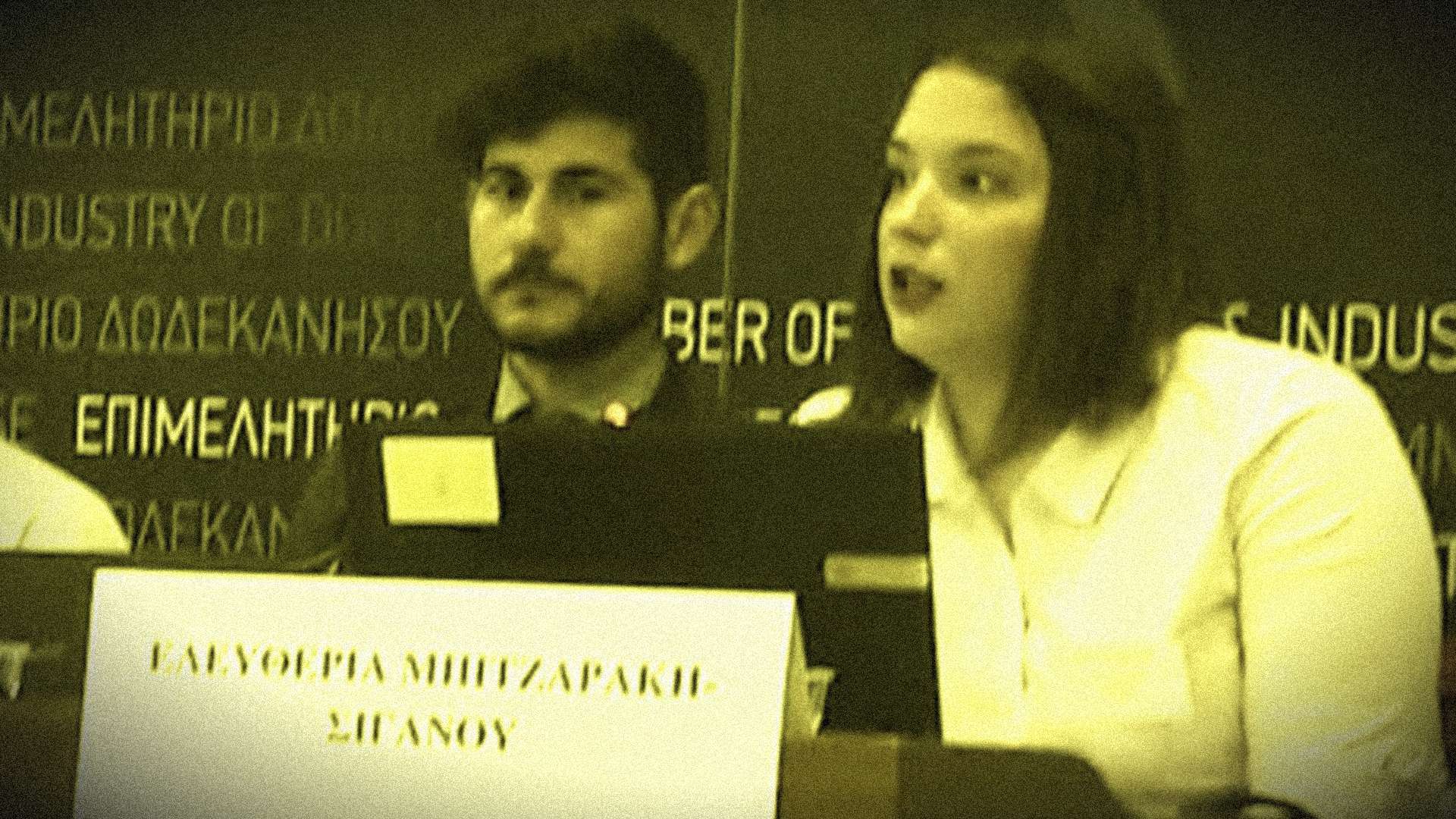
    [vc_row][vc_column][vc_column_text] Eleftheria Bitzaraki, Trainee at Koumentakis & Associates Law Firm participated in Mare Nostrum VIII, an annual congress organized for the eighth consecutive year in Rhodes by the Department of Mediterranean Studies at the University of the Aegean, with the scientific support of the Center for the Study of Mediterranean – Middle Eastern policy and culture.


    Mare Nostrum’s Objective

    The objective of the congress was to highlight as much as possible the multiple aspects of accumulated crises at the legal, political, ideological, economic and social levels as well as the interaction between them.


    The Presentation Of Eleftheria Bitzaraki

    In this context, Eleftheria was called upon to develop the legal parameters of the refugee crisis in the Mediterranean, since the last two years (2014-2016), and especially 2016, have been the most lethal year in recent years at the level of refugees. And why is it the Mediterranean? Because there is a variety of international problems in it. The only stable that exists in the Mediterranean at this time is the instability from the constant movement of populations and, along with them, the overthrow of borders and regimes.

    In the presentation of Eleftheria Bitzaraki there are developed purely legal issues about the way in which the states have taken measures, both at international level and at our country level, by passing laws, by adopting decrees, by ratifying international or European conventions, in order to check the huge number of refugee flows that crossed and cross the Mediterranean even today.


    Reference To The International Conventions

    More characteristically, reference has been made to the well-known and with a variety of extensions Agreement between the European Union and Turkey on the control of the refugee population and the positive (for some) and negative (according to others) results it has brought, as well as the crucial role of the Court of Justice of the European Union (CJEU) by adopting both legislation and case law on this issue. Also, reference was made to the procedures for the admission of refugee flows under the Directive 2013/33 / EU and Presidential Decree 220/2007 as well as the important role of NGOs in this. Without omitting the extensive reference to the Geneva Convention 1951 and to the New York Declaration which followed, as key elements of the international legal framework for the protection of refugees and the role of the UN High Commissioner for Refugees. Finally, Eleftheria also referred to the Dublin Regulation on Access to Asylum Procedures and the way in which Greece with Laws 4375/2016 and 4399/2016 succeeded (or not) to incorporate European directives into domestic law.


    Curriculum Vitae

    Eleftheria Bitzaraki was born in Heraklion, Crete, in 1992, and completed her studies in the Law Department of the Aristotle University of Thessaloniki in 2016. She participated in virtual trials organized by legal entities in the country in collaboration with the Aristotle University of Thessaloniki. Eleftheria speaks Greek, English, German, Russian.


    [/vc_column_text][/vc_column][/vc_row][vc_row][vc_column][vc_text_separator title=”Gallery” border_width=”3″][/vc_column][/vc_row][vc_row][vc_column][vc_images_carousel images=”35151,35150,35149″ img_size=”” speed=”6000″ slides_per_view=”3″ hide_pagination_control=”yes”][/vc_column][/vc_row]

  • Stone Group International Awarded

    Stone Group International Awarded

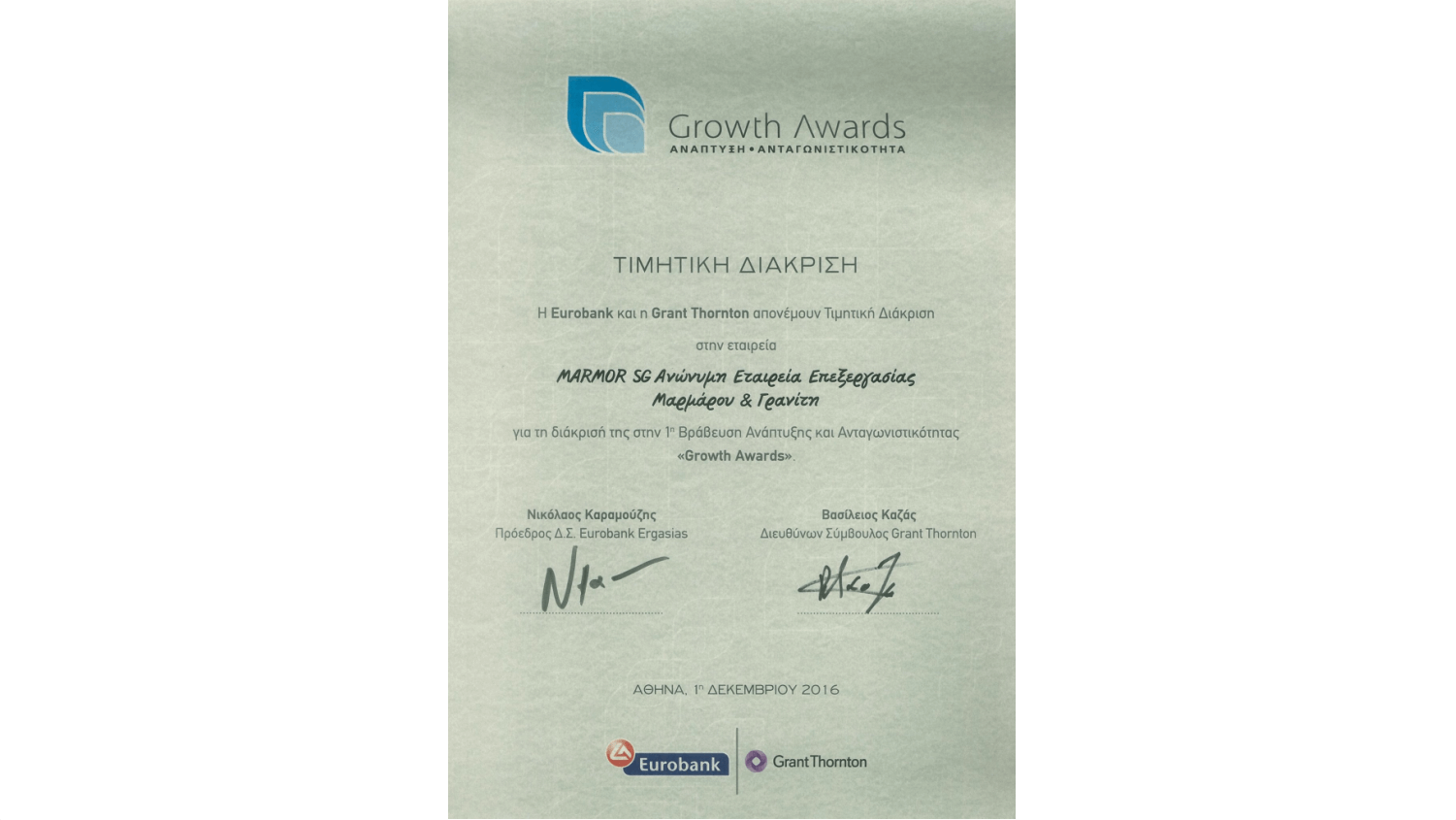
    [vc_row][vc_column][vc_column_text] In Koumentakis & Associates Law Firm we are proud to support legally Stone Group International (MARMOR SG SA), which has been awarded in Growth Awards 2016, as one of the 20 companies with the highest performance in the following categories:

    o Operational / Business Improvement
    o Product development
    o Markets development
    o Human resources and corporate culture
    o Investments
    o Corporate Social Responsibility

    [/vc_column_text][/vc_column][/vc_row][vc_row][vc_column][vc_text_separator title=”Gallery” border_width=”3″][/vc_column][/vc_row][vc_row][vc_column][vc_images_carousel images=”34678″ img_size=”full” slides_per_view=”3″ autoplay=”yes” hide_pagination_control=”yes” wrap=”yes”][/vc_column][/vc_row]

This site is registered on wpml.org as a development site. Switch to a production site key to remove this banner.