Tag: νομικοί σύμβουλοι

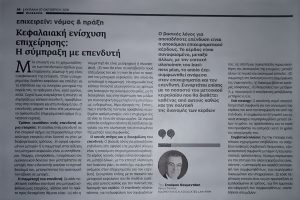
  • Company’s Capital Enhancement: Partnership With An Investor

    Company’s Capital Enhancement: Partnership With An Investor

    [vc_row][vc_column][vc_column_text] An option to finance a company’s investment plans (either it is a startup or not) is its capital enhancement. When the entrepreneur has funds and chooses to invest and keep his course alone things are, generally, simple. Thus, sometimes he is forced or chooses to partner with an investor looking to his enhancement and support. The investor can be either an individual or a business venture (eg venture capital).

    How An Investor “Enters” Into A Company

    An investor’s entry into a corporate scheme (let’s limit it to a Société anonyme) can be made in different ways. The purchase of existing shares or the participation in the share capital increase are the most common ones. There is, in addition, the case of a bond loan convertible into shares when the lender exercises its relative right to convert its financial claim into shares.

    Investor’s Participation In Capital Enhancement

    In each case of an investor’s entry into the share capital of a company, some of the first issues to be clarified are:

    (a) if the shareholding shall be a minority shareholding or a majority shareholding,

    (b) what will the amount to be paid by him be, and

    (c) what will be the percentage of the share capital to which his participation shall correspond.

    Please note that some percentages of the share capital are assessed as critical for the operation of a Société anonyme, with the clarification that when we refer to majority shareholding as a mean of participation, we may face the issue of the company’s acquisition. Additionally, the investor will always aim to an increased number of shares, while the entrepreneur to the less possible. From the legal perspective, there are always the appropriate tools to implement the object of the (participation) agreement.

    Common Objective And Investor’s Assurance

    The main reason for any investment (either of a high or of a low risk) is earning business profits.


    The profit (: common objective) is interwoven, among other things, with the successful implementation of the business plan, which has been agreed between the entrepreneur and the investor. It also corresponds to the percentage of the share capital each one of them holds as well as to the policy for the distribution of profits.

    The investor always claims, in order to safeguard his interests:

    (a) close and multilevel monitoring of the operation of the company (including the legal and financial aspects of the company’s operation),

    (b) participation in the administration and formulation of the (company’s) strategy,

    (c) a veto right in critical decisions,

    (d) shareholders’ commitments (e.g. limitation or prohibition of the transfer of shares) and so on.

    Exit strategy

    The investor often seeks a binding agreement with regard to earning his profit and to withdrawing from the investment. This agreement (also known as the “exit strategy”) includes, among other things, the time, the conditions and the amount the investor expects to receive at the time of withdrawal.

    Contractual Framework

    For the success of such a venture, it is necessary to have secure contractual commitments, an extraterrestrial shareholder agreement and / or statutory amendments. A crucial parameter for the success of the whole venture is always the detailed and accurate recording of everything that has been agreed, the rights and obligations of each party. In any case, it is desirable that the parties involved do not appeal to third parties for the interpretation and implementation of the agreements, at any time in the future.

    stavros-koumentakis

    Stavros Koumentakis
    Senior Partner


    P.S. This article has been published in Greek in MAKEDONIA Newspaper and portal makthes.gr (October 9, 2018)

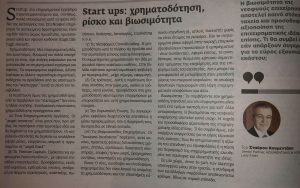
  • Startups: Financing, Risk and Sustainability

    Startups: Financing, Risk and Sustainability

    [vc_row][vc_column][vc_column_text] Startups: business ventures (emerging and usually promising) in the early stages of their operation. In Startups the subject of activity is almost always highly original, pioneering but also high risk-high reward.

    Startups Financing

    A business idea, as innovative, dynamic and promising as it may be, needs capital to be translated into a business venture and profit. Such capital, sometimes less and other times more important, may come from the savings of the “startupper” or from its close environment.

    Thus, the case of financing coming from the startupper’s close environment is not the most common one. Alternatively, financing comes from:

    (a) Business Angels. “Angel investors” are the ones who, first and above all will believe in the innovative idea and will agree to fund it. Angel investors will undertake high risk, acting individually or organized into an angel fund.

    (b) Venture Capitals. It is an organized fund of investors, with high-level professionals. In addition to capital, experience and knowledge in strategic, development, sales, administration, operation, marketing, and other issues, are also provided.

    (c) The Crowdfunding platforms. The “crowd” funding will come from the use of an on-line platform. The participants fund the idea with small amounts each. In Greece there is a relevant legislative provision thus with limited implementation to date.

    (d) Banks. This is not a common ase in our country, as banks typically look to finance existing businesses long established and with good-standing financial data.

    (e) The European Union. These funds are channeled directly or through programs managed at national level.

    (f) Business Incubators. Business Incubators usually provide support at a practical level (premises, furniture, equipment, administrative support, contacts) or/ and short – term support and financing.

    startups-funding

    Risk

    It is not reasonable for a young, optimistic and promising entrepreneur to expect the financing and support of an investor (or of a simple lender) without being ready to take the risk. And the specific risk concerns the provision of adequate collateral (personal or real – when available). It also refers, most commonly, to the commitment of an important part of the business and of his business freedom. This can be translated into a transfer to the investor of a part of the company’s share capital, into accepting drastic restrictions on making business decisions etc.


    Startups’ Sustainability

    The interests of the contributor / investor and the entrepreneur are partly identical and partly conflicting. The sustainability of the start-up is a common goal. The rapid and lucrative exploitation of the business idea as well. What will happen, however, if there are conflicts over the range of powers of each party? How to deal with the investor’s claim for collateral or with the pressure to restrict the business freedom of the startuper who is also the owner of the idea?

    In a country where 50% of startups fail within three years, the assistance of appropriate consultants is proving critical. Especially from a legal perspective.

    stavros-koumentakis

    Stavros Koumentakis
    Senior Partner


    P.S. This article has been published in Greek in MAKEDONIA Newspaper and portal makthes.gr  (September 30, 2018)

  • Digital Employability: Two Years of Offer!

    Digital Employability: Two Years of Offer!

    [vc_row][vc_column][vc_column_text] The Alliance for Digital Employability (AFDEmp) has recently celebrated the anniversary of the two-year offer to young and unemployed people; KOUMENTAKIS & ASSOCIATES participates in this Alliance by offering Legal Support. To date, more than 200 unemployed graduates have been recruited and are now working as Developers!

    Two Years Of Offer To Young And Unemployed People

    The Alliance for Digital Employability is being implemented with the Vision of reducing unemployment in Greece through the creation of new jobs in the IT sector. The actions of the initiative aim to (a) accelerate the training of candidates in high-quality digital skills, (b) certify the skills they have acquired, and (c) the absorption of the candidates by the labor market.

    Today, through Alliance For Digital Employability (AFDEmp) actions, more than 200 unemployed graduates have been re-qualified. People with a different educational background (from mathematicians and physicians to theologists and nurses) have gained access to IT knowledge that is in high demand and have already been hired as well-paid developers in major Greek companies participating in the program.


    The Contribution of KOUMENTAKIS & ASSOCIATES Law Firm

    KOUMENTAKIS & ASSOCIATES Law Firm participated from the very beginning and continues to provide full legal support to this important for our country initiative. The two-year anniversary event was attended by Stavros Koumentakis, Senior Partner and by Lambros Timotheou, Partner of the firm.

    In his statement, Stavros Koumentakis said “We fully identify the Vision of the Alliance For Digital Employability (AFDEmp). Improving the capabilities of human resources and acquiring modern knowledge as a means to improve employability form one of the pillars of our Social Solidarity Program. In KOUMENTAKIS & ASSOCIATES Law Firm we believe in Lifelong Learning and we are committed to supporting all those who create access to it. I warmly congratulate Mr. Byron Nicolaides, President of the BoD of the Council of European Professional Informatics Societies (CEPIS) for his tireless efforts in recent years to help reduce the digital divide and thereby reduce unemployment. I also thank Mrs. Eleni Nicolaides, Head of Action and founding member of AFDEmp, who gives us the opportunity to contribute in practice to the implementation of the actions and the achievement of the objectives of this initiative”. 


    The Alliance for Digital Employability

    AFDEmp is a voluntary initiative of the President of the BoD of the Council of European Professional Informatics Societies (CEPIS), Mr. Byron Nicolaides, of the distinguished academics of the Athens University of Economics and Business, Mr. Giorgos Doukidis, Mr. Diomidis Spinellis, Mrs. Katerina Pramatari, Mr. Panos Louridas, of the President of HePIS, Mr. Nikos Faldamis, of the Director of HePIS, Mrs. Eleni Nicolaides, along with the participation of more than 200 companies and business entities.

    The objective of AFDEmp is to help tackle unemployment while at the same time help also all those who want to change their career through their rapid training in high-quality digital skills. The idea for the initiative was born out of a special study conducted – under the aegis of CEPIS – by the Athens University of Economics and Business, ALBA and HePIS. According to the findings of the study, youth unemployment as well as the gap between supply and demand for technological skills can be addressed through re-training.


    “The Private Initiative To Help Tackle Unemployment”

    This was the central message of Mr. Byron Nicolaides, President of the BoD of the Council of European Professional Informatics Societies (CEPIS) and Head of PeopleCert Group, worldwide, who stated, among other things, “A European need, a Greek opportunity took shape thanks to the alliance of the European Informatics, their Greek colleagues, of academics and of the most important Greek companies. It is now necessary for a company to be able to manage and make full use of the tools offered by new technologies. In this context, we, through AFDEmp, train young professionals by encouraging them to broaden their professional horizons. I am sincerely proud of what we have done together so far. I think that, we, as a private initiative, are laying another brick to shape the next day in the country by tackling the phenomenon of unemployment “.

    HePIS President Mr. Nikos Faldamis said that through AFDEmp an institution has been created that overturns the existing path and turns digital skills into a major opportunity for growth and employment of the new workforce”. Mr. George Doukidis, Professor at the Athens University of Economics and Business, pointed out that such initiatives contribute to: (a) encouraging young people to dare change their professional field by moving to modern fields such as Information Technology and Programming; and (b) encouraging companies to invest in the new generation by employing people who have acquired the appropriate knowledge.


    The Event And The Awards

    The Alliance for Digital Employability (AFDEmp) event was attended by more than 150 representatives of the most important companies in Greece and of the most promising in the fields of Information Technology and Technology. AFDEmp honored the collaborating companies, as a practical acknowledgment of their contribution to this effort, while the event was honored by their presence: the President of GRNET (National Network of Research and Technology) and Professor of the National Technical University of Athens Mr. Panagiotis Tsanakas, the President of the Hellenic Company Logistics Mr. Nikos Rodopoulos, the President of GRECA Mrs. Katerina Fredaki, the General Manager  of HAMAC Mr. Yannis Giannarakis,  the General Secretary of CIO Forum Mr. Michalis Moraitis, and others.

    The 32 companies that has been awarded at the event are: Accenture, ATCOM, CANDI, Cognity, Connectline, Cosmos Business Systems, Data Communication, Epsilon Net, Eurobank, EY, Generation Y, iKnowHow, Intralot, INTRASOFT International , iteam,  JR Technologies, Mellon Group of Companies, Novibet, Omilia, PeopleCert, Printec, Prisma Electronics, Profile Software, Programize, QIVOS, Retail Link, SIEBEN, SingularLogic, SoftOne Technologies, Ulysses Systems, Uni Systems, Upstream.


    To Conclude

    The effort continues. The courses of Coding Bootcamp 6 begin on October 1, 2018.

    [/vc_column_text][/vc_column][/vc_row][vc_row][vc_column][vc_text_separator title=”Gallery” border_width=”3″][/vc_column][/vc_row][vc_row][vc_column][vc_images_carousel images=”33528,36051,36049,36047,36043,36041″ img_size=”” speed=”6000″ slides_per_view=”4″ hide_pagination_control=”yes”][/vc_column][/vc_row]

  • The Newspaper MAKEDONIA Is Back With Us

    The Newspaper MAKEDONIA Is Back With Us

    [vc_row][vc_column][vc_column_text] The historical newspaper MAKEDONIA is again since the 9th of September in kiosks and in Koumentakis & Associates Law Firm we feel very happy to support its success as Legal Advisors.

    With the comprehensive legal support of Koumentakis & Associates Law Firm, the historical newspaper of Thessaloniki (and Northern Greece) is back in the kiosks, while its online version www.makthes.gr has been already … released (since 3 September). As Stavros Koumentakis, Senior Partner, characteristically said, “The dream came true. Thanks to innovative partnerships, innovative planning and tireless efforts. In “Koumentakis & Associates” we feel a special honor that the participants have trusted us with the legal dimension of the whole project and, above all, we are proud that we have provided our small contribution to the realization of the dream. Wishing “BEST OF LUCK”, let’s enjoy the amazing journey together …”.


    The project

    εφημεριδα μακεδονια ιστορικη αξιοπιστη

    The efforts to re-issue the newspaper MAKEDONIA began almost immediately after its suspension. A team of 24 employees with vision and plan moved quickly. They decided that there was a need for a scheme that would not be based on self-managed practices or on classic investment. The ideal scheme would make the most of the employees of “MAKEDONIKI” but would be financed by businessmen.

    Employees ensured the right to use the titles of the two newspapers in Thessaloniki in exchange for a portion of the accrued that the company owed to its employees. They then created a Social Cooperative Enterprise (SCE) and finally sought funding. In order to re-issue the newspaper MAKEDONIA, it was necessary to engage with entrepreneurs doing business in the area of ​​Northern Greece. In the context of building this partnership, a fully-fledged business plan was created that guarantees the viability and prospect of the venture. It is worth noting that the profits of SCE will be distributed in the following way: 33% for employees, 33% for reinvestment for development activities in the same context (e.g. publication of pullouts) and 33% as a reserve for further growth.


    The Stakeholders

    “None of the twenty entrepreneurs involved in the project expect profit or other economic benefits. The multiplicity of the project combined with the quality of the entrepreneurs and the journalists involved in it guarantee the validity of the information” says Vassilis Takas, industrialist and chairman of the new publishing company’s Board of Directors.

    Such an innovative publishing model requires an overcoming of the rigidities of the past. “We want to overcome the old stereotypes about “bad bosses”. Entrepreneurs, for their part, have to avoid a speculative logic and stop fearing of the wage costs”, says Michalis Alexandridis, publisher and director of the publishing project. “I think that we are all in the same vein, and that, will benefit the city and the media. We are all committed to abstain from practices that have been established and still plague the country, such as nepotism, bribery and corruption. We believe that the new media will respect their heavy names, their history and their ties with the Thessalonians and the Northern Greeks in general”.

    The 11-member board of the company that will issue the newspaper MAKEDONIA and will be responsible for the operation of makthes.gr was formed as follows: Vassilis Takas President. Michalis Alexandridis executive vice president – publisher – publishing director. Hasdai Kapon vice president. Leonidas Fakas Vice-President. Panagiotis Alexandridis Managing Director. Members: Yiannis Masoutis President of the Chamber of Commerce and Industry of Thessaloniki (TCCI). Thanasis Savvakis President of the Federation of Industries of Northern Greece. George Konstantopoulos, President of Exporters’ Association of Northern Greece. Giorgos Bikas President of Imathia Chamber of Commerce. Panayiotis Menexopoulos Secretary General of the Chamber of Commerce and Industry of Thessaloniki (TCCI). Stavros Koumentakis lawyer – legal advisor of the company.

    Statement by Stavros Koumentakis In the Newspaper

    δηλωση σταυρου κουμεντακη στην εφημερίδα μακεδονια

    “From early on I believed in the project of re-publishing the historical newspaper of our city, and that not for emotional reasons. The certain needs of our city, the breadth of the shareholders structure, the severity of the investors-shareholders, the inability to promote personal or party strategies, the technocratic approach of the stakeholders and, above all, the brilliant journalistic group and its dynamics are the necessary, adequate and capable elements for success. We are happy about the first edition, confident of the result and proud to contribute aligned behind the press team, fulfilling a debt to the city. I take it for granted that also the Thessalonians will embrace the effort with equal fervor.”

    The Historical Newspaper MAKEDONIA

    The newspaper MAKEDONIA is the oldest political newspaper in Northern Greece. It was founded in 1911 (its first edition was published on July 10, 1911 – with the new calendar on July 23, 1911) by the publisher Konstantinos Velidis. After his death (1936) his son, John Vellidis, took over. After the death of the latter (1978), his wife, Anna Vellidi, took over and from 1980 her daughter Katerina Vellidi. In the summer of 1996, the newspaper was closed down because of indebtedness, to be then re-released in early 1998 by its new owner, businessman Yannis Raptopoulos. The newspaper suspended its issue in October 2017 and was re-released on September 9, 2018.

    In the head of the newspaper, succeeding Konstantinos Dimadis, a historical figure for the family of journalists, who served as editor-in-chief and director of the newspaper for 62 years (1931 to 1993), were also the journalists, Nikos Vourgountzis, Giannis Nikolopoulos, Lazaros Chatzinakos, and many others . Dimitris Chourmousios, Dimitris Psathas, Kostis Palamas, Stratis Myrivilis, Georgios Vafopoulos, Archelaos and others were among the newspaper’s associates in the past.

    The leads of the newspaper include the introduction of an early form of monotonic system, many years before its establishment as the official written usage of the Greek language as well as the fact that it was the first Greek newspaper to be published online. [/vc_column_text][/vc_column][/vc_row][vc_row][vc_column][vc_text_separator title=”Gallery” border_width=”3″][/vc_column][/vc_row][vc_row][vc_column][vc_images_carousel images=”36012,36014,36010,36016″ img_size=”full” speed=”6000″ slides_per_view=”5″ hide_pagination_control=”yes”][/vc_column][/vc_row]

  • Entrepreneurship Program Of Mandoulides Schools

    Entrepreneurship Program Of Mandoulides Schools

    [vc_row][vc_column][vc_column_text] For a second consecutive year, “Koumentakis & Associates Law Firm” cooperates with Mandoulides Schools within the framework of the latter’s Entrepreneurship Program. The program is implemented with the aim of enhancing experiencing vocational guidance for students over 16 years of age.

    Within the framework of the Entrepreneurship Program of Mandoulides Schools, “Koumentakis & Associates Law Firm” hosted for 4 weeks the student Mr. Konstantinos Zissis, who attended the main activities of the firm and was informed about issues related to the scientific subject.

    The Entrepreneurship Program In Koumentakis & Associates

    In our firm, we are delighted to participate in the innovative Entrepreneurship Program of Mandoulides Schools. We are proud to actively participate in the effort of talented and promising young people to meet with attorneys and legal advisors into active action. We believe that by participating in experiencing education and by supporting such initiatives, we contribute to the decision-making process for proper studies and immediate professional reintegration.

    Koumentakis & Associates Law Firm encourages the experiencing education and development of pupils and students through work. Within the firm’s environment, trainees feel new experiences, explore their professional interests and develop new skills. At the same time, they have the opportunity to get acquainted with tools and methods that help them acquire assets of great value.


    The Entrepreneurship Program Of Mandoulides Schools

    Mandoulides Schools give special attention to experiencing education while remaining faithful in the provision of high educational services. The pioneering Entrepreneurship Programs have been created to connect their students with innovative organizations and companies in the region and learn through them.

    Partners of KOUMENTAKIS & ASSOCIATES Law Firm and Victoria Pervizou-Head of Entrepreneurship Program of Mandoulides Schools attend the presentation of Constantinos Zisis.


    The Entrepreneurship Program And Experiencing Vocational Guidance

    The Entrepreneurship Program of Mandoulides Schools  is part of the experiencing school vocational guidance, which is cultivated in the Schools through a series of actions (Three-day School Vocational Guidance, educational visits and projects under the STEAMulator program, 100 Mentors) aiming at better information, but also the acquisition of experiencing knowledge.

    The duration of the programs is four weeks divided into two phases. In the first phase, students are introduced to the basic principles of operation of a company. In the second phase of the Programs they acquire experience in its premises, with daily presence, participation in meetings, dialogue with executives and familiarity with the subject.

    [/vc_column_text][/vc_column][/vc_row][vc_row][vc_column][vc_text_separator title=”Gallery” border_width=”3″][/vc_column][/vc_row][vc_row][vc_column][vc_images_carousel images=”35587,35583,35580,35577″ img_size=”” slides_per_view=”3″ autoplay=”yes” hide_pagination_control=”yes”][/vc_column][/vc_row]

  • Cyber Risk: The Role Of The Legal Advisor

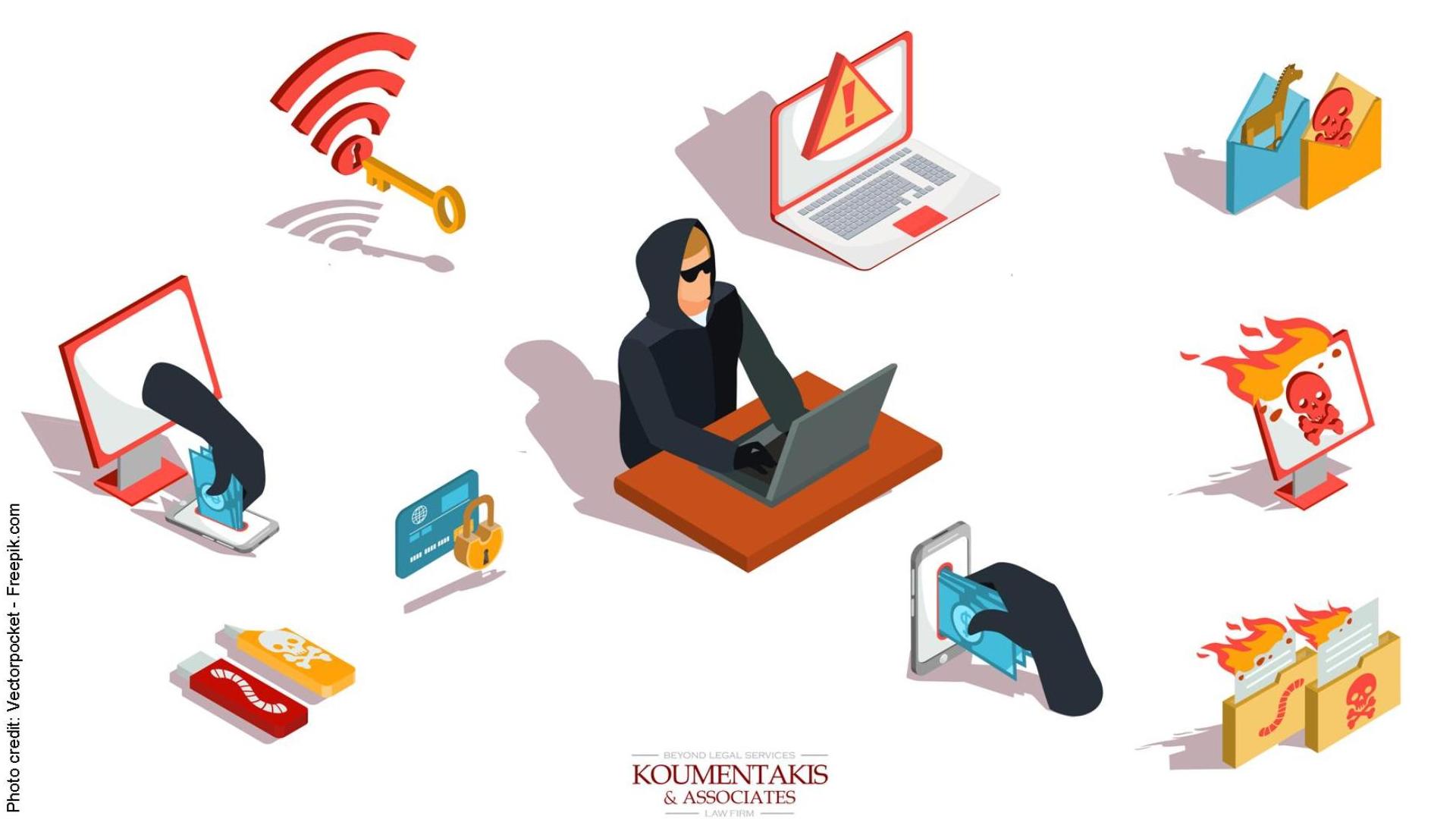
    Cyber Risk: The Role Of The Legal Advisor

    [vc_row][vc_column][vc_column_text]

    Cyber Risk: Does It Concern Everyone Or Exclusively The “Elite” And “Famous People”?

    “Many people working in cybersecurity will tell you that it’s not a question of whether a company shall suffer a cyber-attack but of when it will suffer it in any form. Whether you have been cyberattacked and you have not been aware of it or you have been cyberattacked and you know it, or you will be cyberattacked sometime in the future”.

    This is Martin Felli’s statement (CLO of JDA Software, one of the world’s largest software companies for logistics companies) to Dominic Carman, who conducted a special survey for Kroll.

    What Felli says is in fact an explanation of the statement of former FBI Director Robert Mueller who had already since 2012, stated that: “There are only two types of companies: those who have been already hacked and those that will be hacked in the future”.

    Despite the continuous digitization of all kinds of information and the use of electronic networks to carry out all sorts of transactions and operations, it is more than obvious that most companies in Greece are not aware of the risks they run themselves as well as their customers’ data from of every kind and form of cyberattacks.

    But why should your legal advisor deal with this issue? Isn’t it a matter of IT?

    In order to attempt a satisfactory answer to this question, we must set our sights to the recent past …


    Τhe Disclosure Οf Loss Οr Leakage Οf Information Αnd Its Consequences-General.

    The demonstration – disclosure of a loss or leak of information of any nature (whether it is a customer’s personal data or business secrets) starts with admitting publicly this leak. Such public action can be made either to the general public or to a limited circle of persons and legal entities whose data has been lost or leaked due to the cyberattack.

    In either case (: admitting publicly or limitedly a cyberattack) the legal consequences are always serious. Third injured parties are entitled to bring proceedings against the company that has suffered a cyberattack while the competent authorities have to impose the fines provided by the existing institutional framework. The extent of the damages to be awarded and the fines to be imposed will always be directly proportional to the extent of the leakage and the severity of data lost or hucked.

    In both cases (: in the first one immediately, in the second on time) the inevitable publicity attracts media’s interest and causes, inevitably, a serious damage in the company’s prestige and reputation. This second consequence of a cyberattack is similarly severe (sometimes even more) than the legal consequences of such disclosure (lawsuits, administrative fines, criminal liability).


    “There Has Not Been A Thorough Investigation Of The Causes Of the Leak Of Information”: Yahoo Case

    Relatively recently (in 2016), Yahoo has revealed two separate incidents of data hacking by hackers who have gained access to data for a billion users (the number actually causes vertigo). The first incident occurred in 2014 and was initially kept secret. But when 2016 a second violation took place the company was forced to make a total disclosure.

    The shock to the business world of the United States was so great that a detail perhaps went unnoticed: The first to resign was Yahoo’s Head IT (: as expected) but the second was the Chief Legal Advisor. Why, though, this second resignation?

    The Special Commission appointed by the Yahoo Board to investigate leakage circumstances, both in 2016 and 2014, considered that the whole group of Yahoo’s Legal Advisers failed to investigate thoroughly the causes and circumstances of the breaches in 2014. Notwithstanding the fact that it also had the data and conditions to do so. This particular failure by the legal counsel team had as a first result that no substantive measure was taken, and that, as a final and yet dramatic (result) to allow the widespread violation of 2016.

    What was the duty that Yahoo’s Chief Legal Advisor omitted? What is the responsibility of the Legal Advisors of a company?


    The Changes Brought In The Global Business Environment By The EU Regulation GDPR And The NIS Directive

    In 2016 the European Union legislated two major legal instruments: the General Data Protection Regulation 2016/679 and the Network and Information Security Directive 2016 / 1148).

    Many people are already aware of the first of them (GDPR). However, the second is ignored, despite the fact that it must also be incorporated into the domestic law of the Member States from May 2018. Member States are obliged to identify by November 2018 the operators and service providers of basic services (who now have increased responsibility for maintaining high security measures).

    These laws will affect (more precisely: they already affect) directly and in one way or another all the companies that process Personal Data of European citizens. It is emphasized that they affect not only European companies but also non-European Union entities that process Union citizens’ data.

    In Europe (as in North America earlier in the past), something important is changing in relation to the assessment of the risks posed by electronic data processing. The attitude of the legislative and auditing authorities appears to be abrupt and significant. With the above-mentioned legislation, the European Union is spearheaded on the issue of corporate responsibility for failing to protect and securely process information that in one way or another is processed by the companies.

    Both laws, apart from all their other consequences and the multiple regulatory compliance parameters they create, are also adding further adverse consequences in the event of a cyberattack that may result in data leakage.


    The Role Of The Company’s Legal Advisor

    In this context of the rapid (but at the same time important) changes in business behaviors and practices brought by the current legislative trends, the role of the Legal Advisor of a company proves to be extensive and, at the same time, crucial.

    The Legal Advisor of a company, as the head of the team concerned, owes to design, supervise and test in advance an Incident Response Plan for the case of a cyberattack.

    Perhaps it seems strange that a lawyer and not the IT Manager is at the head of such an effort. However, only in this way can there be effective protection of the company’s interests against the consequences of a possible loss or leakage of data.

    In the technical part it is obvious (and self – evident) the assistance of the specialists who will identify the type of invasion, the exploitation weakness, the identification of the volume of data leaked, etc. However, the main concern of the Legal Advisor will not only be disclosing to the management and the responsible employees of the company, but also ensuring the best implementation of the laws and best practices, mitigating the consequences of any breach and, in particular, harmonizing all the departments of the company in the implementation of the Incident Response Plan.

    Your Legal Advisor (ought to) know those provisions (before cyberattack) and the actions required (after cyberattack and data leakage) to:

    • Make clear to the competent Audit and Judicial Authorities that the company has done the best on both preventive (before cyberattack) and post-data leakage.
    • Identify the causes of the leakage, the persons liable, the existence of willful deception or fault that contributed to the leakage of the information in a clear and understandable way (to non-experts).
    • Creating optimal conditions and evidence for seeking to punish perpetrators and / or those responsible for the attack before the competent authorities and bodies.
    • Manage the communication of the consequences of the disclosure of data loss / leakage due to cyberattack.

    The Legal Advisor of the company will identify the specific risks for each of his client companies according to their activity and their exposure to data processing (gap analysis). In cooperation with IT, the Legal Advisor will investigate possible cybercrime scenarios and prepare an Incident Response Plan that will be simple and comprehensible to all executives and departments of the company and, in particular, to a judge who may eventually deal with it later.

    To be clearly understood, let’s take a simple example: The lawyer who defends a client for medical negligence does not need to be a neurosurgeon. It is enough to be prepared to understand the philosophy and sequence of the protocol that his client ought to follow in order to respond to the disputed incident. The Legal Advisor of the company, having understood the technical issues with the valuable help of IT, will “translate” in a comprehensible manner the necessary actions and processes so that they are simple and easy to understand by both the Company’s Management and the employees and by third parties (auditing and judicial authorities).

    It is particularly notable that already in the US and Great Britain, the top law firms have developed their own Cyber Security Division to provide all the services required (legal and IT).


    The Issue Of Cyber-Security And Its Integration In The Company’s Regulatory Documents

    On the initiative of the Legal Advisor, the Cyber Security issue must be integrated in the company’s regulatory documents (Internal Working Rules, Internal Rules of Operation, Policies for Data Processing and / or Computer Management etc.).

    For illustrative purposes only it has to be noted that an Incident Response Plan should contain (indicatively – among others):

    • Who are the heads of the action groups, when and how they are alerted.
    • Who decides and within which time framework the (eventually) total shut down of the company’s networks or attempts to resume operations to identify the origin of the cyberattack.
    • Who is the external partner (who may) be involved in system monitoring.
    • What and of what nature are the written notices and reports that will be the proof of the time of awareness of the cyberattack and of the actions that took place.
    • Who is responsible for communication and PR (who may) have to manage the communication part of the disclosure.


    Does The Legal Advisor Have To Deal ALSO With The Insurance Against Civil Liability?

    In the same context, the Legal Advisor of the company will accurately identify the most likely sources of risk and will be able to choose the right insurance against civil liability plan in relation to cyberattack. This in contravention of the usual business practice, when the cheapest offer is chosen and the first text / draft insurance contract to be sent by the selected insurance company (which may cover on the one hand absolutely unnecessary risks while on the other hand not cover what is absolutely necessary).


    The Link Of The Company’s Good Repute With Its Protection

    All the above actions of the Legal Advisor (: existence of clear regulatory documents, policies, Incident Response Plan, Insurance Coverage etc.), but mainly the alignment of the company and of its executives with what is provided can only have the effect of increasing the trust of customers and collaborators towards it.

    Given that we all want to work with trusted partners, the (regional) benefits of the company are more than obvious: customers see that they are dealing with a serious business partner rather than a “little store”.


    Creating The Conditions To Prevent an “Internal” Cyber Attack

    Over the past few years, we have been facing business-secrets violations by (dissatisfied or not, active or retiring) company’s executives in the context of their long-term or opportunistic planning. Our case law has dealt with some individual cases, until now, where executives either wanted (simply) to harm their employer’s company or their personal enrichment or their transfer to a competitor-along with the business secrets of their previous employer.

    The protection of the company by its (malicious) executives, although not automatic or self-evident, is, to a very large extent, feasible, with significant leverage in the existing institutional framework and the Constitution. (http://koumentakislaw.gr/en/blog/articles/enterprises-and-confidentiality/)

    So, what happens when cyberattack comes “from the inside”, that is when the offender is an executive of the company? Is protection and deterrence possible? Is it possible (in the non-desired case) to detect the origin and identify the offenders so as to make an (internal) example of them and for (future) deterrence?

    The Legal Advisor is the one who must create the framework and the background of business secrets. It is precisely in this same context (in close co-operation with the IT section) that he must create the conditions to prevent an “internal cyberattack”, which could seriously damage the interests of the company he represents. He is the first to “raise” the alarm but also the one who should urge the company to establish appropriate policies and procedures for the safe use of the company’s networks, electronic communications, the control of access to the company’s systems and records by its executives.

    By Way Of Epilogue

    The resources available are always limited. The need for their rational management is more than obvious and (also) in relation to the maximum possible protection from Cyber Risk.

    If there is no rapid and thorough identification of the needs and potential risks for the particular company, it is likely that the company’s resources be “spent” in a way that will not be the optimal one.

    Your Legal Advisor can lead you to a more rational and efficient use of available resources and also take the responsibility for coordinating all stakeholders.

    Even if you do not choose to assign to him the specific projects, please just search for his assistance. You can be sure that the result will be infinitely better.

    Lambros Timotheou
    Partner

    [/vc_column_text][/vc_column][/vc_row]

  • Companies And Confidentiality

    Companies And Confidentiality

    [vc_row][vc_column][vc_column_text]

    The Importance Οf Securing Confidentiality

    Every company faces a lot of challenges to become and remain healthy, but also to maintain the high standards it has possibly achieved in terms of operation, efficiency and profitability. Maintaining (and, more importantly, increasing) its market share in the geographic areas of its activity requires a series of obstacles to be overcome daily.

    Achieving and maintaining healthy entrepreneurship is always not only a requirement but also an everyday challenge. One of its prerequisites is to ensure that the information that the business identifies as confidential will be maintained as such and, among other things, will not diffuse into competition.

    In some, special cases, the obligation to preserve the confidentiality of the information that is handled by the company is imposed by the institutional framework (see below on personal data). In these cases, the consequences do not refer to the smooth operation and development of the company. The consequences may refer to indefinitely high fines and penal sanctions!


    Persons Liable For Confidentiality

    The obligation to preserve confidentiality is an obligation that everyone has. Without exception!

    As the worker or the company’s usher is not excluded the same way (obviously), the executives, the senior management, the CEO or even the main shareholder are not excluded. It is important, however, to stress that this obligation also includes any third party with whom confidential information is shared, e.g. a close associate or consultant of a business.


    Form And Way Of Notification Of Privileged Information

    The form of the information is of no importance for its protection: It may be documents, electronic files, even for oral information disseminated to a specific number of persons and pertaining to a particular company or group of companies.

    Additionally, the way of knowing the information covered by the confidentiality obligation is also meaningless. It may be information that (e.g.) an executive has become acquainted with while performing his/her duties at his workplace or even outside such (e.g. at the client’s premises). It may still be information about matters handled by the person responsible for such, colleagues, business associates or consultants of the company. Finally, there may be information on issues related even to customers of the latter.


    Privileged Information

    Information covered by the confidentiality obligation may refer to commercial know-how (commercial information: e.g. customer and supplier lists, cost accounting and price calculations, sales strategies, marketing methods, and so on) and / or technical know-how (expertise, technical information). They may relate to the methodology, procedures, planning, data, development and results of any business activity, process, research, product output or service provision. They may relate to procedures, policies, documents of auditing authorities related to the company. It may, in the end, concern any issue of importance for the company.


    Particularly, On Personal (Personal and Sensitive Information) Data

    Thus, some of the protected information may even be related to personal data – personal and sensitive information. This scenario adds more obligations for companies as provided by the current institutional framework (EU / 1995/46 Directive incorporated by Law 2472/1997) as well as by the new Regulation (EU / 2016/679) which will be implemented as of 25 May 2018 and beyond – regardless of whether or not the (expected) law which implements it be adopted.

    However, it is not only the additional obligations of companies that are being created by the existing and the new institutional frameworks with regard to personal and sensitive data but also, especially, the threatened sanctions in case of non-compliance and / or violation (for all these issues please refer to the relevant article “Personal Data Protection and Companies”)

    The Obligations Of Executives And Partners

    Contracts that associate all employees and external partners with a company (must) include provisions that restrict the use of information that come to their knowledge during and solely in the context of their cooperation with the company. And even more: (they ought to) regulate the obligations of employees and associates during the period after the expiration of their cooperation (e.g. return of forms, documents, notes, deletion or return of electronic files) as well as the sanctions for breach of their (contractual and post-contractual) obligations (usually high penalties – in addition to general claims for compensation).


    Particularly, Decision 1/2017 Of The Arios Pagos (Supreme Court of Cassation)

    This decision has been a landmark on the specific issue.

    By virtue of this decision, it has been accepted that constitutionally protected rights (including the rights of the employees) such as the confidentiality of letters and communication (article 19 of the Constitution), the inviolability of private and family life (article 9C) and the protection of personal data (article 9A C) be limited on the basis of the constitutionally guaranteed principle of proportionality (article 25C).

    Therefore, in the context of this decision, the right to legal protection (article 20 par. 1 C) and of the freedom to conduct business (articles 5 & 106 par. 2 C) of an employer / company could prevail over the abovementioned rights of the employees.

    However, what was, practically, the meaning of the limitation of the constitutionally guaranteed employees’ rights in the framework of this specific and of other similar cases?

    There has been recognized the Employer’s right (whose above-mentioned constitutional rights were deemed to prevail, in the particular case and under the particular circumstances) to:

    • Monitor the electronic (professional and personal) correspondence of its employees as it is imprinted on the computers and on the other means of its company
    • Draw the deleted mail from these computers that constitute its property
    • Record the data obtained from the computers of its company and, in particular,
    • Exercise its legal rights on the basis of data contained in the personal or professional correspondence of its employees which took place through the company’s computers even if they had been deleted in the meantime.

    There is no doubt that this decision is extremely important: The Company does not remain (legally) unprotected against malicious employees who, under the guise of their constitutionally protected rights, attempt to harm it for their own benefit.


    When Does The Confidentiality Obligation Recede?

    The confidentiality obligation recedes:

    • when the information to which it refers is public (and a priori) known
    • when there is an obligation to disclose this information arises from the existing institutional framework or is imposed by a competent authority or a competent court.


    Confidentiality Provisions In Business Level

    In business level, the provisions that refer to confidentiality are (or should be) normally contained:

    • in the employment contracts, in the service agreements, in work contracts etc. of the company
    • in the company’s Work Rules (where applicable)
    • in the Code of Ethics (or Code of Conduct) of the company
    • in the NDA’s of the company and its customers- clients τόσο της επιχείρησης όσο και των πελατών της (to the extent that the latter apply to the company and, in addition, to its employees)


    Confidentiality Provisions Contained Into Legislation – Generally

    In cases where (contrary to what is agreed or what the law requires) the person who breaches the confidentiality obligation causes damage, the person responsible is obliged to restore it in its entirety (losses and damages – article 914 of the Civil Code, moral damage – article 932 of the Civil Code)

    However, irrespective of the civil claims maintained by the injured person against the person responsible, there are a number of criminal provisions relating to the criminal offense of the offender [indicatively: article 370 of the Penal Code (violation of letters privacy), article 370A of the Penal Code (violation of the telephone conversation and oral conversation privacy) , article 370C of the Penal Code (illegal access to an information system) and the related provisions of articles 370B, 370D, 370E of the Penal Code]

    There are, of course, also provisions referring to specific issues arising from the breach of confidentiality, as (indicatively):

    There are, of course, also provisions referring to specific issues arising from the breach of confidentiality, as (indicatively):

    More Specific Provisions

    (a) With regard to personal data breach

    Whenever the confidentiality obligation breach is related to personal data breach, there are administrative, criminal and civil penalties directly or indirectly imposed (also) on the offender.

    On the basis of the existing institutional framework (Law 2472/1997) which is in force until 25.5.2018 – when Regulation 2016/679 –  http://koumentakislaw.gr/en/blog/articles/personal-data-protection-and-companies/ enters into force, there are provided specific administrative penalties (Article 21), criminal sanctions (Article 22) and also civil liability of the offender (Article 23).

    Regulation 2016/679, of course, provides for very serious administrative sanctions (Article 83) and for civil liability for those who violate personal data (Article 82). It is expected that the law currently being drafted will further specify said sanctions or even impose additional (e.g. criminal) for the offenders (Article 84).

    (b) With regard to unfair competition

    Where through confidentiality breach there is also violation of the provisions of unfair competition (Law 146/1914), both criminal penalties (Article 16 & 17) and civil sanctions (Article 18) are provided for.

    (c) With regard to Codes Of Ethics

    It is not unusual for the operation of certain business sectors to be governed by Codes of Ethics. In these Codes, we often encounter a number of provisions regarding the obligation to ensure confidential data as well as sanctions in case of breach. (Indicatively: Code of  Greek Pharmaceutical Conduct – provisions of articles 26-chapter A and 4 of chapter C)


    Penalties on Breach of Confidentiality: Legal, Business And Not Only …

    In general, in view of the above, one could say that the obligation to preserve confidentiality directly or indirectly is supported in almost the whole range of law (e.g. civil, criminal, administrative). More specific provisions of the existing institutional framework and of the contractual relationships that have arisen in the course of the negotiations, specify both this obligation and the many consequences of its breach.

    The penalties provided envisaged relate to offenders-natural persons and, sometimes, the directly or indirectly involved companies: those who did not do the appropriate to protect those affected as well as those who urged the offenders into their unlawful actions.

    Thus, the sanctions are not only legal:

    The persons who violate this obligation they also suffer the corresponding personal and professional demerit.

    However, in the case of companies where the offenders were employed, the consequences are sometimes unbearable: For how long can a company operate when data, personal data (or even worse sensitive personal data) of its customers are loaded into the Internet? For how long can a company operate when its critical business secrets (whether it’s recipes or clientele, or production or marketing methods or whatever) are diffused to its competitors?


    Necessity Of Compliance And Consequences Of Non-Application Of Confidentiality – The Role Of The Legal Advisor

    Storing and disseminating information (also at business level) is an element of everyday life-one that does not seem to be differentiated from vital, human, functions..

    Safeguarding the integrity and confidentiality of information, notwithstanding the avoidance of the aforementioned sanctions, ensures the existence of high professional standards (in particular) for the companies concerned. This fact, inevitably, is reflected in its existence and development, in its relations with its customers and suppliers. It is reflected into the shareholders, the employees, the associates and their families.

    There is no doubt that securing confidentiality is an obligation of all those who are directly or indirectly involved in operating a company. However, the responsibility of the legal advisor is a little more special as he/she has the burden of: (a) informing the parties involved; (b) creating a coherent grid of contractual and other regulations, dissuasive to be breached; and (c) managing the critical situation created in the case of violation of any kind of confidential information.

    It is also not of a minor importance that your Legal Advisor’s involvement in Cyber Risk issues is already covered by Directive 2016/1148 on Measures for a High Level of Network and Information Security for Networks across the Union ( Network and Information Security Directive 2016/1148 – also known as NIS) – but for this issue, there shall be a specialized screening and filing on the same site.


    The Challenge (By Way Of Conclusion)

    In any case, it is more than obvious that securing confidentiality is one of the challenges of today’s business. It is up to us, the directly and indirectly involved (us Legal Advisors in particular), to assist and respond positively to this challenge by providing our own small contribution to what everybody desires, that is to secure and develop healthy entrepreneurship.

    Koumentakis-and-Associates-Stavros-Koumentakis

    Stavros Koumentakis
    Senior Partner

    [/vc_column_text][/vc_column][/vc_row]

  • Workshop Of Creative Pharma Services for Confidentiality

    Workshop Of Creative Pharma Services for Confidentiality

    [vc_row][vc_column][vc_column_text] Koumentakis & Associates Law Firm was invited and participated in the annual training conference of Creative Pharma Services, with a presentation titled: “Companies and Confidentiality”.

    The presentation of Mr. Stavros Koumentakis gathered the high interest of nearly one hundred executives and associates of the company who participated, as, apart from the general context of the issue, Mr. Koumentakis also referred to the specific issues arising for the Pharmaceutical market.


    Obligation Of Confidentiality

    Mr. Stavros Koumentakis, Senior Partner of Koumentakis & Associates Law Firm started his address with a reference into the obligation of confidentiality for all information related to a company and its stakeholders, such as associates, clients and employees and he furtherly focused on the particular issues related to pharmaceutical industry, including any information related to studies and pharmacovigilance as well as products, designs, patents, documents on policies and procedures.


    Personal Data

    Mr. Koumentakis then referred to the issue of personal data, the obligations and rights of employees and associates, and the capabilities that companies have in order to ensure Confidentiality (e-mail monitoring, retrieving deleted mail, recording of data from the company’s computers, etc.).

    Confidentiality Regulations And Sanctions

    As Mr. Koumentakis stated, the legal framework for confidentiality regulations is quite comprehensive both in general (Civil Code and Penal Code), and in particular (Law 2472/1997, Law 144/1914, Greek Code of Ethics for Pharmacists), as well as at the level of a company (Employment Agreements, Labor Code, Code of Ethics, NDA’s), while the sanctions for a confidentiality breach are Civil Penalties (two times the annual remuneration,  compensation for any damage), Penal sanctions (custodial sentences, financial penalties) and Professional penalties.


    The Benefits Of Confidentiality

    In conclusion, Mr. Koumentakis, noted that the issue is NOT, mainly legal, and that the benefits of securing confidentiality are obvious to the company, its clients, its employees and their families. Since, on the one hand, the company believes in its partners and trust in them, and on the other hand the partners confirm the high levels of professionalism with respectful confidentiality, this is a factor of growth and prosperity. “Regardless of sanctions, it is necessary to align the philosophy of the stakeholders and maintain high professional standards”.

    Koumentakis & Associates Law Firm was represented in the conference by Konstantinos Kornilakis, Partner and by Petrini Naidou, Senior Associate.

    [/vc_column_text][/vc_column][/vc_row]

  • Personal Data Protection And Companies

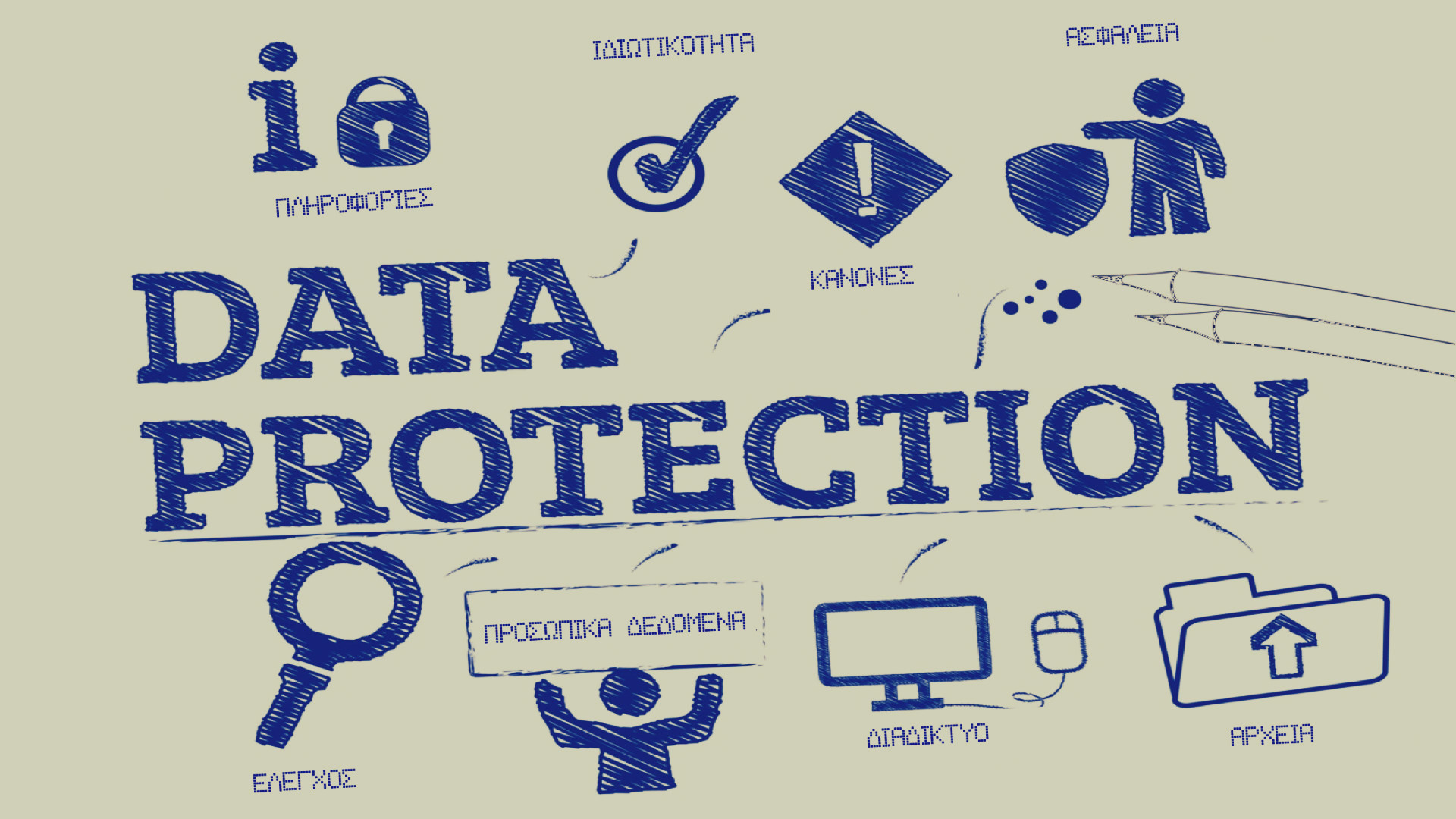
    Personal Data Protection And Companies

    [vc_row][vc_column][vc_column_text] European requirement the enforcement for Personal Data Protection. New compliance rules (Regulation 2016/679)


    Preamble: What Does Non-Compliance Mean

    It is true that any new obligation created for a company burdens its operating costs. But could anyone suggest non-compliance with the obligations under this Regulation for Personal Data Protection?

    To this case we could not remain indifferent. European Regulation (2016/679) is in force without the need for ratification by the Greek legislator.

    Sanctions threatened? Unsustainable! Without going into the details of criminal sanctions, the maximum penalties (fines) amount to € 10.000.000 or € 20.000.000 and at a percentage of 2% or 4% respectively of the infringer’s worldwide turnover (if the above amounts are below the respective percentages on its worldwide turnover!)

    Things are NOT simple …


    The Existing Institutional Framework

    The need to protect individuals from the constantly evolving (due to the rapid developments in technology) exposure of their Personal Data and the creation of a secure modus operandi of the data processors is underlined by the European Regulation 679 of 27 April 2016, which shall be in full effect for all Member States (among which our country, of course) on 25.5.2018.  

    In accordance with Law 2472/1997 on the Protection of Individuals with regard to the Processing of Personal Data (and its revisions), the Greek legislator has incorporated the European Directive 95/46 / EC “On the protection of individuals with regard to the processing of personal data and the free movement of such data”.

    The key foundations for the Protection of Personal Data that had already been set twenty years ago referred to the identification of:

    (a) the basic concepts such as “record”, “data subject”, “simple data”, “sensitive data”, “controller”, “processor”

    (b) the rights of the Subjects of Processing (each of us)

    (c) the obligations of Personal Data Controllers (natural and legal persons, bodies and organizations with whom we are required to have transactions in our daily lives from our employer to the Register of a Taxation); and

    (d) the establishment of the Personal Data Protection Authority, which would then function independently, as a supervising body and as an institutional guarantor for verifying compliance with the European requirements.

    The Personal Data Protection Authority has been set up and operating since then, it undertakes vigorous action while its decisions have become a serious item in the agenda of not only the legal world bit also of the public opinion, as for example in the case of identifying religion in identities.

    The European Parliament chooses in this Regulation a more dynamic position than the previous Directive, since the former is a law of increased formal validity (it raises upward the laws of each member – state) and is (unlike the Directive) directly applicable horizontally (its incorporation by the national legislator is not required).


    The Tightening For The Protection Of Personal Data In The Context Of The European Regulation

    The Regulation strengthens the protection framework and in particular:

    (a) the Controller is required to choose the most secure, organizational and technical measures both at the time when the data collection and processing measures are defined and at the time of processing.

    The obligations of the Controller and the Processor expanded (: record-keeping – specifications – processing activities) and acquire specific responsibility to receive and be able to demonstrate that it has taken all necessary measures to ensure that processing is carried out in accordance with the Regulation.

    (b) The rights of the Subjects are enhanced, including: (i) the right of access, (ii) the right of correction (or completion) (iii) the right to be forgotten (conditionally, the right to erase data), (iv) the right to object (v) the portability of data.

    (c) It is specifically provided for cases of systematic, extensive and large-scale assessment of personal data or systematic monitoring on a large scale of public places, an obligation to carry out an impact assessment of potential risks and consequences for the rights and freedoms of individuals arising from the type, the framework, the scope and the purpose of processing.

    (d) the Controller is required to immediately inform the authority of any breach of the system security (within 72 hours as from the moment he becomes aware of such)

    (e) the Controller (in cases explicitly mentioned in the Regulation, indicatively large-scale processing of data and / or sensitive data) appoints a Data Protection Officer, an internal supervisor (employee or external partner) (such as a security technician) who will ensure compliance with the regulatory framework (in conjunction with any specific regulation, if any, envisaged by the national legislator in the scope of his discretion) and has direct contact, cooperation with and reporting obligation for any violation to the Personal Data Protection Authority.

    (f) There are provided considerably stricter sanctions than the existing administrative and criminal penalties, with fines of between € 10.000.000 or € 20.000.000, and a percentage of the company’s turnover, as the case and the offender may be (if that percentage exceeds the above amounts).

    A significant difference with the current legal framework is that no disclosure to the Authority is foreseen, rather than the availability of the material (: processing file) at the direct request of the Authority. However, each national legislator may specify his requirements and request for Disclosures or Licenses, especially in cases related to processing of sensitive personal data. In order to examine the possible adoption of legislative measures for the implementation of the Regulation, a Legislative Committee has been already set up (Government Gazette 1913 / 27.6.2016) whose work we expect to be completed before the implementation of the Regulation.

    It is imperative that each Controller reviews (with the appropriate collaborators) the security status of his technical systems and of its organizational structure so that he is ready to comply with the requirements of the Regulation.


    However, Is There, Any Time?

    As already mentioned, the date the new European Regulation comes into effect is 25.5.2018 – i.e. at first reading, we have enough time to act. Still, is that the case?

    Many factors are to be evaluated in order to provide the answer: “Okay, we have a lot of time”.

    The kind of business activity, compliance with the current institutional framework, the concentration (and / or handling) of sensitive, apart from simple, personal data, and so on.

    Let us not rush to answer that “we do not have sensitive personal data”. Do we ask for criminal records for some of our employees? Do we have a record of the health status of some of them? Do we have security cameras for the security of our company?


    Conclusion

    While we expect what (also) the national legislator will impose, the institutional framework for the protection of personal data has already become more complex. Threatened sanctions not only are significant but also, in fact, dramatically high.

    Preparing the company, most of the time, is neither easy nor quick.

    The need for more detailed information, a first assessment and for the first procedural steps, is present.

    Today!


    [/vc_column_text][/vc_column][/vc_row]

  • The Proper Legal Advisor

    The Proper Legal Advisor

    [vc_row][vc_column][vc_column_text] Legal Advisor, Attorney, Counsel. How many times have we all been wondering about who is the appropriate? Is it a question of remuneration (: cheap / expensive), promoted by the media (: unknown / famous), studies and experience, age or gender? And me, I’m neither from the Boston Legals nor member of the team of Suits. No such luck nor experiences! I managed to write a simple decalogue, which does not even refer to the level of fees … Who is the appropriate legal advisor and lawyer? Is it yours?

    1. Trust, Integrity, Prestige

    A constituent element of the client – lawyer relationship is trust. If we do not trust the (potential) lawyer, legal advisor, or if he does not trust you, I shall be dogmatic: We DOT not start a cooperation. But in the case that we have started the cooperation and we already see that mutual trust has been lost, we stop it DIRECTLY! We seek for another lawyer. A lawyer we can trust.

    But in order to trust our lawyer, he must have inspired us and still, unfailingly and continuously, inspire us with his integrity, credibility, seriousness and prestige. If, hopefully, he did not succeed with us, how will he succeed in court, clients and colleagues while defending our interests?

    2. Strategy And Details

    It is usually easy for any lawyer to deal with our affairs. But is that all we need? We must not forget that our legal advisor must develop a strategy for handling each case (small or large). And it is certain he will do well if he can be two steps ahead of others – not just one. But this strategy should be dynamic. At all times, and depending on the developments, its correctness should be assessed and, when necessary, revised. Caution! We are not only interested in the “forest”, we are also interested in the “trees”. No single case was won by strategy alone. It is necessary to look into the details that our counterparts and contractors have not identified. Our Attorney is the right person to deal with them-better not you!

    3. Knowledge And Experience

    No one would like to (and should not) choose an “illiterate” lawyer or someone (who thinks he) “knows everything”. An appropriate legal advisor is not only he who has the appropriate scientific knowledge and expertise, but also, he who has the courage to accept the limits of his abilities. And for the rest to refer (or he himself to address) to the experts. And if, hopefully, our lawyer, focusing on our pocket or to impress us, makes us believe that “he knows everything and that he can do anything” you should introduce him to me. Because I still believe that there is NO such a lawyer.

    4. Consistency, Judgement And Perception

    What is more attractive than the spiritual consistency and the satisfactory, at least, judgment and perception? Does anyone imagine a lawyer who not only is he not able to perceive those that happen but is also unable to decode them and use them in his client’s benefit? Does anyone imagine a lawyer without analytical and, at the same time, synthetic thinking? And more over: Does anyone imagine a lawyer whose speech (spoken or written) is not understood or attractive? We must not forget that every lawyer has listeners, judges or co-contractors before him. And if he cannot bring the interest of the listener or reader to what he himself supports or, worse, be understood in the formulation of his thoughts, he probably should not be our legal advisor.

    5. Negotiating capacity, Persuasion And Passion

    And if I take for granted the judgment and perception of the lawyer we have chosen, I should also take for granted his negotiating capacity in the defense of our affairs and interests. It is precisely in this capacity that our legal advisor must be able to convince the people he is dealing with on our behalf.

    But it is a prerequisite that he himself has been convinced. And more over: to defend us and our interests with passion. For if he is not convinced himself, and is confined to the simple, lukewarm, quote or reading of our argument, we must also assume that even the people he has before him will not be convinced.

    6. Qualitative And Quantitative Performance. Speed Of Response And Availability

    We cannot expect from our lawyer anything less than the best. The best in quality, the most in quantity and at the right (fastest) time. And that because, think of a lawyer who does his job extremely good thus without respect (or commitment) to procedural deadlines or to the client’s business needs. A lawyer that has been just today able to start working on the job he was assigned with a month ago. And to complete it, “God will provide” …

    And just to meet our needs, experience has shown that it is not possible for a lawyer to invoke or use a timetable, to divide the days into working and unparalleled, or to systematic lack, for whatever reason, availability and inability to communicate. Availability is required when and wherever needed!

    7. Efficiency

    We have all met competent people who, however, are unable to focus on the outcome and often to succeed getting one. And it is true that each interested person, by nature, always wants to win (whether he says it or not). However, it is important that our attorney focuses on the best result and does not leave “incomplete” his or her relative effort either by indolence or by indifference or for any other reason. It is important that our lawyer does not leave the case file aside before completing whatever is necessary and possible.

    8. Calmness And Sobriety

    When someone reaches the point of seeking the advice or assistance of his lawyer, it means that a matter of importance is of concern to him. Sometimes these issues prove to be complex and highly complicated. And some others, are reaching the point of crushing, with their consequences, those concerned. And here is the need for an appropriate legal advisor: not to share (client’s) panic attack (but eventually), to decode the data and put them in their true dimension, to propose the appropriate strategy, but also to implement it, to select and oversee the individual solutions.

    Crisis management (whether it refers to smaller or larger or / and really big crises) is, beyond any doubt, an almost daily necessity to which our legal advisor must successfully respond.

    9. Self-Confidence And Ability to Collaborate.

    We all know what a lack of self-confidence means. And if we refer to children, we can reasonably look forward to strengthening it over time. But if we meet the lack of confidence in our doctor or lawyer, can we have hope? It may be the case if, in order to strengthen it, he will appeal to willing and better than its own colleagues. But if such are not available or are already tired of him? If he tries to “cling” to our own thought and opinion to choose or strengthen his own? He’s probably not the appropriate lawyer.

    It also does not seem for our legal counsel to be the right person if he lacks team spirit and of the ability to co-operate with the useful and necessary persons, to recognize their assistance and contribution and the fact that he relies (to any extent) on those. If our lawyer needs a confirmation of his skills by concealing the necessity of collaborations and of his associates, we should probably start to doubt both his abilities and him.

    And something more: Our legal advisor should have leadership skills, he must be able to set up a team and manage it for the best result but also to “take upon himself” our case. But, in particular: to be in a position to remove the burden that our case, personally, and fair, creates.

    10. Does He “Lay Down A Part Of His Life” For Your Cases?

    And if we identified the appropriate lawyer who has “everything in the world” -and more and even more, there is one last question: Do we feel that our lawyer deals with our affairs, simply as a good professional or that, in addition, he lays down a part of his life for them? If the second ALSO happens I think we should not leave him.

    He is the one who will do what is humanly possible for us and for our interests, the one who will “turn night into day” and who will “upset everything” for us. It is he who is honestly happy with our joy and who does not “give up” in our dead ends. He is the one who will continue to fight until victory or up to the end. He is the one who deserves to be OUR LAWYER!!!

    So, is your lawyer the proper lawyer, legal advisor and counsel? I guess you have, already, concluded…

    [/vc_column_text][/vc_column][/vc_row]

This site is registered on wpml.org as a development site. Switch to a production site key to remove this banner.