Blog

  • Cyber Attacks And The Role Of The Legal Advisor

    Cyber Attacks And The Role Of The Legal Advisor

    [vc_row][vc_column][vc_column_text] “There are only two types of companies: those that have been hacked, and those that will be”, said on 2012 the then FBI Director Robert Mueller.

    Despite the digitization of information and the use of electronic networks to deal with transactions and operations, it is obvious that most companies in Greece are not aware of the risks they face as well as their customers’ data from cyber-attacks.

    The legal consequences of data leakage due to cyber-attacks are always serious. On the one hand, the injured third parties are entitled to bring legal proceedings against the company for the leakage of their data while on the other hand, the competent authorities must impose the fines provided for by law.


    The Νetwork And Information Security Directive

    Most are now aware of the General Data Protection Regulation 2016/679 (also known as GDPR). Few, however, are aware of the Network and Information Security (2016/1148), which also had to be incorporated into the domestic law of the Member States in May 2018.

    With the above-mentioned legislation, the European Union strengthens its attitude towards corporate responsibility for failing to protect and secure data management. Both of these laws provide for unfavorable consequences for the company for data leakage.


    The Role of the Legal Advisor

    The duty of the Legal Advisor is to ensure the correct implementation of legislation and best practices, to mitigate the consequences of any breach and, in particular, to harmonize the entire company to comply with the Incident Response Plan, which every company must have. A Response Plan to Cyber- Attacks indicatively includes:

    • The composition of the crisis management team and when / how it is activated.
    • The heads of the action groups, and when / how they are alerted.
    • The person who decides (and the decision-making deadline) for the total shutdown of the company’s networks or the continuation as an attempt to identify the origin of the cyber-attack.
    • The documents that will document the time of cyber-awareness and the actions that have taken place.
    • The communications officer who (possibly) will handle the communicative part of the revelation.

    Your legal advisor knows what actions are required to make clear to the authorities that the company has done its best on both preventive and post-data leakage as well as to collect the appropriate evidence. The role of the legal advisor is also critical for the preparation of a report that will clearly and easily identify the causes of the leakage and the persons responsible for such.

    Also, the company’s legal advisor will identify the most likely sources of risk and will be able to negotiate the content of the proposed insurance contracts and eventually recommend the conclusion of the appropriate insurance coverage contract against cyber-attack.

    All the above actions of the legal advisor (internal policies, Response Plan, Insurance Coverage), but mainly the alignment of the company with everything that is provided to this respect, can only result in the increase of the trust of its clients and associates towards it.

     

    Lambros Timotheou
    Partner


    P.S. The article has been published in MAKEDONIA Newspaper (October 21, 2018)
     

  • Companies Vs Investors / Banks: Balance Of Interests

    Companies Vs Investors / Banks: Balance Of Interests

    [vc_row][vc_column][vc_column_text] The financial data of the companies, the current circumstances each time, as well as the business plans often create the need to look for funds: more often in the form of a company’s capital strengthening and / or its financing.


    The Expectations of The Parties

    Business interest leads to the search for “cheap” funds (in the sense of the least possible financial burden). What is important is, on the one hand for no significant commitments and collateral to be, while on the other side for the repayment period (when it comes to lending) to be long.

    Investors (most commonly individuals, funds, venture capital, etc.) and, just recently banks, are always looking for

    a) the maximum possible return,

    b) the earliest possible return of the investment,

    c) the maximum possible collateral.


    Collateral

    Contractual undertakings and securities (guaranties, liens on mortgage, mortgage, pledges) have lost a significant part in the value scale of investors and banks. It is no longer the basic, and certainly not the only, security they are looking for. They often require (and, as a rule, achieve) important commitments from the company – contrary to their own interests and needs. The threatened sanction in the case of breach of these commitments is a kind of penalty (in the case of investors) or the recognition of a relative reason for terminating financing and claiming immediate return (in the case of banks).


    Restrictions, Commitments and Obligations

    The restrictions, commitments and obligations imposed are, generally, diverse. They may concern the company, its business activities, its management and its shareholders. Access to books and close monitoring of the company’s financial data is the minimum. It is quite indicative that one may (in the view of recent experiences) refer to the need for the investor’s or, as the case may be, the (bank) creditor’s assent in cases such as the following:

    (a) Approval of the business plan.

    (b) The composition of the Board of Directors (with the ultimate objective of the involvement of investors’ representatives in it).

    (c) The major decisions making (e.g. merger, demerger, division, interim dividend and dividend distribution, return of capital, purchase, sale, lease, rental and leasing assets, entering into significant commitments, provision of securities, and so.).

    (d) Third party financing either directly (e.g. loans) or indirectly (e.g. guarantees).

    (e) Amendment of core provisions of the Articles of Association.

    (f) Change in equity [transfers of shares either between shareholders or to third parties, including the provision of shares to executives as incentives, for example stock option (!)].

    (g) Insurance of the assets of the company and ban on the transfer of the insurance indemnity, and so on.


    The Multi-functional nature of Commitments

    The undertaking of obligations and commitments such as those mentioned above, operate on three levels:

    (a) The investor (or the Bank, as the case may be) feels the (really necessary for them) security in order to proceed with the useful, and sometimes critical, investment or financing of the company.

    (b) The company, its management and its shareholders should be ready to accept control, limitations and / or (worst case) veto rights in their significant business decisions.

    (c) The company on the one hand and the investor (or, as the case may be, the Bank), on the other hand, are linked with extremely strong ties throughout their co-operation, which cannot be broken without dramatic or even extreme adverse effects.


    The Enforcement of Commitments

    The commitments undertaken by the company are likely to prove problematic in a dual way – especially when the terms are imposed by a bank that finances:

    (a) The ability to take business decisions is transferred by the company, even partially, to (middle or senior) bankers, who are neither entrepreneurs nor have significant knowledge of the subject. Most important: they never hold a real risk for their choices, they never compromise their own personal property.

    (b) The freedom of the company, its management and its shareholders are limited regarding the implementation of its plans. The company binds to the creditor bank. No significant business decision can be taken without the consent of the latter. The bank even has the (normally uncontrolled) option to block or endorse any business move and any other funding. It also has the option to finance the company’s business itself – thus gaining a dominant position among its funding sources.


    The Balance of Interests

    In the context of a free economy like our country’s economy, nobody is obligated to conclude a contract and / or to accept specific unfavorable contractual provisions.

    In the case of searching for funds, the strong party is not, normally, the company: It will be often “drawn” into concluding contracts and to undertaking extremely problematic commitments.

    It often seems, logically, utopian to talk about “balance of interests”.

    There is only one thing for sure: The company shall not be “heard” when it attempts , in the near or distant future, either to discuss on the “small print” or to reproduce the assurance of its creditor (bank, fund or venture capital): “Come on, do not pay attention: these are typical – we are here for you” …

    stavros-koumentakis

    Stavros Koumentakis
    Senior Partner


    P.S. This article has been published in MAKEDONIA Newspaper and makthes.gr (October 14, 2018)


  • Attendance At The Dinner, In Honor Of The Patriarch For The 100 Years of the FING

    Attendance At The Dinner, In Honor Of The Patriarch For The 100 Years of the FING

    [vc_row][vc_column][vc_column_text]

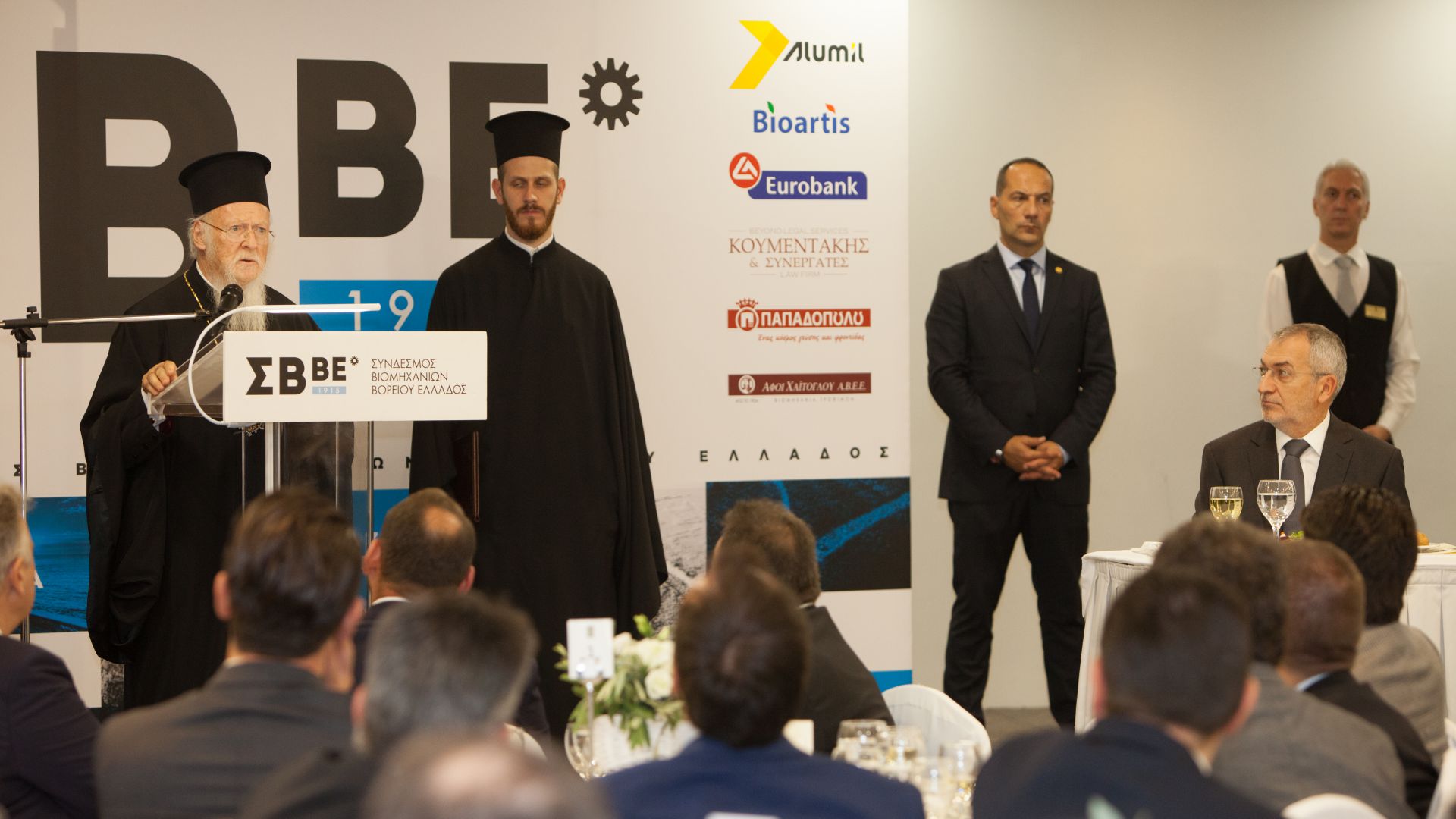
    Koumentakis & Associates Law Firm participated in the official dinner organized by the Federation of Industries of Northern Greece – FING to honor the Ecumenical Patriarch of the Holy Synod Bartholomew, in the context of the anniversary of 100 years of the founding of the Federation. At the event, which took place in Thessaloniki and was attended by more than 400 people, Koumentakis & Associates Law Firm participated by the presence of prominent representatives of the city’s business community and of the Firm’s top executives.

    Address by Mr. Savvakis, President of FING

    Mr. Savvakis, President of FING, addressed the event and stated that there are solutions for all the moral, social and financial problems as long as such be sought with understanding and with respect. With distinction and patience. In this context, he spoke about the emergence of the solidarity of the members of the FING and the successful operation of the Social Solidarity and Relief Network.

    Finally, he stated thatι: “… I assure you your Holiness that our faith to the institution of the Ecumenical Patriarchate has been in the previous 100 years, is today and shall always remain in the future unwavering. As unwavering will remain the respect, honor and love of all of us towards you …”.


    The speech of the Ecumenical Patriarch Bartholomew

    During his speech, the Ecumenical Patriarch, Bartholomew praised FING’s offer to the society of Northern Greece and the country. He then stressed that the Federation, with its foundation and its operation, sends an important message to modern society, namely that “… it is necessary to all us join in order to succeed as individuals and as a whole …”.  He then urged the members of FING to focus mainly on the social offer and wished the Federation to always walk on this tradition, becoming “… the associate of God …”  in the work of Diakonia of others.


    100 Years of Federation of Industries of Northern Greece

    (extracts from the introductory message of President Mr. Athanasios Savvakis)

    100 years ago, nine major industrialists in Thessaloniki, “… following an exchange of thoughts on joint action in support of domestic industry …” decided to establish the “Association of Macedonian Industries” that its transformation in time is the current “Federation of Industries of Northern Greece – FING”.

    The historical course of the Federation teaches us the most, through the example and the innovative thinking of these people, who worked in difficult times, with vision, with hope and with devotion to duty. It honors the bold people for what they inherited: trading ethos, co-operation spirit, investment courage, honesty, social responsibility, genuine entrepreneurial spirit …

    The Federation has supported and continues to support the “right” for the whole, by removing corporatism, taking into account future developments and thus, over the years, it has been an active social partner that has always shown its adaptation to national and international developments. FING has an important role in the economic development and social reality of Thessaloniki initially, then in Northern Greece and, ultimately, of the entire country.

    The legacy of previous generations and the prevailing economic and social conditions require that we first and then through us, the society, to believe in the capabilities of the North-Hellenic industry. That is why we have to work – and we will do work – harder than ever for the development and growth of the industry in Northern Greece.

    It is our own promise for the future. [/vc_column_text][/vc_column][/vc_row][vc_row][vc_column][vc_text_separator title=”Gallery” border_width=”3″][/vc_column][/vc_row][vc_row][vc_column][vc_images_carousel images=”36255,36277,36259,36279,36273,36275,36269,36267,36265,36263,36261,36281″ img_size=”” speed=”6000″ slides_per_view=”6″ hide_pagination_control=”yes”][/vc_column][/vc_row]

  • Company’s Capital Enhancement: Partnership With An Investor

    Company’s Capital Enhancement: Partnership With An Investor

    [vc_row][vc_column][vc_column_text] An option to finance a company’s investment plans (either it is a startup or not) is its capital enhancement. When the entrepreneur has funds and chooses to invest and keep his course alone things are, generally, simple. Thus, sometimes he is forced or chooses to partner with an investor looking to his enhancement and support. The investor can be either an individual or a business venture (eg venture capital).

    How An Investor “Enters” Into A Company

    An investor’s entry into a corporate scheme (let’s limit it to a Société anonyme) can be made in different ways. The purchase of existing shares or the participation in the share capital increase are the most common ones. There is, in addition, the case of a bond loan convertible into shares when the lender exercises its relative right to convert its financial claim into shares.

    Investor’s Participation In Capital Enhancement

    In each case of an investor’s entry into the share capital of a company, some of the first issues to be clarified are:

    (a) if the shareholding shall be a minority shareholding or a majority shareholding,

    (b) what will the amount to be paid by him be, and

    (c) what will be the percentage of the share capital to which his participation shall correspond.

    Please note that some percentages of the share capital are assessed as critical for the operation of a Société anonyme, with the clarification that when we refer to majority shareholding as a mean of participation, we may face the issue of the company’s acquisition. Additionally, the investor will always aim to an increased number of shares, while the entrepreneur to the less possible. From the legal perspective, there are always the appropriate tools to implement the object of the (participation) agreement.

    Common Objective And Investor’s Assurance

    The main reason for any investment (either of a high or of a low risk) is earning business profits.


    The profit (: common objective) is interwoven, among other things, with the successful implementation of the business plan, which has been agreed between the entrepreneur and the investor. It also corresponds to the percentage of the share capital each one of them holds as well as to the policy for the distribution of profits.

    The investor always claims, in order to safeguard his interests:

    (a) close and multilevel monitoring of the operation of the company (including the legal and financial aspects of the company’s operation),

    (b) participation in the administration and formulation of the (company’s) strategy,

    (c) a veto right in critical decisions,

    (d) shareholders’ commitments (e.g. limitation or prohibition of the transfer of shares) and so on.

    Exit strategy

    The investor often seeks a binding agreement with regard to earning his profit and to withdrawing from the investment. This agreement (also known as the “exit strategy”) includes, among other things, the time, the conditions and the amount the investor expects to receive at the time of withdrawal.

    Contractual Framework

    For the success of such a venture, it is necessary to have secure contractual commitments, an extraterrestrial shareholder agreement and / or statutory amendments. A crucial parameter for the success of the whole venture is always the detailed and accurate recording of everything that has been agreed, the rights and obligations of each party. In any case, it is desirable that the parties involved do not appeal to third parties for the interpretation and implementation of the agreements, at any time in the future.

    stavros-koumentakis

    Stavros Koumentakis
    Senior Partner


    P.S. This article has been published in Greek in MAKEDONIA Newspaper and portal makthes.gr (October 9, 2018)

  • Startups: Financing, Risk and Sustainability

    Startups: Financing, Risk and Sustainability

    [vc_row][vc_column][vc_column_text] Startups: business ventures (emerging and usually promising) in the early stages of their operation. In Startups the subject of activity is almost always highly original, pioneering but also high risk-high reward.

    Startups Financing

    A business idea, as innovative, dynamic and promising as it may be, needs capital to be translated into a business venture and profit. Such capital, sometimes less and other times more important, may come from the savings of the “startupper” or from its close environment.

    Thus, the case of financing coming from the startupper’s close environment is not the most common one. Alternatively, financing comes from:

    (a) Business Angels. “Angel investors” are the ones who, first and above all will believe in the innovative idea and will agree to fund it. Angel investors will undertake high risk, acting individually or organized into an angel fund.

    (b) Venture Capitals. It is an organized fund of investors, with high-level professionals. In addition to capital, experience and knowledge in strategic, development, sales, administration, operation, marketing, and other issues, are also provided.

    (c) The Crowdfunding platforms. The “crowd” funding will come from the use of an on-line platform. The participants fund the idea with small amounts each. In Greece there is a relevant legislative provision thus with limited implementation to date.

    (d) Banks. This is not a common ase in our country, as banks typically look to finance existing businesses long established and with good-standing financial data.

    (e) The European Union. These funds are channeled directly or through programs managed at national level.

    (f) Business Incubators. Business Incubators usually provide support at a practical level (premises, furniture, equipment, administrative support, contacts) or/ and short – term support and financing.

    startups-funding

    Risk

    It is not reasonable for a young, optimistic and promising entrepreneur to expect the financing and support of an investor (or of a simple lender) without being ready to take the risk. And the specific risk concerns the provision of adequate collateral (personal or real – when available). It also refers, most commonly, to the commitment of an important part of the business and of his business freedom. This can be translated into a transfer to the investor of a part of the company’s share capital, into accepting drastic restrictions on making business decisions etc.


    Startups’ Sustainability

    The interests of the contributor / investor and the entrepreneur are partly identical and partly conflicting. The sustainability of the start-up is a common goal. The rapid and lucrative exploitation of the business idea as well. What will happen, however, if there are conflicts over the range of powers of each party? How to deal with the investor’s claim for collateral or with the pressure to restrict the business freedom of the startuper who is also the owner of the idea?

    In a country where 50% of startups fail within three years, the assistance of appropriate consultants is proving critical. Especially from a legal perspective.

    stavros-koumentakis

    Stavros Koumentakis
    Senior Partner


    P.S. This article has been published in Greek in MAKEDONIA Newspaper and portal makthes.gr  (September 30, 2018)

  • Digital Employability: Two Years of Offer!

    Digital Employability: Two Years of Offer!

    [vc_row][vc_column][vc_column_text] The Alliance for Digital Employability (AFDEmp) has recently celebrated the anniversary of the two-year offer to young and unemployed people; KOUMENTAKIS & ASSOCIATES participates in this Alliance by offering Legal Support. To date, more than 200 unemployed graduates have been recruited and are now working as Developers!

    Two Years Of Offer To Young And Unemployed People

    The Alliance for Digital Employability is being implemented with the Vision of reducing unemployment in Greece through the creation of new jobs in the IT sector. The actions of the initiative aim to (a) accelerate the training of candidates in high-quality digital skills, (b) certify the skills they have acquired, and (c) the absorption of the candidates by the labor market.

    Today, through Alliance For Digital Employability (AFDEmp) actions, more than 200 unemployed graduates have been re-qualified. People with a different educational background (from mathematicians and physicians to theologists and nurses) have gained access to IT knowledge that is in high demand and have already been hired as well-paid developers in major Greek companies participating in the program.


    The Contribution of KOUMENTAKIS & ASSOCIATES Law Firm

    KOUMENTAKIS & ASSOCIATES Law Firm participated from the very beginning and continues to provide full legal support to this important for our country initiative. The two-year anniversary event was attended by Stavros Koumentakis, Senior Partner and by Lambros Timotheou, Partner of the firm.

    In his statement, Stavros Koumentakis said “We fully identify the Vision of the Alliance For Digital Employability (AFDEmp). Improving the capabilities of human resources and acquiring modern knowledge as a means to improve employability form one of the pillars of our Social Solidarity Program. In KOUMENTAKIS & ASSOCIATES Law Firm we believe in Lifelong Learning and we are committed to supporting all those who create access to it. I warmly congratulate Mr. Byron Nicolaides, President of the BoD of the Council of European Professional Informatics Societies (CEPIS) for his tireless efforts in recent years to help reduce the digital divide and thereby reduce unemployment. I also thank Mrs. Eleni Nicolaides, Head of Action and founding member of AFDEmp, who gives us the opportunity to contribute in practice to the implementation of the actions and the achievement of the objectives of this initiative”. 


    The Alliance for Digital Employability

    AFDEmp is a voluntary initiative of the President of the BoD of the Council of European Professional Informatics Societies (CEPIS), Mr. Byron Nicolaides, of the distinguished academics of the Athens University of Economics and Business, Mr. Giorgos Doukidis, Mr. Diomidis Spinellis, Mrs. Katerina Pramatari, Mr. Panos Louridas, of the President of HePIS, Mr. Nikos Faldamis, of the Director of HePIS, Mrs. Eleni Nicolaides, along with the participation of more than 200 companies and business entities.

    The objective of AFDEmp is to help tackle unemployment while at the same time help also all those who want to change their career through their rapid training in high-quality digital skills. The idea for the initiative was born out of a special study conducted – under the aegis of CEPIS – by the Athens University of Economics and Business, ALBA and HePIS. According to the findings of the study, youth unemployment as well as the gap between supply and demand for technological skills can be addressed through re-training.


    “The Private Initiative To Help Tackle Unemployment”

    This was the central message of Mr. Byron Nicolaides, President of the BoD of the Council of European Professional Informatics Societies (CEPIS) and Head of PeopleCert Group, worldwide, who stated, among other things, “A European need, a Greek opportunity took shape thanks to the alliance of the European Informatics, their Greek colleagues, of academics and of the most important Greek companies. It is now necessary for a company to be able to manage and make full use of the tools offered by new technologies. In this context, we, through AFDEmp, train young professionals by encouraging them to broaden their professional horizons. I am sincerely proud of what we have done together so far. I think that, we, as a private initiative, are laying another brick to shape the next day in the country by tackling the phenomenon of unemployment “.

    HePIS President Mr. Nikos Faldamis said that through AFDEmp an institution has been created that overturns the existing path and turns digital skills into a major opportunity for growth and employment of the new workforce”. Mr. George Doukidis, Professor at the Athens University of Economics and Business, pointed out that such initiatives contribute to: (a) encouraging young people to dare change their professional field by moving to modern fields such as Information Technology and Programming; and (b) encouraging companies to invest in the new generation by employing people who have acquired the appropriate knowledge.


    The Event And The Awards

    The Alliance for Digital Employability (AFDEmp) event was attended by more than 150 representatives of the most important companies in Greece and of the most promising in the fields of Information Technology and Technology. AFDEmp honored the collaborating companies, as a practical acknowledgment of their contribution to this effort, while the event was honored by their presence: the President of GRNET (National Network of Research and Technology) and Professor of the National Technical University of Athens Mr. Panagiotis Tsanakas, the President of the Hellenic Company Logistics Mr. Nikos Rodopoulos, the President of GRECA Mrs. Katerina Fredaki, the General Manager  of HAMAC Mr. Yannis Giannarakis,  the General Secretary of CIO Forum Mr. Michalis Moraitis, and others.

    The 32 companies that has been awarded at the event are: Accenture, ATCOM, CANDI, Cognity, Connectline, Cosmos Business Systems, Data Communication, Epsilon Net, Eurobank, EY, Generation Y, iKnowHow, Intralot, INTRASOFT International , iteam,  JR Technologies, Mellon Group of Companies, Novibet, Omilia, PeopleCert, Printec, Prisma Electronics, Profile Software, Programize, QIVOS, Retail Link, SIEBEN, SingularLogic, SoftOne Technologies, Ulysses Systems, Uni Systems, Upstream.


    To Conclude

    The effort continues. The courses of Coding Bootcamp 6 begin on October 1, 2018.

    [/vc_column_text][/vc_column][/vc_row][vc_row][vc_column][vc_text_separator title=”Gallery” border_width=”3″][/vc_column][/vc_row][vc_row][vc_column][vc_images_carousel images=”33528,36051,36049,36047,36043,36041″ img_size=”” speed=”6000″ slides_per_view=”4″ hide_pagination_control=”yes”][/vc_column][/vc_row]

  • The Newspaper MAKEDONIA Is Back With Us

    The Newspaper MAKEDONIA Is Back With Us

    [vc_row][vc_column][vc_column_text] The historical newspaper MAKEDONIA is again since the 9th of September in kiosks and in Koumentakis & Associates Law Firm we feel very happy to support its success as Legal Advisors.

    With the comprehensive legal support of Koumentakis & Associates Law Firm, the historical newspaper of Thessaloniki (and Northern Greece) is back in the kiosks, while its online version www.makthes.gr has been already … released (since 3 September). As Stavros Koumentakis, Senior Partner, characteristically said, “The dream came true. Thanks to innovative partnerships, innovative planning and tireless efforts. In “Koumentakis & Associates” we feel a special honor that the participants have trusted us with the legal dimension of the whole project and, above all, we are proud that we have provided our small contribution to the realization of the dream. Wishing “BEST OF LUCK”, let’s enjoy the amazing journey together …”.


    The project

    εφημεριδα μακεδονια ιστορικη αξιοπιστη

    The efforts to re-issue the newspaper MAKEDONIA began almost immediately after its suspension. A team of 24 employees with vision and plan moved quickly. They decided that there was a need for a scheme that would not be based on self-managed practices or on classic investment. The ideal scheme would make the most of the employees of “MAKEDONIKI” but would be financed by businessmen.

    Employees ensured the right to use the titles of the two newspapers in Thessaloniki in exchange for a portion of the accrued that the company owed to its employees. They then created a Social Cooperative Enterprise (SCE) and finally sought funding. In order to re-issue the newspaper MAKEDONIA, it was necessary to engage with entrepreneurs doing business in the area of ​​Northern Greece. In the context of building this partnership, a fully-fledged business plan was created that guarantees the viability and prospect of the venture. It is worth noting that the profits of SCE will be distributed in the following way: 33% for employees, 33% for reinvestment for development activities in the same context (e.g. publication of pullouts) and 33% as a reserve for further growth.


    The Stakeholders

    “None of the twenty entrepreneurs involved in the project expect profit or other economic benefits. The multiplicity of the project combined with the quality of the entrepreneurs and the journalists involved in it guarantee the validity of the information” says Vassilis Takas, industrialist and chairman of the new publishing company’s Board of Directors.

    Such an innovative publishing model requires an overcoming of the rigidities of the past. “We want to overcome the old stereotypes about “bad bosses”. Entrepreneurs, for their part, have to avoid a speculative logic and stop fearing of the wage costs”, says Michalis Alexandridis, publisher and director of the publishing project. “I think that we are all in the same vein, and that, will benefit the city and the media. We are all committed to abstain from practices that have been established and still plague the country, such as nepotism, bribery and corruption. We believe that the new media will respect their heavy names, their history and their ties with the Thessalonians and the Northern Greeks in general”.

    The 11-member board of the company that will issue the newspaper MAKEDONIA and will be responsible for the operation of makthes.gr was formed as follows: Vassilis Takas President. Michalis Alexandridis executive vice president – publisher – publishing director. Hasdai Kapon vice president. Leonidas Fakas Vice-President. Panagiotis Alexandridis Managing Director. Members: Yiannis Masoutis President of the Chamber of Commerce and Industry of Thessaloniki (TCCI). Thanasis Savvakis President of the Federation of Industries of Northern Greece. George Konstantopoulos, President of Exporters’ Association of Northern Greece. Giorgos Bikas President of Imathia Chamber of Commerce. Panayiotis Menexopoulos Secretary General of the Chamber of Commerce and Industry of Thessaloniki (TCCI). Stavros Koumentakis lawyer – legal advisor of the company.

    Statement by Stavros Koumentakis In the Newspaper

    δηλωση σταυρου κουμεντακη στην εφημερίδα μακεδονια

    “From early on I believed in the project of re-publishing the historical newspaper of our city, and that not for emotional reasons. The certain needs of our city, the breadth of the shareholders structure, the severity of the investors-shareholders, the inability to promote personal or party strategies, the technocratic approach of the stakeholders and, above all, the brilliant journalistic group and its dynamics are the necessary, adequate and capable elements for success. We are happy about the first edition, confident of the result and proud to contribute aligned behind the press team, fulfilling a debt to the city. I take it for granted that also the Thessalonians will embrace the effort with equal fervor.”

    The Historical Newspaper MAKEDONIA

    The newspaper MAKEDONIA is the oldest political newspaper in Northern Greece. It was founded in 1911 (its first edition was published on July 10, 1911 – with the new calendar on July 23, 1911) by the publisher Konstantinos Velidis. After his death (1936) his son, John Vellidis, took over. After the death of the latter (1978), his wife, Anna Vellidi, took over and from 1980 her daughter Katerina Vellidi. In the summer of 1996, the newspaper was closed down because of indebtedness, to be then re-released in early 1998 by its new owner, businessman Yannis Raptopoulos. The newspaper suspended its issue in October 2017 and was re-released on September 9, 2018.

    In the head of the newspaper, succeeding Konstantinos Dimadis, a historical figure for the family of journalists, who served as editor-in-chief and director of the newspaper for 62 years (1931 to 1993), were also the journalists, Nikos Vourgountzis, Giannis Nikolopoulos, Lazaros Chatzinakos, and many others . Dimitris Chourmousios, Dimitris Psathas, Kostis Palamas, Stratis Myrivilis, Georgios Vafopoulos, Archelaos and others were among the newspaper’s associates in the past.

    The leads of the newspaper include the introduction of an early form of monotonic system, many years before its establishment as the official written usage of the Greek language as well as the fact that it was the first Greek newspaper to be published online. [/vc_column_text][/vc_column][/vc_row][vc_row][vc_column][vc_text_separator title=”Gallery” border_width=”3″][/vc_column][/vc_row][vc_row][vc_column][vc_images_carousel images=”36012,36014,36010,36016″ img_size=”full” speed=”6000″ slides_per_view=”5″ hide_pagination_control=”yes”][/vc_column][/vc_row]

  • Entrepreneurship Program Of Mandoulides Schools

    Entrepreneurship Program Of Mandoulides Schools

    [vc_row][vc_column][vc_column_text] For a second consecutive year, “Koumentakis & Associates Law Firm” cooperates with Mandoulides Schools within the framework of the latter’s Entrepreneurship Program. The program is implemented with the aim of enhancing experiencing vocational guidance for students over 16 years of age.

    Within the framework of the Entrepreneurship Program of Mandoulides Schools, “Koumentakis & Associates Law Firm” hosted for 4 weeks the student Mr. Konstantinos Zissis, who attended the main activities of the firm and was informed about issues related to the scientific subject.

    The Entrepreneurship Program In Koumentakis & Associates

    In our firm, we are delighted to participate in the innovative Entrepreneurship Program of Mandoulides Schools. We are proud to actively participate in the effort of talented and promising young people to meet with attorneys and legal advisors into active action. We believe that by participating in experiencing education and by supporting such initiatives, we contribute to the decision-making process for proper studies and immediate professional reintegration.

    Koumentakis & Associates Law Firm encourages the experiencing education and development of pupils and students through work. Within the firm’s environment, trainees feel new experiences, explore their professional interests and develop new skills. At the same time, they have the opportunity to get acquainted with tools and methods that help them acquire assets of great value.


    The Entrepreneurship Program Of Mandoulides Schools

    Mandoulides Schools give special attention to experiencing education while remaining faithful in the provision of high educational services. The pioneering Entrepreneurship Programs have been created to connect their students with innovative organizations and companies in the region and learn through them.

    Partners of KOUMENTAKIS & ASSOCIATES Law Firm and Victoria Pervizou-Head of Entrepreneurship Program of Mandoulides Schools attend the presentation of Constantinos Zisis.


    The Entrepreneurship Program And Experiencing Vocational Guidance

    The Entrepreneurship Program of Mandoulides Schools  is part of the experiencing school vocational guidance, which is cultivated in the Schools through a series of actions (Three-day School Vocational Guidance, educational visits and projects under the STEAMulator program, 100 Mentors) aiming at better information, but also the acquisition of experiencing knowledge.

    The duration of the programs is four weeks divided into two phases. In the first phase, students are introduced to the basic principles of operation of a company. In the second phase of the Programs they acquire experience in its premises, with daily presence, participation in meetings, dialogue with executives and familiarity with the subject.

    [/vc_column_text][/vc_column][/vc_row][vc_row][vc_column][vc_text_separator title=”Gallery” border_width=”3″][/vc_column][/vc_row][vc_row][vc_column][vc_images_carousel images=”35587,35583,35580,35577″ img_size=”” slides_per_view=”3″ autoplay=”yes” hide_pagination_control=”yes”][/vc_column][/vc_row]

  • Voluntary Benefits In The Context Of Modern Labor Relations

    Voluntary Benefits In The Context Of Modern Labor Relations

    [vc_row][vc_column][vc_column_text]

    Voluntary Benefits: “What is, ultimately, in force?”

    The offer of benefits to an employee, in addition to the agreed salary

    (whether this is the statutory or higher than that), is a practice of several employers, which in the last years of the deep economic crisis tends to become an established practice.

    These benefits are classified as “voluntary” and may be a certain amount of money, a benefit in-kind (e.g. vouchers for supermarket purchases, food, meals during work) or even an expenditure on behalf of the employee (e.g. conclusion of a group insurance contract and payment of the premiums).

    As a result of this practice, the employee receives the salary agreed with the employer and in addition, actually, earns more “income” during the employment relationship, which is valued at the amount of the benefit offered. The fact that these benefits are paid in the course and because of the employment relationship, often gives rise to a confusion as to their nature and, in particular, to whether they can be characterized “salary” for the employee.

    The answer to this question is not simple and has repeatedly addressed the Greek courts at the highest level. However, it should be noted that this question has, even beyond the legal, also a business- and of course economical dimension, as for many entrepreneurs the adoption or not of such a choice, is a central question.

    An initial response to these questions is attempted here.


    Is it an Employer’s Right Or Obligation?

    In principal, the offer of these (voluntary) benefits takes place in the context of the exercise of the employer’s freedom to give to the employee “something extra” to the salary that has been contractually agreed upon. Thus, the employer (should) be able to discontinue the offer of each voluntary benefit at any time and without providing any reason while the employee cannot be able to raise a claim for the continuance of such offer.

    However, it is possible that the offer of a voluntary benefit become a business practice (custom) due to its continuous and long-term granting and to its acceptance by the employee, which results in a tacit agreement between the employer and the employee that the benefit is part of the latter’s salary. In this case, the employer is obliged to offer the benefit and can no longer stop granting it unilaterally.

    However, if the employer, at the beginning of the offer of a benefit, makes it clear to the employee (e.g. in the employment contract) that he reserves his right to discontinue its grant at any time, without justification and without the agreement of the worker, thereby formulating the so-called “reservation of liberty”, it cannot – in any event – be considered that the benefit has a salary nature and therefore the employee will not be entitled to claim its payment.


    Employer’s “Reservation of Liberty” And “Withdrawal Clause”:
    The Distinction of the Legal (And also Economical) Consequences of Each

    The Arios Pagos (Supreme Court of Cassation) for the first time its decision with the no. 1174/2017 separated the concept of the “reservation of liberty” from that of the “withdrawal clause” which the employer may enter at the beginning of the granting of a voluntary benefit.

    In the case of the “withdrawal clause”, the employer may discontinue the benefit by exercising the right to withdraw by a unilateral declaration addressed to the employee. As a result, both the “reservation of liberty” and the “withdrawal clause” allow the employer to unilaterally discontinue the offer of the benefit.

    There is, however, a substantial difference between them: Entering a “reservation of liberty” rules out the creation of a business practice (custom) and thus implicit contractual commitment of the employer to provide a benefit and the employee’s corresponding claim for its payment. On the other hand, entering a “withdrawal clause” does not function in the same way: the employee’s entitlement to the benefit is born thus the exercise of the right of withdrawal results in the loss of that claim for the future.

    As soon as the worker becomes entitled to the benefit, this amount should be taken into account for the purposes of determining both the severance allowance and also any other benefit of the employee provided by law and for the determination of which the amount of the salary paid is taken into consideration (indicatively: ad hoc bonusses). As the choice of one or other clause has direct financial consequences for the burden on the business, the particular value of this distinction is easily understood.


    dikhgoriko-grafeio-koumentakis-kai-synergates-law-firm-

    The Real Dimensions of Voluntary Benefits in Labor Relations

    More and more companies, burdened by the unreasonably diverse charges on business nowadays, seem to face voluntary benefits as a means of limiting their contractual obligations towards their employees and hence saving (or potentially saving) costs. The procedure followed is more or less common for both the current employees of the company and for those in recruitment: both are required to accept as a fixed remuneration a certain amount, which is however split down to the statutory minimum wage (which will be mentioned in the employment contract) and to the remaining amount that (explicitly or implicitly) will be offered to the employees as one of the above-mentioned types of voluntary benefit.

    On the one hand, the current employees agree to sign an amendment to their contract of employment, in which the reduction of their salary to the statutory minimum is recorded, while the ones in recruitment agree to sign a contract of employment accepting the statutory minimum salary as a conventional salary. Both categories of employees aim at more permanent compliance with the additional voluntary benefit, which will complement the amount of the agreed salary.


    Voluntary Benefits: Its Tax Treatment

    As far as taxation is concerned, the legislator does not deal with the voluntary benefits in a consistent way. In principle, the general taxing rule applies for their taxation, if their value exceeds € 300,00 per year. However, the sub-cases of how to determine their value, but also the explicit exceptions to the rule, are several (and related to the amount of benefits per category envisaged), so that the employee must search in which sub-case the benefit he receives is categorized in order to know if he will be taxed for this benefit. A typical example of this is the coupons for food (i.e. the widely used coupons for the supermarket), which are not taxed if they do not exceed € 6,00 per day, or € 120,00 per month.

    For the tax legislator, therefore, the legal characterization of the benefit is irrelevant, but the amount of the benefit is particularly important.


    By Way Of Conclusion

    The choice of companies to offer voluntary benefits under employment contracts (whether offered freely or freely withdrawn) is increasingly adopted in the context of a reasonable effort to derive a legitimate benefit or to reduce unfair costs. In any case, particular attention should be paid to the wording of the relevant provisions and clauses in order for the maximum benefit to be achieved and for the risk to be minimized.

    The contribution of the lawyer (and in this case) also legal advisor is particularly important.

    Evdokia Kornilaki
    Senior Associate

    [/vc_column_text][/vc_column][/vc_row]

  • Participation in SAMARAS & PARTNERS’ Workshop for GDPR

    Participation in SAMARAS & PARTNERS’ Workshop for GDPR

    [vc_row][vc_column][vc_column_text] KOUMENTAKIS & ASSOCIATES Law Firm was invited and participated in the workshop for GDPR organized by SAMARAS & PARTNERS, in which Mr. Constantinos Kornilakis, Partner of KOUMENTAKIS & ASSOCIATES, made a presentation entitled “Introduction to the institutional framework for the protection of personal data: Rights and Obligations”.

    The workshop, which has been a great success, was held at the Thessaloniki International Fair (TIF) with the support of the Exporters’ Association of Northern Greece and had the topic “The New European Regulation for the Protection of Personal Data (GDPR) and Useful Tools for Cyber Risk Insurance”.

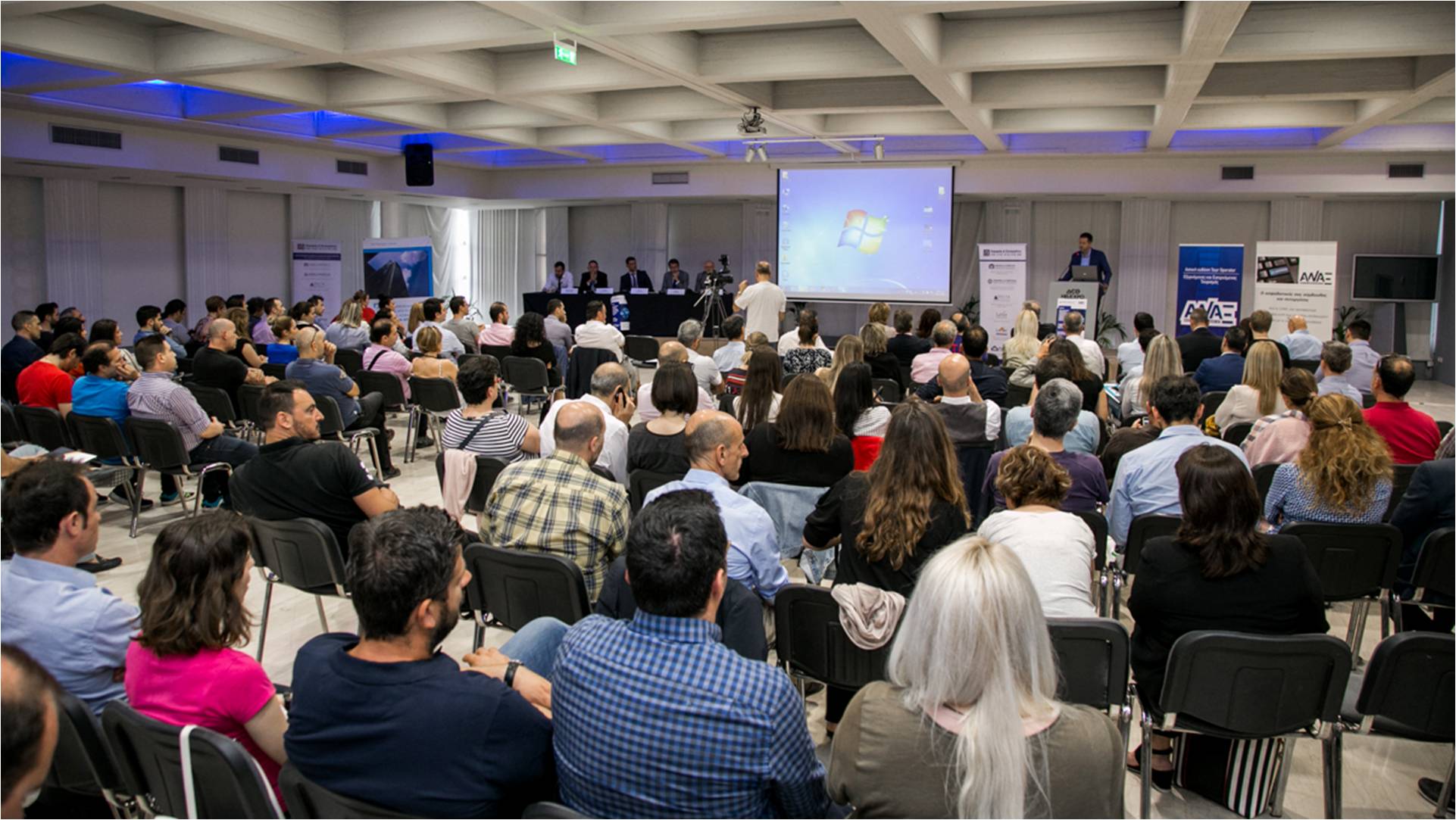
    hmerida-samaras-for-gdpr-speakers-panelThe purpose of the workshop for GDPR was to inform companies on the requirements of Regulation 2016/679 (GDPR) and on the basic guidelines and actions that each company should take to comply with the Regulation. In addition, useful tools for cyber risk insurance were presented by AIG GREECE.

    Mr. Grigoris Tassios, President of the Panhellenic Federation of Hoteliers, and Mr. Kyriakos Loufakis, President of the Exporters’ Association of Northern Greece, welcomed the participants and contributed to raising awareness and concerns of the stakeholders and in this context, of the entrepreneurs, scientists and representatives of the organizations that attended the workshop. The event was dynamic, and the participants contributed in a constructive manner to the exchange of views and the promotion of fruitful dialogue.

    hmerida-samaras-for-gdpr-speaker-samaras

    The opening statements of the workshop for GDPR were:

    • “Introduction to the institutional framework for the protection of personal data: Rights and Obligations”, Constantinos Kornilakis, Partner of KOUMENTAKIS & ASSOCIATES
    • “Requirements – Harmonization Guidelines – Indicative Technical and Organizational Measures”, Christoforidis Giorgos, General Manager of SAMARAS & ASSOCIATES LTD
    • “Cyber Risks and Personal Data Leakage: The Last Line of Defense”, Kostas Voulgaris, Financial Lines & Casualty Manager of AIG HELLAS

    hmerida-samaras-for-gdpr-the-team

    [/vc_column_text][/vc_column][/vc_row]

This site is registered on wpml.org as a development site. Switch to a production site key to remove this banner.