Blog

  • Violence and harassment at work: Their (reasonable as well as self-evident) ban

    Violence and harassment at work: Their (reasonable as well as self-evident) ban

    Absolutely no one was waiting for the voting of the recent, but also particularly important, law on labor relations (Law 4808/21, Government Gazette A 101 / 19.6.21) to be informed of the existence of incidents of violence and harassment in the workplace. The phenomenon is as old as work itself. Accepted in the past, tolerated later, reprehensible and punishable today. The “me too” movement drastically contributed to the acceleration of the relevant regulations. What is its management by the legislator? In this article we will deal with the extent of this phenomenon, the basic concepts, the obligations of the employer, the new (expanded) role of the Occupational Physician. Also, the relevant (now mandatory) Policies as well as the (necessary) provisions of the Labor Regulations. The subject, due to its extent and seriousness, will be “closed”, in an article to follow, with the rights of the affected persons and the (expanded) role of Labor Inspectorate.

    The extent of the phenomenon

    We should probably state that we are surprised by the results of the research on workplace bullying that was recently conducted (25.2 / 1.3.21) by Kappa Research on behalf of MRK Consulting and was presented, among others, to the members of Hellenic Human Resources Management Association. Not that we did not know about the phenomenon. We did not imagine, however, its extent.

    Here are just a few of its striking conclusions:

    85% of the participants (men and women) consider that the phenomenon of workplace bullying is so widespread that it is a serious social problem.

    Participants state that they have suffered or perceived to take place: inappropriate comments of sexual nature – 19% of participants (but 29% of women), physical violence – 9% (: 10% of women), suggestions of sexual content as a prerequisite for professional development -7% (: 12% of women), sexual assault -3% (: 5% of women).

    It is more than obvious that violence and harassment in the workplace mainly, but not exclusively, affects women.

    Four out of ten employees (both in the private and public sectors – 46% are women) say they have been the target of workplace-related bullying (more often: verbal violence, job degradation and gossip – not least sexual harassment and physical abuse).

    Nearly one in two employees who reported being bullied at work are still employed by the business (or organization) in which they were targeted, and about 20% of victims continue to experience bullying, even today.

    The reaction of the colleagues of the victims is interesting – in two ways. 43% of the victims state that their colleagues, in addition to the main source, participated in their bullying. On the other hand: only 52% of the victims received support from their colleagues.

    And as for the management of the business: usually it knows but it does not react. Only 1 in 10 businesses take effective action after a bullying incident.

    Prohibition of violence and harassment

    Therefore, taking into account the size of the problem, we read with satisfaction in the specific, mentioned in the introduction, legislation: “All forms of violence and harassment, which occur during work, whether associated with it or arising from it, including violence and harassment due to gender and sexual harassment are prohibited.” (Article 4 §1).

    But what is violence and harassment?

    According to the law (art. 4) “violence and harassment” are behaviors, acts, practices or threats that aim or may lead to any form of harm (: physical, psychological, sexual or financial) of the victim.

    “Harassment” is behavior that aims at or may lead to a violation of the dignity of the person and the creation of a problematic environment for the victim and, finally,

    “Harassment due to the gender of the victim” is gender-related behaviors that target or violate a person’s dignity and create a problematic (intimidating, hostile, degrading, humiliating, or aggressive) environment. This includes, but is not limited to, sexual harassment, as well as behaviors associated with sexual orientation, expression, identity, or gender characteristics.

    Field of application

    The specific law covers (a. 3) the employees in the Private and Public Sector. It covers all employees, trainees, apprentices, volunteers and even those looking for work and the uninsured.

    Prohibition of violence and harassment; where?

    Prohibited violence and harassment may take place (a. 4):

    (a) in the workplace (where, for example, the employee works, takes a break, in personal hygiene and care areas, in locker rooms, even in accommodation provided by the employer),

    (b) while commuting to and from work and even during travel, education and work-related events and social activities; and

    (c) in communications related to work of any nature (face to face or using technology or computers).

    What are the obligations of the employer – in general

    Employers (and those who represent them) are obliged to (art. 5):

    (a) show zero tolerance for violence and harassment;

    (b) receive, investigate and manage any relevant complaint in confidence and with respect;

    (c) provide assistance to any competent authority upon request;

    (d) provide employees with information on potential related risks and prevention and protection measures (including: obligations and rights of employees and employer);

    (e) post in the workplace and make accessible information on relevant procedures at business level as well as the contact details for the competent authorities.

    The obligation of the employer to inform the employees

    Employers are obliged (art. 6) to inform their employees about the legislation on health and safety at work and how it is implemented by the business. Also, they are obliged to inform them about safety and health risks but also about protection and prevention measures and activities. It should be noted that the specific risks and measures include those for combating violence and harassment at work (of course, sexual harassment included).

    The obligation of the employer to assess risks and take measures

    The employer is obliged (among other things a. 7 / a. 42 §6 law 3850/2010) to:

    (a) draw up a plan of preventive action and improvement of working conditions in the enterprise;

    (b) assess psychosocial risks, including violence and harassment and sexual harassment; and

    (c) take measures to prevent, control and mitigate these risks.

    The (new) responsibilities of the Occupational Physician in matters of violence and harassment

    The occupational physician must now (d. 8 / d. 17 §2 & 18 §2 law 3850/2010) (also) advise on issues of violence and harassment-including sexual harassment. They advise, inter alia, on the integration or reintegration of persons who are discriminated against or victims of violence and harassment.

    The occupational physician now supervises (art. 17 §2 law 3850/2010) and informs (also) on issues of violence and harassment-including sexual harassment. Also: they inform employees about the dangers of their job, as well as ways to prevent them, among which are the risks of violence and harassment – including sexual harassment.

    The occupational physician, finally, provides emergency treatment – including in cases of violence in the workplace.

    Policies to combat violence and harassment

    The law mentioned in the introduction establishes, for the first time (art. 9), the existence and implementation of Policies to combat violence and harassment. It is important to note that their implementation should take place no later than 19.9.21.

    The existence of these Policies is mandatory for businesses with more than twenty employees. They should, in fact, include the employer’s declaration of zero tolerance for violence and harassment. Also, the rights and obligations (of both employees and the employer) to prevent and deal with such incidents or behaviors.

    They also include (at least – among others): assessment of the relevant risks at work, measures for the prevention, control, reduction, treatment & monitoring of such incidents or behaviors and risks, information and awareness actions of the staff, mentioning of a liaison- responsible person for guiding and informing employees on such matters, the protection of employment and the support of employees – victims of domestic violence.

    Policies for managing internal complaints

    Along with the existence of policies for the fight against violence and harassment, the Policies for the management of the relevant internal complaints are also mandatory (article 10). Here, too, the policies mandatory for businesses with more than twenty employees are identified.

    These Policies concern the management as well as the process of receiving and examining the specific complaints (with respect to the protection of the victim and to human dignity).

    They include (at least) secure and easily accessible communication channels for receiving complaints, identifying the persons responsible for receiving them, examining and managing them. The policies ensure the investigation of the complaints with impartiality and the protection of the confidentiality and personal data of victims and complainants. They provide for the (absolutely necessary) prohibition of retaliation and further victimization of the affected person and the cooperation with the competent authorities. They determine the consequences in case of violation.

    Content of Labor Regulations and Business Collective Employment Agreements

    Policies for the prohibition of violence and harassment (a. 9) as well as those for the management of internal complaints (a. 10) should be the subject of collective bargaining (as the content of the General National Collective Employment Convention or the Work Regulations -a. 11). However, in the absence of trade unions and employees’ councils, the Policies are drawn up by the employer, after the latter informs the employees and posts the relevant policy draft in the workplace or notifies them, in order to receive their views.

    When there is a Work Regulation (or the obligation to draft one), its content must include provisions for disciplinary offenses, disciplinary proceedings and disciplinary penalties in the context of or following complaints of incidents of violence and harassment.

    The issuance of a Ministerial Decision with examples of the aforementioned Policies is expected (a. 22).

    Incidents of violence and harassment in the workplace have never disappeared. But in the past, they were treated as “normal”. Let us remember the 1963 film “Tis Kakomoiras” (aka “Bakalogatos“), the adventures of the (very much) likeable Zikos but also the behavior of his boss against him, which was in fact logically expected, as the former was “just the help”.

    Such phenomena must no longer be tolerated.

    Working women are, unfortunately, affected dramatically more than their male colleagues.

    The legislator belatedly and, rather, after having fallen behind, followed the trends of the time. The “me too” movement rightly affected working relationships as well.

    Employees should be and feel safe. Women and men.

    Of course, in the legislator’s attempt to protect the victims, some exaggerations were not avoided, but regarding them see our, relevant, next article.-

    Stavros Koumentakis
    Managing Partner


    P.S. A brief version of this article has been published in MAKEDONIA Newspaper (August 29th, 2021).


    Disclaimer: the information provided in this article is not (and is not intended to) constitute legal advice. Legal advice can only be offered by a competent attorney and after the latter takes into consideration all the relevant to your case data that you will provide them with. See here for more details.

  • Business Angels

    Business Angels

    The importance and value of Business Angels (: Angels Investors or Business Angels) in the development of entrepreneurship and the economy is well known worldwide. However, as the business and investment culture differs from country to country, the supply and use of funds from Business Angels appear different, respectively. We hope that the recent, albeit small, push of the relevant institution by the State will contribute to its (desirable) development. It is worth, on the occasion of the resurgence of the relevant discussions, to take a deep dive into the institution.

    Who are the Business Angels?

    Business Angels are, according to the European Commission, independent individuals with business experience, who choose to invest part of their fortune in new and promising (in their opinion) private companies. They invest individually or, alternatively, as part of a consortium, where one (possibly) most usually takes the lead.

    Business Angels do not only offer funds to the business. They also offer their experience, skills and contacts, in order to expand the business activity and, of course, their personal benefit.

    Business Angels and startups

    Business Angels play an important role in the global economy. In many countries they have a significant position as external financing sources for startups.

    In fact, they are proving to be increasingly important as providers of venture capital, contributing to economic growth and technological progress.

    It is well known that startups hope for and aim to the financing of Business Angels – not unjustly, as the data shows.

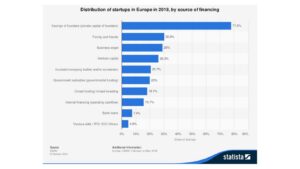
    The degree of penetration of Business Angels in the financing of startups in Europe is interesting as it results from a survey conducted on behalf of EBAN (: European Business Angels Network) and concerns the year 2018. The data presented in the table below are from this survey:

    Based on the data of the reference year (: 2018), almost 1/3 of the startups in Europe (more precisely: 29% of the total) utilized the financing and assistance of Business Angels. It is noteworthy that the latter (: Business Angels) fall short only of those cases in which the founders contributed the necessary funds (77.8% of the total), while a respective percentage of funding derived from investors in the category “Family and Friends” (: 30.2% of the total).

    The participation of Venture Capital in the financing of startups is significantly lower (: 26.3% of the total) while bank lending is rather negligible (: 7.4% of the total).

    Business Angels: how many are there?

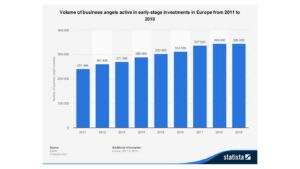
    It is interesting, however, to focus on the numerically growing presence of Business Angels, over the years, in terms of the early stage of investment in Europe. Relevant research of the same Organization (EBAN) deals, among other things, with this issue. Hence the data in the table below.


    From the above table we come, based on the available data, to two main conclusions: (a) that the approximately 240,000 Business Angels that were active in 2011 in Europe gradually reached 345,000 in 2018 & 2019 and (b) that their increase in numbers has been gradually halted in recent years.


    Business Angels, Large, and Small and Medium Enterprises

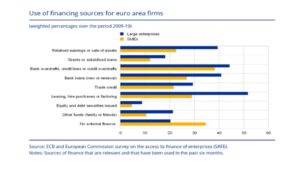
    And once we see the significant presence of Business Angels among the sources of funding for startups in Europe, it is worth taking a similar, quick look at Large and Small and Medium Enterprises (looking for them, respectively, among their sources of funding). Our source: The European Central Bank and its related research. Let’s focus on the table that lists their sources of funding:


    So, although Business Angels are, as we have already seen, significantly involved in startups, their involvment in larger companies (Small and Medium and Large) is completely non-existent. This fact is logically expected: the needs of these companies are extremely high and, in any case, inversely proportional to the capabilities of the Business Angels.


    The Business Angels in the USA

    The investment culture that characterizes the USA is of course different from the corresponding European one – much more the corresponding one of our country.

    The data from the Angel Funders Report 2020 seem very interesting:


    According to the Angel Capital Association: (a) Business Angels invest approximately $ 2.5 million each year in various businesses in the United States, (b) Business Angels business and financial assistance generates the background for achieving total funding of 2 billion USD from startups, (c) the total funding of 25% of startups comes from Business Angels and (d) in 40% of the new agreements that took place in 2019, Business Angels held a position in the management of the companies with which they came to an agreement.


    Business Angels in our country

    From what has been mentioned above, the importance of Business Angels worldwide, in Europe, of course in our country as well, seems absolutely obvious. Efforts to create a relevant Network in our country but also to encourage investors to operate as such have already emerged, with the most important one coming from the Athens Chamber of Commerce and Industry, created by the Network of Business Angels.

    However, in the context of the broader effort of the Athens Chamber of Commerce and Industry to restart the interest for the activation of Business Angels, it became the head of the Gazelle project. This project was created within the Interreg-Balkan Med Program and several countries participate (Greece, Cyprus, Bulgaria, Northern Macedonia). Its purpose: “the development and pilot implementation of a coherent framework for the design and implementation of joint sustainable measures aimed at creating, improving and accelerating the market of Business Angels in the Balkan-Mediterranean region”.

    According to the assessment of the recently deceased Mr. Kon. Michalou (President of the Central Association of Chambers of Greece and the Athens Chamber of Commerce and Industry), who shared with the signatory-just before his unexpected loss: “With the activation of the recent, favourable, tax measures, regarding the investments by the Business Angels, we expect the revitalization of this institution, which will contribute to the strengthening of entrepreneurship and the economy of our country”. We look forward to confirming his prediction.


    The investment culture in our country is not at all equivalent to the corresponding US and European one. The presence, therefore, of Business Angels in our country could be characterized as rather non-existent. However, their importance in the economies where they operate is obvious. In this context, it seemed necessary to provide them with incentives in our country, to attract and utilize them.

    For a year now, albeit belatedly, there has been the appropriate legislation in place (: article 49 law 4712/2020) with significant tax incentives for those who would be willing to act as Investment Angels. Unfortunately, its coming into force was not quick, as a Joint Ministerial Decision was required, which was issued almost a year later.

    The content of the specific provisions and, above all, the issues on which the owners of startups but also, of course, the Business Angels should focus on for their protection, will concern us in an article of ours to follow.

    However, the substantial development of this institution and the assistance of its utilization is desirable for everyone, in the context of the (much desired) development.

    The baton has already passed into the hands of the Business Angels.-


    Stavros Koumentakis
    Managing Partner


    P.S. A brief version of this article has been published in MAKEDONIA Newspaper (August 22nd, 2021).


    Disclaimer: the information provided in this article is not (and is not intended to) constitute legal advice. Legal advice can only be offered by a competent attorney and after the latter takes into consideration all the relevant to your case data that you will provide them with. See here for more details.
  • Supplementary insurance: a step forward?

    Supplementary insurance: a step forward?

    The consultation on the draft law “Insurance Reform for the Young Generation: introduction of a capitalization system of predetermined contributions to the Supplementary insurance, establishment, organization and operation of the Supplementary Capital Insurance Fund” was recently completed. While we were waiting for it submission in July, we see that it was postponed to September. Its delay, we hope, is in the direction of its improvement. However, some are already turning against it. Rightfully so? Regardless of the position one takes, we all agree that several points need improvement. Some of them have already been duly pointed out – also by the author. But it is time, now that the dust has settled down, for a brief and calm review and evaluation.

    Distribution vs capitalization system

    A key innovation, introduced by the above bill, is the significant strengthening of the capital nature of Supplementary insurance.

    The characteristics of the social security system in our country classify it as distributive (despite any individual and, sometimes, optional elements of capital nature). What does this mean; The social security contributions of today’s employees finance the pensions of (current) retirees. Any social security deficits in this system are fully covered by the state budget. This system works, in fact, effectively when there are many employees and few retirees. What happens when this is not the case, like today in our country? Deficits are accumulating at the expense of the state budget and, ultimately, at the expense of us all.

    In the capital system, the contributions of each insured person constitute their own, personal, “savings” which are used to finance their own, only, pension. Not the pention of others. The observance of the contributions is carried out in “individual insurance portions”. The total amount accumulated in the individual insurance shares is managed by specialized managers, who invest them properly-where they are allowed (including: real estate, shares, bonds, etc.). The positive return on investment has a positive effect on the savings of each insured and increases their capital. And, finally, the basis for calculating their pension.

    The positives

    According to the competent Ministry

    The main advantages of the relevant legislative intervention, according to the competent Ministry, are that:

    (a) It is expected to lead, based on relevant European experience, to higher supplementary pensions for young insured persons.

    (b) It introduces the logic of the “individual piggy bank”, giving the young insured persons more options and more control over the final amount of their pension.

    (c) It helps restore young people’s confidence in the insurance system.

    (d) It creates a new culture of saving, with significant benefits for the national economy.

    (e) It enhances the viability of the insurance system by disconnecting ancillary insurance from adverse demographic developments.

    Remarkably

    Among the really positive elements of this bill we should, without a doubt (in particular), note:

    (a) The Conversion of the supplementary insurance fund from a distributive to a capitalized system (: art. 1)

    (b) The Procedure for the Selection of Board Members of the Supplementary Capital Insurance Fund -of the administrator, ie, of the amounts that will be accumulated in total in the individual insurance shares (: art. 12)

    (c) The establishment of a (sufficient) Corporate Governance System (: art. 31 ff.) – in particular of the relevant regulations concerning the Risk Management Unit and the Internal Audit Unit.

    (d) The possibility of choosing (and / or changing) an investment program by the insured (: art. 62)

    (e) The choice to accompany the specific legislation with the three studies (Actuarial for the cost of the transition to the new system and the maturation rate -drafted by the National Actuarial Authority, the Macroeconomic study – drafted by the Foundation for Economic & Industrial Research and the Analysis of its viability Public Debt – drafted by the Public Debt Management Agency), which confirm, in a solemn way, the correctness of the core of the specific legislation.

    The strengthening of the domestic capital market

    Among the, indeed, many advantages of this bill, one more should be added: The strengthening, through the specific legislation, of the domestic capital market and the Greek stock exchange. Through its support, entrepreneurship, growth and, ultimately, the National Economy are expected to be strengthened. It is true that this argument has not been stressed enough by the competent ministry. We easily understand why. The lack of the relevant communication, however, does not diminish its importance and value at all.

    Concerns & Suggestions

    In addition to the, without a doubt, positive aspects of this legislation, we must also record the following [General -below under (a) and Specific, on the individual provisions -under (b)] concerns and corresponding proposals. Specifically:

    (a) General

    e-EFKA is called upon to undertake investment activity in the domestic and international capital markets.

    The examples and memories of the investment activity, of previous years, of the Insurance Funds (at which time they bought products with reduced collateral – let’s remember the Structured Bonds) were not positive. On the contrary: This investment action created huge deficits in the Insurance Funds and led to their financial ruin. Much more: it was one of the reasons for the long economic crisis (2009) and the consequences, known to all of us, at national, and not only, level.

    Past experience therefore requires us to be more careful in order to avoid the recurrence of such phenomena.

    (b) The individual provisions

    i. Article 28: (Investment Committee)

    In this specific provision, the Managing Director, the Head of the Investment Unit and an Employee of the said Unit are appointed as members of the Investment Committee. It is additionally stated: “By decision of the Board of Directors it is possible to add as members two experts from the Public or Private Sector, depending on the needs of the Fund”.

    However, in the author’s view, it is necessary for this Investment Committee to be supported by experts of recognized prestige and international experience. Such a reinforcement: (a) will give increased prestige and decisive importance to its suggestions (b) will weaken any ill-intentioned comments made against logic that (should) prevail in the Investment Committee but also against its decisions.

    ii. Article 33 & 34: (Risk Management and Internal Monitoring Units)

    It is desirable to assist the work of the specific, of special importance and value (in accordance with the remarks made in the introduction) Units by External Consultants of prestige that will be selected according to objective criteria. The active involvement of such External Consultants will work in the direction of transparency and security of the whole system and project.

    Let us not forget that, even today, there is not too many capable executives in the market. Even the listed companies, as a result, face serious problems in the staffing of such units – necessary within the Corporate Governance System (mandatory – from 17.7.21).

    iii. Article 44 (Overdue Contributions):

    (a) According to §3: “the criminal prosecution of the debtors is suspended only with full payment of these contributions”.

    In case a debtor does not have the possibility for immediate repayment, their criminal conviction will be inevitable. But what is the case today? The criminal proceedings are suspended as long as there are arrangements in places. The judicial system is burdened in this way, but payments do take place and the sums outstanding are reduced.

    In the opinion of the writer, the content of this provision should be re-evaluated: If there is a final conviction of a debtor, they will no longer have any interest in repaying the lenders, in case they lack (explicit) assets.

    (b) According to §4: “the payment by the employer… of all overdue contributions…. constitutes a condition for the valid termination… of the employee’s employment contract”.

    In case an employer does not have the possibility for immediate payment of all the overdue contributions, they will not be able to terminate the employment contract to which they relate. It is a given that such an arrangement will intensify the pressure for the repayment of the debts.

    But what if the employer really lacks the necessary financial means? The employment contract will not be possible to terminate, the arrears of wages will most likely continue to accumulate, and the employee will be forced to resign, depriving themselves of the (always significant) severance pay.

    It is possible, therefore, that this provision will work to the detriment of the employee and, therefore, its re-evaluation should take place.

    iv. Article 47 (Investment Strategy)

    (a) According to §2: “The Fund ensures the adequate diversification of portfolios and the selection of quality investments… In this context, excessive reliance on a specific item or issuer or group of companies is avoided, as well as excessive accumulation of risks in the portfolio as a whole”

    It would be desirable to specify in the law (or in a CMO to be issued) the mixture of investments that will be selected (eg listed shares, real estate, deposits, Greece / abroad, etc.) respective to the regulations concerning the operation of the Mutual Funds.

    The provision, as it is, creates flexibility, but dramatically increases the risk of reliance on the evaluation of specific individuals in terms of its specialization. It is, in the writer’s view, obvious that the (imposed) dispersion of investment risk should be subject to specific, explicitly defined rules.

    (b) According to §3: “Assets are primarily invested in regulated markets”

    Investments in shares that are not listed on regulated markets are proving to be catastrophic (based on existing experience as well).

    At least the clarification of this provision is desirable.

    (c) According to §4: “Investments in derivatives… only if they contribute to the reduction of investment risks or facilitate effective investment management”

    Investments in derivatives should, in the author’s view, take place exclusively for hedging.

    It is therefore proposed to delete: “or facilitate effective investment management” as the risks that will be created will be inconceivably high.

    (d) According to §5: “The fund reserve of benefits is invested in products with low investment risk, as they are determined by a decision of the Board of Directors. After consulting the Investment Committee and the Risk Management Unit… »

    It would be preferable to add: “… as well as from the opinion of the external investment manager of article 49 hereof”, a fact that will give security, decisive importanceand prestige to the opinion of the Investment Committee.

    v. Article 49: Investment Manager

    “… The Fund may enter into contracts for the management of part of its assets with external investment managers.”

    In the opinion of the signatory, a wording with the following content is desirable:

    “… The Fund is obliged to conclude, for a limited time (not less than one year and not more than three) management contracts for up to 1/5, as the case may be, of its assets with external investment managers, whose work at regular intervals will be evaluated based on the parameters to be set by a CMO to be issued … »

    The bill on supplementary insurance is undoubtedly moving in the right direction. The choice of the capitalization system alone over the multi-problematic (due to demographic data) distributive one, would in itself be enough for the positive evaluation of the bill.

    However, as there are imperfections that can be further improved, let us not stick to any of the positive provisions of the bill.

    And, further, let us not choose, only, its further improvement for the good of future generations and, ultimately, of our national economy.

    It is worth using this bill as a basic model for the general reform of the insurance system.

    The benefits will be astonishing.

    For all of us.-

    Stavros Koumentakis
    Managing Partner


    P.S. A brief version of this article has been published in MAKEDONIA Newspaper (August 15th, 2021).


    Disclaimer: the information provided in this article is not (and is not intended to) constitute legal advice. Legal advice can only be offered by a competent attorney and after the latter takes into consideration all the relevant to your case data that you will provide them with. See here for more details.
  • Rest Time, Readiness to telework and Right to Disconnect

    Rest Time, Readiness to telework and Right to Disconnect

    The readiness to provide work has already occupied us in our previous article (: 3/2020). We referred there to the forms of readiness to work that do not have a legal basis but are defined by case law (ie: actual, simple and call readiness). We pointed out the difference that is observed between the Greek case law and the case law of the ECJ in terms of defining the concept of simple readiness; consequently: in terms of the working time. Finally, we mentioned the risk of interfering with the employee’s private life due to the use of technology. As the traditional form of teleworking is increasingly being replaced, these issues are proving to be important and relevant. The rest time that the employee is entitled to, legally and morally, but also their right to disconnect – as a means of ensuring their rest time, are the issues that will occupy us in this article.

    Call readiness and digital technology

    The continuous availability / readiness of the employee for work, by utilizing / using digital technology, could be equated with call readiness (one of the forms of readiness). A readiness that, in practice, is achieved with the use of the employee’s laptop, tablet and even smartphone.

    The employee is, through technology, continuously (on a theoretical, only, level?) at the disposal of their employer. As we acknowledged in our article mentioned in the introduction, the employee “… can, and is no longer unusual, undertake and perform a task that does not require their physical presence.” This was followed by repeated lockdowns and the need to adapt to new data. The emergence of telework as the main, in some cases, way of providing work, proved that the physical presence can easily, and to a greater extent, be replaced, than what we believed here in our country (: in the small “village” in the world).

    During the gradual transition to pre-pandemic normalcy, we find that the provision of work with physical presence is increasingly being replaced by telework.

    Our concerns at the time are becoming more and more relevant today: “Reading a professional e-mail could be considered equivalent to interfering with the employee’s private life.” The expansion of the use of digital technology at work and consequently, the increased potential for telecommuting, raises serious concerns. Concerns regarding, in particular, the application of the arrangements for working time limits – but most importantly: regarding the employee’s time of rest.

    Call readiness and time of rest

    Each 24-hour work period corresponds to a minimum rest period of 11, consecutive, hours (: Directive 2003/88-article 3).

    Both the ECJ case law and the Greek case law exclude from working time (: therefore, they are included in rest time), the time when the employee is on call. Of course, provided that the employee was not ultimately called upon to work.

    However, the means of digital technology provide the possibility of direct, but also instantaneous, communication between the employer and the employee. The latter is often called upon, (also) after working hours (and therefore during their rest time), to deal with matters relating to their work. Sometimes in minutes – maybe less. Often, a short e-mail or, respectively, a phone call is enough.

    The major issue that arises, in this case, concerns whether the short-term, sometimes infinitesimal, employment interrupts the employee’s rest time. If we answer in the affirmative, a new (rest) period of duration of 11 (again) consecutive hours for the employee should start, after the interruption of their rest time.

    Various views have been expressed on this issue. As far as we know, the issue has not yet been addressed by the ECJ, which could help to draw safer conclusions.

    Among the other approaches, the (teleological) reduction of the scope of the provisions of Articles 3 and 5 of the Directive has been proposed (: daily and weekly, respectively, rest), for those cases where working hours outside working hours are too short. This view, however, is, quite rightly, strongly criticized. It is argued, in particular, that this interpretation would require an amendment of the Directive. Otherwise, the assumption of the provision of work for a short period of time, which does not interrupt the rest time, does not seem to be in line with the purpose of Articles 3 and 5 of the Directive (Zerdelis, European Labor Law, 2020, §7 / ​​42).

    But we can go one step further: as the data has changed dramatically since this Directive entered into force, it proves necessary to re-approach its content.

    The new labor law, the right to disconnect and readiness to provide telework

    Does any short-term employment outside of working hours, through digital technology, in the end, interrupt the rest time? The answer is not easy.

    However, the solution can be sought in the provisions of the new labor law (Law 4808/2021) in the case of telework and / or from its provisions-when telework is not provided.

    Specifically, the new law provides for the right of disconnection for teleworkers (art. 67 §10 law 4808/2021). It stipulates in particular that: “The employee who teleworks has the right to disconnect, which is their right to abstain completely from the provision of work and in particular, not to communicate digitally and not to answer phone calls, e-mails or any form of overtime communication and during their legal leave. Any discrimination against an employee who teleworks is prohibited, because they exercised the right to disconnect…”

    Also, in the same article, it is provided that: “In addition to the obligations under The Presidential Decree no. 156/1994 (A ‘102), within eight (8) days from the start of telework, the employer is obliged to inform the employee in any appropriate way, including by e-mail, the working conditions that differ due to teleworking, which include at least the following:

    a) The right to disconnect of par. 10.

    (e) Agreement for readiness to provide telework, its time limits and deadlines for the employee’s response.” (article 67 §5 a’ and e’ law 4808/2021).

    Readiness to provide telework (as regulated by this law) should be compatible with work and rest time limits. The disclosure, in this context, of the working conditions by the employer, as required by law, should adequately (and contractually) define and structure the right of disconnection.

    Telework not only entered our country’s labor relations violently but also (as we have repeatedly argued in a series of presentations, workshops and articles) “is here to stay”.

    And it did.

    The issues created by the new, at least for our country, specific form of work are many. And, not infrequently, serious and hard to solve. It is a given that not only the national but also the European legislator will be called upon, unfortunately a posteriori, to manage them.

    Until then, we are called to manage them using the grid of tools provided by law.

    Above all, however, it is necessary for each business that is to meet its needs through telework of their employees, to have a tailor-made employment contract entailing the working conditions regarding telework and readiness to provide it.

    Stavros Koumentakis
    Managing Partner


    P.S. A brief version of this article has been published in MAKEDONIA Newspaper (August 8th, 2021).


    Disclaimer: the information provided in this article is not (and is not intended to) constitute legal advice. Legal advice can only be offered by a competent attorney and after the latter takes into consideration all the relevant to your case data that you will provide them with. See here for more details.

  • Mandatory Vaccination: Positions, Contradictions, Regulations & Businesses

    Mandatory Vaccination: Positions, Contradictions, Regulations & Businesses

    We were concerned, in our previous article, with the obligation (or not) of employees to get vaccinated as well as withs the consequences of their (possible) refusal (or weakness) (: Deniers vs Business & Economy: 1-0). This article was followed by a piece of legislation (Law 4820/21-Government Gazette A 130/2021), which attempted to contribute to the management of the whole issue. Did it help businesses and the economy? Now that “the dust has settled down” from the various view on the matter, we can make a sober and brief assessment of it. In this context, the absolutely recent views expressed by the President of our Republic and the position of the scientific community will assist us.

    The position of the President of the Republic (and of our Republic): The responsibility of all of us

    One of the central slogans in the anti-vaccine demonstrations is “punks, traitors, politicians”. Words, if nothing else, full of hatred and discredit. Words that clearly go beyond freedom of speech but also the right to criticize.

    Do all our politicians have these specific characterizations? During the 47th anniversary of the restoration of the Republic, we heard, among other things, the President of the Republic clarifying:

    “Democracy does not only promote individual rights. The virtuous exercise of citizenship presupposes the distance from selfishness and the recognition of the good of the many. Our freedom is not unlimited and it does not involve the harm of others. Its power is within and not outside the law. In the health crisis, we realized how much our actions and decisions affect our fellow human beings. Our obligations to society as a whole are the other aspect of our rights. As the fourth wave becomes even more contagious, we realize the importance and urgency of mass vaccination. “There is no ambiguity and doubt: the end of the pandemic is no longer a matter of good fortune or metaphysics; it is our choice and responsibility.”

    This is the essence of our democracy. This, and only this, is the position that may be appropriate for the issue of vaccinations in a benevolent and democratic country like ours.

    This is the reason why we must, without exception, adopt this view for this issue and for each any relevant one.

    The position of the scientific community: The way of transmission of the coronavirus

    Researchers from the Universities of Oxford, Colorado, California, North Carolina, Toronto and San Diego published (most recently-15.4.21) their study in the prestigious Medical Review “The Lancet” entitled “Ten scientific reasons in support of airborne transmission of SARS-CoV-2”.

    This study concludes:

    “There is steady, strong evidence that SARS-CoV-2 is being transmitted by airborne transmission. Although other routes may contribute, we believe that air transmission is likely to be dominant. The public health community must act accordingly and without further delay.”

    Should we remain inactive and apathetic as a society in this finding? What do we have to do – other than keep the windows open?

    Obligation to present a vaccination certificate or disease certificate

    The (absolutely) recent law, which we mentioned in the introduction, is moving in the direction of the views expressed by the President of the Republic and the aforementioned scientific study. It aims to remind us (but also, necessarily, impose) our democratic duty to ensure the lives and health of our most vulnerable fellow human beings.

    In this context, it provides (: article 205, par. a) that, until 31.12.21, “public and private sector employees who have completed the COVID-19 coronavirus vaccination or have become ill within the last six months, are obliged to demonstrate to the head of the organizational unit where they serve or to their employer, respectively” either a vaccination certificate or a disease certificate. In fact, the relevant certificates and attestations are checked “by the employer through the special electronic application” that has already been put into operation.

    Obligation to get vaccinated

    The specific piece of legislation imposes the obligation of vaccination “for imperative reasons of protection of public health”.

    In fact, this obligation concerns “all staff of private, public and municipal care units for the elderly and people with disabilities (medical, paramedical, nursing, administrative and support staff)” (Article 206 §1a).

    It also occupies “all staff (medical, paramedical, nursing, administrative and support) in private, public and municipal health structures (diagnostic centers, rehabilitation centers, clinics, hospitals, primary health care facilities, hospital units, National Organization of Public Health)” (§2).

    Let us clarify, of course, that the above personnel includes anyone who provides services or works – permanently or temporarily, directly or through third parties. Even the volunteers (§3).

    This obligation does not apply to those who have fallen ill (“for a period of six (6) months from the illness”) as well as to those who will be able to demonstrate specific health reasons (specifically identified by the National Vaccination Committee) that prevent them from getting the vaccine (§4).

    The deadlines for compliance and the consequences of refusal

    Those who are obliged to be vaccinated have a deadline to receive the first (or, as the case may be) single dose of the vaccine until 16.8.21 (or, in the case of healthcare facilities, until 1.9.21). They are also obliged, in cases where a second dose is provided, to proceed with the completion of the vaccination -as provided.

    However, in the event of non-compliance of those required to be vaccinated, severe penalties are provided for both employees and employers (Article 206 §6).

    For employees – “deniers”: Their contracts are suspended. Most importantly, however, they are not paid the required wages, whether they work in the public or private sector or are employed on employment, project, independent service, loan contracts or through a contractor.

    As for the employers who employ, nevertheless, unvaccinated employees, the penalties provided are severe: a fine of 10,000 to 50,000 € is imposed for each violation and, in case of recurrence from 20,000 to 200,000€ for each violation.

    The possibility of extending the measures to other categories of employees

    Although logically expected, the provision that provides for the possibility of extending the specific measures, by Joint Ministerial Decision, to other categories of employees, as well as the possible specialization of the specific regulations, caused quite a stir (article 206 §7).

    In particular, this provision provides: “the specification and extension of the categories of persons to be obligated to get vaccinated, the determining of the procedure and timing of vaccination, as well as any prioritization, monitoring and control of compliance with the obligation, the specific conditions of the protection of personal data and any other necessary details are provided… “.

    Based on the statements of the government so far and the relevant news reports, it seems that other categories of employees, such as teachers, are not so far behind.

    Replacement of the deniers – recruitments for a specific time

    In order to fill the gaps created in the Public Sector bodies by the suspensions of the employment contracts of those who refuse to be vaccinated, it is possible to hire staff with three-month fixed-term contracts that can be extended for another three months (Article 207).

    For the respective cases and gaps created in the private sector, the employer is entitled to act at will – without any restrictions.

    And the many (other) businesses?

    As the provisions mentioned above refer only to specific categories of employees, it is obvious that no other category is under them – at least for the time being.

    It is therefore obvious that all other businesses are called upon to manage corresponding problems without coverage from the government and without any directions.

    Unfortunately.

    We closed the last article in our series of the relevant topic, noting that: “businesses are completely helpless against any employee who refuses (even for non-medical reasons) to be vaccinated. Let’s hope that, soon, they will be provided with the absolutely necessary legislative tools to manage such situations.”

    The State, however, chose not to take full responsibility and the relevant (but necessary) political costs. It currently limited the measures taken to specific categories of employees.

    The burden and responsibility is passed on, therefore – unjustly, to businesses that are called upon to solve intractable problems: Tolerance (?) of those who (even for non-medical reasons) refuse to be vaccinated, management of problems that may arise in production or customer service, safeguarding the lives and health of employees and their families – especially those belonging to vulnerable groups.

    It is desirable (in the context of the directions of the President of the Republic but also, of course, of the scientific community) for the State to take the absolutely necessary measures.

    The soonest possible.-

    Stavros Koumentakis
    Managing Partner


    P.S. A brief version of this article has been published in MAKEDONIA Newspaper (August 1st, 2021).


    Disclaimer: the information provided in this article is not (and is not intended to) constitute legal advice. Legal advice can only be offered by a competent attorney and after the latter takes into consideration all the relevant to your case data that you will provide them with. See here for more details.

  • Deniers vs Business & Economy: 1-0

    Deniers vs Business & Economy: 1-0

    In our previous article, at the beginning of May 2021, we referred, among other things, to the obligation (or not) of employees to get vaccinated under the then existing legal regime. The data are changing extremely rapidly – especially with regard to the ongoing pandemic: While we observed new cases at the end of June be around 200-300 per day, we suddenly see them approaching 3,000. Nightmare scenarios predict, very soon, up to 10,000 cases per day. The fourth wave of the pandemic is already underway. The D variant threatens to “shake up” the health system again. Its weapon is the unvaccinated. Primarily the (for whatever reason) Deniers. But what is their impact on the operation of businesses? And what are the “weapons” of the latter to deal with them?

    The Prime Minister’s announcements. The enforcement of vaccinations (targeted)

    In the recent prime ministerial announcements of 12.7.21 regarding the handling of the pandemic, we heard, among other things, that the immediate vaccination of those employed in elderly care units, in the health sector, in the Armed Forces will become mandatory. Expected – among the sanctions – is the suspension of employment contracts of liable persons, who choose to not comply – despite the fact that they are employed in “critical structures”.

    We have also heard about the possibility of marking some businesses that operate with staff who have been vaccinated or have gotten the illness in the last six months. This was followed by the (absolutely recent) relevant CMO [: D1a / in house protocol no. 44779 / 15.7.2019 (Government Gazette B 3117 / 16.7.21)], where in article 1 the “extraordinary measures of protection of public health per field of activity” were identified. Among them we find that for specific, exclusive, categories of businesses (eg those that operate in the fields of “Live shows” and “Catering” (: §§12 & 16) there is the possibility of their operation, should the businesses choose so, with the appropriate marking, solely with people who have been vaccinated or become ill in the last six months. Also, should all their employees have either been vaccinated and / or become ill during the last six months, those businesses have the right to display the following sign by affixing it in a prominent (obvious) place:

    But if one of its employees is among the Deniers, the business loses the relevant privilege that comes with a self-evident, obviously not insignificant, financial loss.

    Human rights – the right to vaccination and the right to its denial

    Those who deny vaccinations invoke, among other things, their (violated) human rights. This particular topic has occupied us, in detail, in our article mentioned in the introduction. Very briefly:

    Let us not forget that the most competent body to speak on human rights is none other than the ECtHR (: European Court of Human Rights). In a very recent decision (: 8.4.21-Vavřička and others v. Czech Republic) it assessed, inter alia, that those who refuse to comply should face the consequences of their refusal. And so did the decision of the CoC no. 2387/20 (which is really interesting and especially important for our country).

    Therefore: each of us has, indeed, the right to choose to be vaccinated or not. But they must also be ready to accept the (legal) consequences of their refusal.

    Implementation of the enforced vaccinations and the consequences for the “non-compliant”

    On the issue of vaccinations, we already have, since the declaration of the pandemic, the necessary, constitutionally tolerated (more precisely: constitutionally imposed) legislation.

    The (ongoing) National Vaccination Program, but also the possibility of compulsory vaccination of specific population groups, take place within the framework of these legislations. Among them is the possibility “for any partial or complete suspension of labour obligations” of the liable persons (inc .: articles 4 §3 law 4675/20 and article 1 law 4682/2020-which ratified the 25.2.2020 Legislative Decree and, in particular, article 1 §§2 & 4 thereof).

    The situation is beginning to clear up, at least on a legal level, as we expect, precisely in this context and on the basis of the aforementioned prime ministerial announcements, the ministerial decisions that will make mandatory the immediate vaccination of specific categories of employees and the suspension of employment contracts of those refusing to comply. It would not surprise us if more categories of employees were included in the future (eg teachers and so on) …

    But what about other businesses? Those who (co)constitute the backbone of the real economy of the country?

    The obligation to ensure the life & health of employees-Sanctions

    Businesses have extremely important (general and specific) obligations regarding “the health and safety of employees in all aspects of work” (indicative articles 42 & 43, law 3850/20). They must, inadvertently, comply with their specific obligations.

    Let us not forget, moreover, that “the obligations of the safety technician, the occupational physician and the employees’ representatives do not affect the principle of the employer’s responsibility” (article 42 §3, law 3850/20). What does this mean? Violation of the obligations of businesses related to ensuring the health of employees burdens them as well, without a doubt. It even raises administrative and criminal sanctions.

    Businesses must therefore (for reasons of compliance with the law – but above all for moral reasons) take the appropriate measures to ensure the highest good: the lives and health of their employees.

    The Sword of Damocles is hanging over them in case they omit to do so.

    Businesses in the field of production, services and trade-The stress-The impasses

    In recent months, since the launch of the National Vaccination Program, businesses have increasingly turned to their legal advisers to investigate their ability (or not) to require the vaccination of their employees who refuse to get vaccinated. Lately the questions (and the stress) are getting more and more intense.

    The basis of the relevant considerations is twofold. On the one hand, the continuation of the smooth operation of the business and on the other hand, the (reasonable) pressures they receive from the other (vaccinated and anxious for their own and their relatives’ health) employees. Especially the last issue is not minor: How to respond to the anxiety of a vaccinated employee, that they or someone close to them belongs to a vulnerable group, when they are forced to work with their unvaccinated colleague?

    Lately we have seen employees’ representatives write public letters asking for (in fact) mandatory vaccination of their colleagues. We have also seen businesses threatening, in a disguised form or not, their employees who deny getting vaccinated or offering them various (financial and not) incentives in order to get the “valuable” vaccine.

    We must be clear: It is a given that businesses are not entitled, at least under the current legal scheme, to impose the vaccination of their employees. Any such enforcement exposes them, irreparably, to a variety of sanctions.

    The legislative background is also not there.

    Unfortunately, the data is “blurred” even by official sources. We find that there are, wrongly, attempts made to pass on the relevant responsibility to businesses. A responsibility that belongs, without a doubt, to the executive authority and the legislature.

    The right (?) to the suspension of employment contracts and the (without compensation) dismissal of the deniers

    The Minister of Development and Investment, Mr. Georgiadis, argued, in his absolutely recent (17.7.21) television appearances, that a business has the right (in general) to suspend the employment contract of its unvaccinated employees. And also that it has the right to dismiss them, without compensation in fact, as non-vaccination is a great reason for dismissal.

    It should be clearly emphasized, however, that the specific positions are very wrong, at least at a legal level, (in the case, of course, that they were correctly recorded during their publication). In brief:

    Dismissal of an employee, without payment of the compensation due by law, is provided in absolutely specific cases. Non-vaccination is not included.

    Also: it has not been ruled, at least to date, that a non-vaccination of an employee is an great reason for dismissal.

    Finally: the suspension of the employment contract of an employee does not seem possible, in the present circumstances, as there is a lack of a relevant legal background (: see the Ministerial Decision, in particular, provided in article 1 §4 of 25.2.2020 Legislative Decree-ratified by Article 1 of Law 4682/2020).

    The treatment of Deniers by businesses

    It is a given that (for whatever reason) the deniers endanger the operation of the business. Also: the life and health of their colleagues and their relatives – especially those belonging to vulnerable groups.

    Employers must take the necessary (and possible) measures on a case-by-case basis (: regular rapid tests and, possibly, molecular tests, teleworking, relocation, isolation from other employees, etc.). But it is obvious that the possibilities seem completely, on a practical level, limited. Moreover, not all businesses have multiple options and their jobs and / or spatial planning are not suitable for such alternatives.

    The weight is transferred, unjustifiably, to them.

    And it is inconceivably heavy.

    Businesses are entitled (and obliged) to take all necessary measures to ensure the life and health of their employees. They are entitled, in this context, to require – but are unable to impose – their vaccination. Even when the (other) vaccinated employees (or people in their environment) belong to vulnerable groups and their lives are indeed in danger.

    How can one explain to the latter that their lives are somewhat less important than the lives of those housed in nursing homes or healthcare facilities – where the vaccination of employees will be institutionally imposed?

    Businesses are entitled (and obliged) to take all necessary measures to ensure their operation and continuity. The entrepreneur is the one who will be called to face any problems in their operation: the halt of the production line, the inability to deliver or the inability to serve their customers. Even when the cause is the illness of their employees – because of their refusal to be vaccinated.

    How can one explain to the latter that their whole business can rightly be endangered by individual employees who unjustifiably refuse to be vaccinated?

    And finally, how can one explain to the customers of a restaurant business how they can, safely, be served by the unvaccinated waiters, cooks or helpers of the restaurant / tavern that, under different circumstances, they would visit? And, in addition, how could they unjustifiably choose another establishment, with the valuable (above) mark, to enjoy the delicacies?

    It is therefore obvious, based on the above data, that businesses are completely helpless against any employee who refuses (even for non-medical reasons) to be vaccinated. Let’s hope that, soon, they will be provided with the absolutely necessary legislative tools to manage such situations.

    Until then, however, it seems perfectly obvious that:

    Deniers vs Business & Economy: 1-0.-

    Stavros Koumentakis
    Managing Partner


    P.S. A brief version of this article has been published in MAKEDONIA Newspaper (July 25, 2021).


    Disclaimer: the information provided in this article is not (and is not intended to) constitute legal advice. Legal advice can only be offered by a competent attorney and after the latter takes into consideration all the relevant to your case data that you will provide them with. See here for more details.

  • Joint Investment Accounts

    Joint Investment Accounts

    We all know the Joint Banking Account. By utilizing its capabilities, more than one depositor can bypass the inheritance procedure and avoid paying inheritance and donation tax. At first -at least. But what if the common asset of more than one person is intangibles, rather than cash deposits? We can look for the solution in the Joint Investment Accounts, which provide us with corresponding facilities, as they are reflected in the Regulation of the Hellenic Capital Market – which was recently approved by a decision of the Hellenic Capital Market Commission [: 6/904 / 26.2.2021 (Government Gazette B1007 /16.03.2021)]. But let’s start with the regulations of the Joint Bank Account that we will encounter in the Joint Investment Accounts.

    The Joint Bank Account

    The Joint Bank Account is under the provisions of the law (Law 5638/1932 “on deposit in a joint account”). The inflow of capital from abroad and, in particular, the inflow of capital of Greeks living abroad was the purpose of its introduction into the Greek reality. This goal, moreover, is explicitly stated in the Explanatory Memorandum of the relevant legislation.

    The Greek legislator aimed, in particular, to make Greek banks competitive with their counterparts abroad. It sought to achieve this by introducing a deposit instrument, which would offer a number of favorable arrangements for depositors. Among them, the exemption from inheritance tax and the possibility of bypassing the inheritance.

    As regards, in particular, the case of succession, the possibility of an agreement is provided for, according to which “… upon the death of any of the beneficiaries, the deposit and the account thereof automatically pass to the survivors, until the last one”. This term, in fact, is accompanied by a highly advantageous arrangement for the survivors. It is provided, in particular, that in the event of the death of one of the beneficiaries “… the deposit is owned by them (: the other survivors) free of any inheritance tax or other fee. On the contrary, this exemption does not extend to the heirs of the last remaining beneficiary “(article 2 of law 5638/1932).

    The wording of the law provides, as we also mentioned in the introductory remarks, that the object of the joint account can be, exclusively, money (article 1 of law 5638/1932).

    It is obvious that, based on the above data, non-monetary assets ​​are not covered by this legislation. Securities and debt instruments-e.g. In some cases, however, the legislature opted for the proportionate application of the favorable provisions of the law on the joint account. Indicative: the securities of the State in accounting form. In the case of the Joint Investment Account as well. The latter concerns the possession of intangible securities-shares, ie, among others, that are listed on the Greek stock exchange.

    The co-ownership of intangible securities

    The possession of intangible securities and the development of investment activity in the Greek Capital Market through the opening of a Securities Account, presupposes for each investor to be legalized-to have a Share, ie in their name. The latter contains their identification data and receives from ATHEXCSD, when it opens, a Registry Serial Code Number (RSCN) which is unique to DSS and does not change (: Section III, Part 4, 4.1 and 4.3. Regulation of the Hellenic Central Securities Depository SA-ATHEXCSD, the content of which was approved by a recent decision of the Hellenic Capital Market Commission: 6/904 / 26.2 .2021 (Government Gazette B1007 / 16.03.2021), based on the provision of article 4 of law 4569/2018 and Regulation (EU) 909/2014 (CSDR)

    It is possible that sometimes two or more investors are co-owners of some shares. In this case, it is presupposed, according to those that apply to the listed shares, the participation of all, without exception, the co-owners for each related transaction.

    In case there is co-ownership in intangible securities, the possibility of forming a Co-ownership Share is provided. It is assumed that each of the co-owners has an independent Customer Share. The Share of Conjunctures is determined on the one hand by the co-owners and on the other hand by their percentage of co-ownership in the securities ​​(Section III, Part 5, 5.2.2. Regulation of ATHEXCSD).

    For the common securities that are registered in a Co-ownership Share, it is provided that in case of any change of the co-owners or the percentage of co-ownership in the specific values, the creation of a new Co-ownership Share is required. This new Share is also determined by the new data of the current times and the new percentages of ownership.

    An exception is that it is not required to create a new Co-ownership Investment Share in the event of the death of one of the co-owners. In this case, ATHEXCSD changes the names of the co-beneficiaries by registering in the position of the co-owner who passed, their heirs. Obviously, it also changes, respectively, the percentages of co-ownership (: Section III, Part 5, 52.7. Regulation of ATHEXCSD).

    What is mentioned immediately above does not apply, however, in the event that the possibility of registration in a Joint Investment Account is opted for.

    The Joint Investment Accounts- In General

    The Joint Investment Accounts (: JIA) can be created at the request of two or more natural persons if they act as co-beneficiaries of a joint securities account according to the provisions of par. 6 of article 13 of law 4569/2018. A legal entity, therefore, cannot participate in the creation of a JIA (: Section III, Part 5, 5.1.1. Regulation of ATHEXCSD).

    The JIA is clearly identified by the co-beneficiaries, who -as provided- are joint owners of the values ​​registered in it (: 5.2. Regulation of ATHEXCSD).

    As we have already pointed out above, the peculiarity of JIA is the fact that this Share is governed by the provisions governing the Joint Bank Account (: Law 5638/1932).

    The characteristics of the JIA

    In General

    The contract of the JIA contains the individual terms for its operation. The creation of a JIA, however, is distinguished for its specific characteristics.

    Each Participant in a Joint Investment Account implements under their own responsibility any transaction related to the operation of the relevant Securities Account at DSS, acting (also) on behalf of the co-beneficiaries. Each co-beneficiary, therefore, can act individually, without the complicity of the others (: 5.1.6. Regulation of ATHEXCSD). Among the co-beneficiaries, however, their hierarchical order is determined, which indicates the one who is legitimized to act as a representative of all (: 5.1.5.b. Regulation of ATHEXCSD).

    The case of death of one of the co-beneficiaries

    The change of the co-beneficiaries of a JIA she is not possible. Specifically, in case of death of a co-beneficiary (and if the application of the condition of sub-paragraph a of article 2 of law 5638/1932 has not been implemented), the balance of Securities corresponding to the rights of the heirs or bequests is transferred to their own Securities Accounts (5.1.8. Regulation of ATHEXCSD).

    However, the case in which the provision of article 2 of law 5638/1932 is applied is different. In the latter case, the securities ​​are automatically transferred to the other co-beneficiaries. Specifically, ATHEXCSD modifies the details of the JIA, as it eliminates the deceased from the co-beneeficiaries. However, the hierarchical order of the co-beneficiaries, recorded from the beginning, is maintained (: 5.1.9. Regulation of ATHEXCSD).

    It is possible, of course, as a logical consequence, after the death of the other co-beneficiaries, that only one survivor remains. In this case, the registered in JIA assets ​​are owned by the beneficiary remaining. The latter is obliged, in this case, to proceed with the unification of the JIA with their unique Share (: 5.1.9. Regulation of ATHEXCSD).

    The provisions for the Joint Bank Accounts (: Law 5638/1932) are favorable for the co-beneficiaries. Their application in the Joint Investment Accounts aims to provide (and it provides) to the latter and their co-beneficiaries corresponding facilities with those of the Joint Bank Account.

    The possibilities presented by the creation of a JIA are clearly identified in matters of inheritance, as, in case of death of a beneficiary of a JIA, the assets ​​that are in the Joint Investment Account automatically belong to their co-beneficiaries.

    The advantages of the Joint Investment Account are multiple.

    They can be enjoyed, without a doubt, (also) in the context of a wider tax (within a family or not) planning and scheduling, which (also) concerns the management of shares of listed companies and dividends.

    But beware!

    Utilizing the benefits and facilities of both the Joint Bank Account and the Joint Investment Account is not always without pitfalls…

    Stavros Koumentakis
    Managing Partner


    P.S. A brief version of this article has been published in MAKEDONIA Newspaper (July 18, 2021).

    Disclaimer: the information provided in this article is not (and is not intended to) constitute legal advice. Legal advice can only be offered by a competent attorney and after the latter takes into consideration all the relevant to your case data that you will provide them with. See here for more details.

  • Management of working time – a missed opportunity?

    Management of working time – a missed opportunity?

    It is already a law of the state (: law 4808/21, Government Gazette A 101 / 19.6.21) the enactment of new (and massively reformed) provisions that regulate labor issues. Among its provisions is one that refers to the management of working time. A provision that, on its own, became the leading argument of the opponents of the relevant bill. Is it fair?

    This issue has already occupied us, repeatedly. It has been more than a year since the signatory reviewed the issues relating to eight-hour working days, that arose since its inception. Immediately afterwards, for the first time in our country, a specific provision for the regulation of working time was proposed- also by the signatory. A proposal by the standards of Germany and Cyprus, which successfully utilized it – for the benefit of both employees and businesses.

    The legislative background

    Was the current regulation of working time an inspiration of the executive authority “to abolish the eight-hour work day”, “to abolish overtime” or “to pay the overtime of the employees on their day off”, as it is accused?

    Directive 2003/88

    Directive 2003/88 concerns the management of working time. It aims to improve the safety, hygiene and health of employees at work. It ensures that adequate rest periods are available for employees and it specifies the minimum daily and weekly rest periods. It also explicitly specifies the maximum limits of weekly working time (48 hours-including overtime). In contrast, the maximum daily working time limits (13 hours) are calculated a contrario.

    The most important provision (and the basis for the management of working time): in a period of seven (7) days, the working time may not exceed, on average, 48 hours (including overtime – Article 6 par. b’).

    The implementation of this Directive, due to its increased importance, is not left to “the patriotism of the Greeks”. In a series of decisions, the ECJ imposes an obligation on Member States to prevent any exceeding of the maximum weekly working time (Case: C-55/18, paragraph 43) but also to ensure that workers have minimum daily and weekly rest periods and the compliance with the upper limit of the average weekly working time (Cases: C-14/04, Paragraph 53, C 484/04, Paragraphs 39 and 40, C-243/09, Paragraph 64).

    National legislation on the management of working time

    The above Directive is the one that was the basis for the transposition of this system into our national law (Article 42 of Law 3986/2011), in a completely distorted way and in practice (as it turned out) – absolutely inapplicable. And this is because: if there was no trade union organization in a business, it was not possible to implement a working time management system (!!!).

    In any case, this provision provided for two alternatives:

    (a) First alternative: Ability to provide additional working hours for a specific period (: increased employment) and subtract them, respectively, from the working hours of another period (: reduced employment). The period of periods of increased and reduced employment may not exceed a total of 6 months in a period of 12 months (Article 42 §1 par. a) and

    (b) Second alternative: Ability to allocate 256 working hours within a calendar year to periods of increased work that cannot exceed 32 weeks per year. During the remaining period of the year, work is provided of reduced duration, respectively, in relation to the maximum legal time limits (article 42 §2 par. a).

    The new regulation

    The inclusion in the management of working time at the request of the employee

    The new regulation (a. 59 §1, law 4808/2021) does not change at all the immediately above framework for the regulation of working time; it only removes the (unreasonable for its implementation) condition of the existence of a trade union organization (or a possible dispute on its part) in the business to be implemented.

    In this case, a relevant request of the employee is sufficient: “If there is no trade union or an agreement is not reached between the union and the employer, the working time management system can be applied, at the request of the employee, after a written agreement… ».

    Is the eight-hour work day management adversely affected?

    Obviously not! In order to prove so, let’s take a look at the relevant provision (art. 55 §1):

    “In all sectors of work and in all sectors of economic activity, full-time employment is set at forty (40) hours per week, which may be divided into five-day or six-day weekly work, in accordance with the applicable provisions, collective labor agreements or arbitral awards. When a five-day weekly work system is applied, the full conventional working hours amount to eight (8) hours per day, while when applied is a system of six days a week, the full working hours are six (6) hours and forty (40) minutes per day… »

    Is overtime and “overwork” pay adversely affected?

    On the contrary, the wages arising from the overtime hours (article 58) are higher in relation to what is in force today. Indicative (for five-day work):

    (a) The 41st to the 45th hour per week is paid increased by 20%.

    (b) For more than 45 hours per week (and up to three per day & 150 per year) each hour is paid increased by 40%.

    (c) In cases where exceptional permission is granted by the competent body, in excess of the maximum, annual, limits, each hour is paid increased by 60%.

    (d) For each hour of illegal overtime (ie beyond the above limits and / or for those that did not comply with the legal requirements) each hour is paid increased by 120%.

    The Greek legislator, succumbing to pressures in 2011, provided (?) the possibility for businesses (: a. 42 Law 3986/2011) to proceed with the management of the working time of their employees if, exclusively, there was a union of employees; if there was not, not even a relevant discussion could take place.

    With the extensive reform of provisions of the labor legislation, an attempt was made to re-approach (also) the regulation of working time. The pressures exerted on the parliamentary majority, as well as the aforementioned, blunt, accusations addressed to it, led to a simple re-approach of the legislation a decade ago. “Same old, same old” that is, with the only difference that the specific management will be possible to be requested by the employees themselves.

    And the needs of the business?

    Don’t even mention them!

    Businesses, moreover, do not have a voice; they are neither able to occupy the Syntagma Square nor to block the Parliament…

    A historic opportunity seems to have been lost.

    We look forward to the next.-


    Stavros Koumentakis
    Managing Partner


    P.S. A brief version of this article has been published in MAKEDONIA Newspaper (July 4, 2021).


    Disclaimer: the information provided in this article is not (and is not intended to) constitute legal advice. Legal advice can only be offered by a competent attorney and after the latter takes into consideration all the relevant to your case data that you will provide them with. See here for more details.

  • The Proposal for the regulation of Artificial Intelligence

    The Proposal for the regulation of Artificial Intelligence

    Artificial Intelligence (hereinafter: “AI”) is undoubtedly the “technology of the future”. However, its use, utilization and influence in various aspects of life and activities has long since begun. In fact, it is claiming more and more territory – even in areas that would not have been possible a few years ago. (AI, for example, in the service of justice has already occupied us in our previous article). The EU felt the need, and rightly-albeit a little late, to start the process of proposing relevant regulations. As far as this is feasible.

    The European Commission’s involvement with Artificial Intelligence

    Demonstrating confidence in a technology that is largely unknown, difficult to understand, or sometimes completely incomprehensible (to most of us) is not an easy task. More precisely: it seems absolutely dangerous. Much more since there has not even been an attempt to regulate its individual parameters.

    The European Commission recently published, on 21 April 2021, the Proposal for a Regulation establishing harmonized rules on artificial intelligence. This is the European approach aimed at a credible AI that will serve the European principles, values ​​and, in particular, the human being. This is an effort aimed at mitigating the (given) risks deriving from its gradual expansion.

    This proposal implements the political commitment of the President of the European Commission Ursula von der Leyen. The latter had timely announced, in her policy guidelines for the Commission 2019-2024 (“A Union that strives for more“), that the Commission would propose legislation for a coordinated European approach to the impact of AI on people and ethics.

    The definition of AI

    AI is, as already noted, a concept with which most of us are unfamiliar. But even its definition does not seem easy to understand: “artificial intelligence system” is, according to the Proposal, “software that is developed with one or more of the techniques and approaches listed in Annex I and can, for a given set of human-defined objectives, generate outputs such as content, predictions, recommendations, or decisions influencing the environments they interact with” (Article 3 par. 1).

    The purpose of the (proposed) Regulation

    The importance of the proposed Regulation is evident in the purpose mentioned in the above Proposal. Such (purpose) is defined as the improvement of the functioning of the internal market by the establishment of a single legal framework (in particular) for the development, marketing and use of artificial intelligence – in accordance with the values ​​of the Union.

    We deduct that the Regulation pursues purposes of overriding public interest. Among them: a high level of protection of health, safety and fundamental rights.

    At the same time, it calls for the guarantee of the free movement of goods and services, based on AI, at a cross-border level. In doing so, it seeks to prevent Member States from imposing restrictions on the development, marketing and use of AI systems, in so far as the restrictions are not provided for in the Regulation itself.

    The Regulation also recognizes the need for uniform regulation at an EU level, in order to avoid any fragmentation of the internal market and to prevent any legal uncertainty. Legal certainty, on the other hand, is considered necessary to facilitate investment in AI and the development of a single market for such legal, secure and reliable systems.

    The whole proposal shows the effort to achieve security in the development of AI and its coexistence with the ethics and values ​​of the EU. That is why, after all, the approach of its regulations is done in the light of the risks inherent in the use of AI systems.

    The risk-based approach to the use of AI

    The Regulation, regarding the ways of using AI, takes an approach based on the risk created by its use. Specifically, the uses of AI are distinguished into those that create: (a) unacceptable risk, (b) high risk, (c) low-not high risk.

    Unacceptable risk

    Some AI systems are considered to pose an unacceptable risk.

    The use of such systems is considered unacceptable because it is contrary to the values ​​of the Union (eg it violates fundamental rights). These are the systems that have significant potential for manipulating people through techniques that address the subconscious beyond their consciousness. They are also systems that exploit the vulnerabilities of certain vulnerable groups in order to substantially distort their behavior.

    Such uses of AI are prohibited. The use of systems of remote biometric identification in publicly accessible areas in real time for law enforcement purposes is also prohibited. There may, however, be some exceptions.

    High risk

    Some AI systems are considered to pose a high risk to the health, safety and fundamental rights of individuals.

    Special rules are reserved for these systems. In particular, these systems are permitted on the European market subject to compliance with certain mandatory requirements and ex ante conformity assessment. At the same time, the Regulation imposes clear obligations on the providers and users of such systems. It aims, in this context, at the security and observance of the existing legislation for the protection of fundamental rights throughout the duration of their operation.

    These systems include those used in areas such as:

    (a) The biometric identification and categorization of natural persons.

    (b) The management and operation of critical infrastructure (eg road traffic, water supply, gas supply, heating and electricity).

    (c) Education and vocational training (eg evaluation of exam participants).

    (d) Employment, employee management and access to self-employment.

    (e) Access to and enjoyment of basic private services and public services and benefits (eg assessment or rating of individuals’ creditworthiness).

    (f) Law enforcement (eg assessment of the reliability of evidence in the context of the investigation or prosecution of criminal offenses).

    (g) Management of immigration, asylum and border controls (eg verification of the authenticity of travel documents and supporting documents of natural persons).

    (h) The administration of justice and democratic processes.

    Not high risk

    Only very limited transparency obligations apply to non-high risk AI systems.

    The legislation on Artificial Intelligence must, in any case, be human-centered. The above proposal to a significant degree seems to aim at the above ideal.

    It is important, in any case, that the above Proposal makes EU values ​​its priority. It is interesting that it is centered (and correctly) around the risks that may arise from AI systems.

    Technological developments are really rapid, even for those who are operating in the field. Much more for the rest of us. However, it is necessary to protect all (those who are in the field and those who are not) from the risks involved in the use and utilization of the facilities of Artificial Intelligence. The draft Regulation is moving (also) in this direction.

    A question that will probably be answered by the next generation:

    Is it possible to place Artificial Intelligence in a strictly defined framework outside which it will not be able to expand?

    I’m afraid not.


    Stavros Koumentakis
    Managing Partner


    P.S. A brief version of this article has been published in MAKEDONIA Newspaper (June 27, 2021).


    Disclaimer: the information provided in this article is not (and is not intended to) constitute legal advice. Legal advice can only be offered by a competent attorney and after the latter takes into consideration all the relevant to your case data that you will provide them with. See here for more details.

This site is registered on wpml.org as a development site. Switch to a production site key to remove this banner.