Author: vdionas

  • Participation in 1st Job Fair of ELSA Thessaloniki and ELSA Greece

    Participation in 1st Job Fair of ELSA Thessaloniki and ELSA Greece

    Extroversion is a part of our character. It is a life stance for life itself. However, opening a dialogue with the new generation of scientists is always something much more than just feedback. It is an investment in the future, a source of rejuvenation, and an inspiration.


    Our participation in the 1st Job Fair of ELSA Thessaloniki & ELSA Greece on Sunday, March 16, at the K.E.D.E.A. of Aristotle University of Thessaloniki (Aristotle University of Thessaloniki | AUTH) gave us a unique opportunity to share our values, concerns, and aspirations with the future generation of lawyers. It also allowed us to present our law firm to them as a professional perspective and career opportunity, as well as a strategic partner. We feel great joy and honor about this!


    Expressing our thanks to Elsa Thessaloniki for their trust in our company and the individuals who comprise it! We congratulate them for their flawless cooperation, organization, and hospitality! Our support is firm and unwavering!


    Looking forward to future collaborations…


  • Criminal record and employees: The employer’s right to information

    Criminal record and employees: The employer’s right to information

    It is important for any business to know its employees. For some, it is not only important but also valuable. Could we trust the management of money to irrevocably convicted for financial offenses employees? The care of children or the transfer of students to their school to employees involved in cases of child pornography? Involvement (or not) in criminal offenses is certified with the criminal record certificate. Does the employer (or prospective employer) have the right to require such a certificate to be handed to them? Could one argue that not only a right but also a relative obligation sometimes exists?


    Employment contract and personal data

    The parties undertake, in each contract, specific obligations. Main or secondary. The same happens in employment contracts. The obligation of the employer to protect the personality of their employees is included among them. In protecting the employees’ personalities, they must also protect their personal data.

    We have repeatedly been concerned with the possibility of collecting and (further) processing personal data of employees. The focus of our interest was, each time, the individual categories of personal data. We were concerned, for example, with the issue of monitoring and visually recording in the workplace. With the right (or not) of the employer to monitor the e-mails of their employees. We were also concerned, throughout the pandemic, with whether the employer is (or not) allowed to process sensitive personal data. More specifically, the health data of their employees.

    In this article we will try to investigate the employer’s right to request from an employee (or prospective employee) a certificate for their criminal record.


    The criminal record – Distinctions

    The Code of Criminal Procedure distinguishes between two types of copies of criminal records. That for general and that for judicial use (271 par. 1 CCP).

    The copy for judicial use

    The contents of all criminal records, except those that have ceased to be valid, shall be recorded in the copy intended for judicial use. Despite its detailed content, it is administered to a limited, explicitly listed number of persons. Mainly intended for public services and public officials.

    Among the cases explicitly mentioned in the Code of Criminal Procedure is the appointment of judicial officers, teachers of all levels, officers of Law Enforcement and candidates for admission to the academies of the Armed Forces and the Law Enforcement (57 CCP).

    The copy for general use

    The copy for general use shall contain the contents of all criminal records, with the exception of those:

    (a) showing a fine or community service or imprisonment for up to six months after the expiration of three years;

    (b) stating a sentence of imprisonment of more than six months or a sentence of confinement in a psychiatric ward after the lapse of eight years;

    (c) which indicate imprisonment, after the lapse of twenty years (571 par. 3 CCP).

    The respective employer can (theoretically) be given a copy for general use only. After all, “… where the law provides for the issuance and providing of a copy of any type or extract of a criminal record, a copy for general use shall be provided.” (570 CCP).

    The conflict of interests of both sides

    The employer seeks to develop a relationship of trust with their employees. For this reason, they may want / treat as necessary the receipt of the employee criminal record. Even as a condition for their hiring.

    The relevant claim of the employer seems reasonable and, above all, legal. Sometimes, as mentioned above, imperative.

    An unhindered requirement of criminal records of employees would affect two protected legal goods. Protected, in fact, by the Constitution itself.

    The first is the presumption of innocence. However, since in the general criminal record (to which, in theory, the employer is entitled to have access) the irrevocable, only convictions are recorded, the specific good does not look, in the end, affected.

    The second is the protection of human value. It covers, of course, the irrevocably convicted, imposing care for their social reintegration. A strict and comprehensive requirement for the absence of (any) criminal conviction would minimize the possibility of social reintegration. Even on the basis of the professional activity of the convicted person as a self-employed person.

    But there is also the dimension of personal data protection. An indiscriminate requirement of criminal records of employees would run counter to the principle of proportionality. It would be an overstepping of the processing purpose. In this case, exceeding the protection of the legal interests of the employer. At the same time, it would conflict with the right to oblivion. But when would personal data protection law justify such processing?


    They pre-existing law

    The legislative framework

    Based on the pre-existing law (Law 2472/1997) the criminal record was explicitly included in the category of sensitive personal data. According to article 2 b’ of Law 2471/1997, sensitive data were defined as the “… data concerning racial or ethnic origin, political views, religious or philosophical beliefs, participation in trade unions, health, social welfare and love life, criminal prosecution or conviction, as well as participation in associations of persons related to the above “.

    The collection and further processing of the criminal record as sensitive personal data was, consequently, prohibited (Article 7 §1). It was allowed, exceptionally, under the conditions explicitly provided by law (Article 7 §2).

    The position of the Personal Data Protection Authority

    This issue has always been important. The Authority had to comment several times on the possibility of processing sensitive personal data. Among them, the criminal record.

    The subject of some of its opinions was, precisely, the possibility of collecting and further processing the criminal records of the employees by the employer. Its position was gueded by the legal framework in force at any given time. Also, the effort to harmonize the conflicting interests of both sides.

    The Authority, in a series of its opinions (including: nos. 101/2016, 4/2013, 115/2001), came to the following conclusions:

    The collection and processing of personal data related to the absence of criminal convictions of the candidate for a job was possible when (explicitly and specifically) provided by law. In other words: The law may provide for the mandatory submission by the employee of a criminal record certificate, which will result in the absence of a conviction for specific crimes. Indicative: for the recruitment and occupation of positions in the banking sector, in the companies providing security services (security companies), in the stock broking companies, in the debtor information companies for outstanding debts, and so on.

    Would it be possible for this collection and processing to take place without a specific legal provision that would make it permissible?

    Such a legislative provision would be, according to the Authority, the provision of article 7 §2 g’ of Law 2472/1997. Provided, however, that the fundamental principle of proportionality is respected in view of the alleged purpose of processing. The protection, for example, of the conceptual interests of the employer.

    In particular, the Authority required that the following conditions be met:

    (a) The collection of information on the absence of a criminal conviction directly and only from the employee or candidate concerned.

    (b) The exclusion of the collection and further processing of copies of criminal records of general use, as they exceeded the alleged purpose of processing. And this, in particular, because such processing could reveal the existence of criminal convictions, which had nothing to do with the main economic and productive activity of the employer company – as the controller.

    (c) The qualification of the collection and processing of Official Declarations for the absence of irrevocable conviction (instead of a criminal record) by the candidates for a position. In fact, the absence of a conviction referred to in the Official Declaration should, according to the Authority, relate to acts recorded in the general criminal record.

    (d) The collection and further processing of the above Official Declarations not for all categories of staff but for those, only, related to the main economic and productive activity of the employer, as a controller. This relationship arose from the duties of the employees of these categories based on their employment contracts and the document announcing the terms of their work (p.d. 156/1994).

    (e) The observance of the above data for a specific time. That is, for a period of 5 years from the termination of the contract for those employed. Whereas, for the candidates who, in the end, were not recruited, for a period of 6 months from the completion of the recruitment process (announcement of recruits).


    The applicable law

    The legislative framework

    Law 2472/1997, which was taken into account by the Authority for its above Opinions, has been repealed.

    As of May 25, 2018, the General Data Protection Regulation (EU) 2016/679 (“GDPR”) has entered into force.

    GDPR does not place the criminal record in the special category of sensitive personal data (Article 9). However, it reserves a more specific regulation.

    To be precise, article 10 of GDPR mentions that “Processing of personal data relating to criminal convictions and offences or related security measures based on Article 6(1) shall be carried out only under the control of official authority or when the processing is authorised by Union or Member State law providing for appropriate safeguards for the rights and freedoms of data subjects. 2Any comprehensive register of criminal convictions shall be kept only under the control of official authority.”

    It is therefore doubtful whether the Authority ‘s Opinions now have any legislative basis.

    Based on the Authority’s Opinions, the collection and processing of the employee’s criminal record by the employer, as well as any information of personal data relating to the absence of criminal convictions (eg Official Declarations), was, in principle, prohibited. It could, exceptionally, be carried out under the conditions set out by the relevant law.

    However, under the current legal framework, the processing of personal data relating to criminal convictions and offenses or related security measures is carried out exclusively “under the control of an official authority”.

    In order for such processing to take place by an informal authority (in this case by the employer) there is an important condition. It must be provided for and allowed by Union law or the law of a Member State which provides for adequate guarantees of the rights and freedoms of data subjects.

    However, the Greek law implementing the GDPR, ie Law 4624/2019, does not provide for a corresponding regulation.

    The position of the Personal Data Protection Authority

    The Authority, in its Opinion No 1/2020, makes the following assumptions:

    “While the provision of Article 10 of the GDPR shows that the national legislature is empowered (the ‘opening-specialization clause’) to take the necessary measures to provide adequate guarantees for the processing of personal data relating to criminal convictions and offenses, nevertheless No relevant measures are taken by law, nor does the explanatory memorandum indicate the reason for this omission.

    In any case, even if the national legislature intended to take measures to implement Article 10 of the GDPR into specific sectoral legislation, contrary to its choice in relation to Article 9 of the GDPR, such measures have not yet been taken, thus making it largely impossible to apply the provision of Article 10 of the GDPR. ”

    Therefore, based on the assumptions of the Authority, the receipt of an employee’s criminal record by the employer can still take place under those cases that are explicitly provided by a specific provision of law. However, unless there is an explicit provision in an applicable law, obtaining such a criminal record is not allowed.

    As a result, in cases where there is no explicit legal provision, the collection and processing of personal data concerning criminal convictions and offenses of the employee by the employer, cannot be carried out.


    In some cases, the employer’s knowledge of the criminal record of their employees (or prospective employees) proves to be important. Sometimes we would even say that the relevant claim is crucial. Shouldn’t an employer know if their (candidate) treasurer has been involved in financial crimes? A caring son if the lady he hired to take care of his elderly father has been involved in crimes against life? A father for the girl who takes care of his daughter or a mother for the teacher who tutors her son in the lessons if they have been involved in crimes against sexual dignity?

    The issue turns out to be even more serious and complicated when third parties are (among) the ones who make strong (albeit tacit – as self-evident) relevant claims. Would we criticize the claim of a parent to know that the driver and the attendant of the school bus with which his children travel, have not been involved in crimes of child pornography?

    What should we say to all of them? “You know the legislator has not made any relevant provision, so we are not entitled to request a criminal record for these employees.” How logical, moral and fair, after all, does it seem?

    Let us not have reservations that the failure of the legislator to include in the (implementing of the GDPR-Law 4624/2019) provisions “for the processing of personal data concerning criminal convictions and offenses” proves to be problematic.

    It is a given (obviously and self-evident) that the relevant omission must be remedied quickly.

    Until then: I personally would have a hard time fault (more precisely: I could not fault) the caring son who demands a criminal record from the lady who he wants to hire to take care of his elderly father, the mother from the teacher who tutors her son, the father from the girl who babysits his daughter and the headmaster from the drivers and attendant of the school buses …

    stavros-koumentakis

    Stavros Koumentakis
    Managing Partner


    P.S. A brief version of this article has been published in MAKEDONIA Newspaper (August 16, 2020).


    Disclaimer: the information provided in this article is not (and is not intended to) constitute legal advice. Legal advice can only be offered by a competent attorney and after the latter takes into consideration all the relevant to your case data that you will provide them with. See here for more details.
  • Presentation of the new Act on S.A.s to TELCO/WYLTOR

    Presentation of the new Act on S.A.s to TELCO/WYLTOR

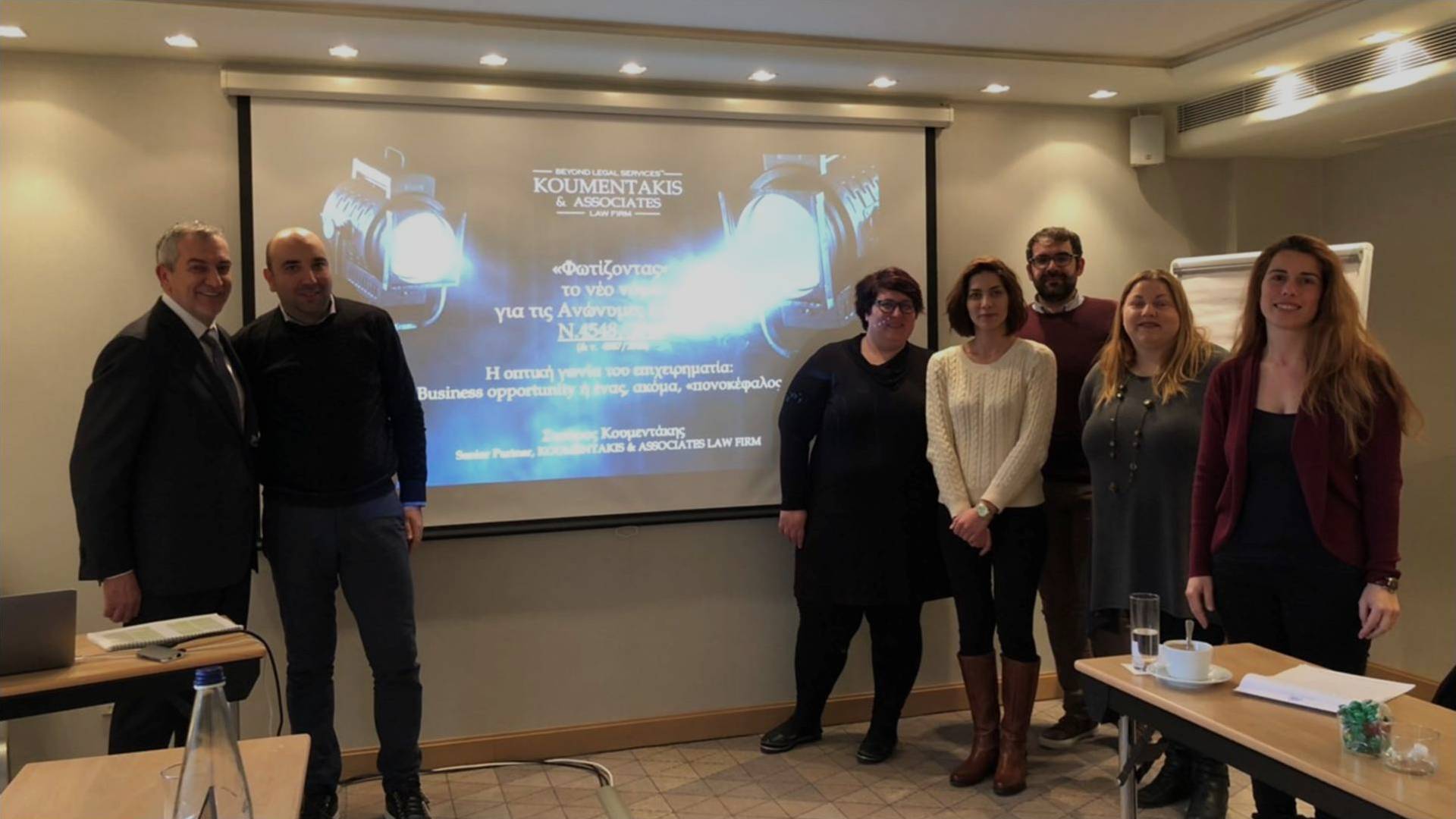
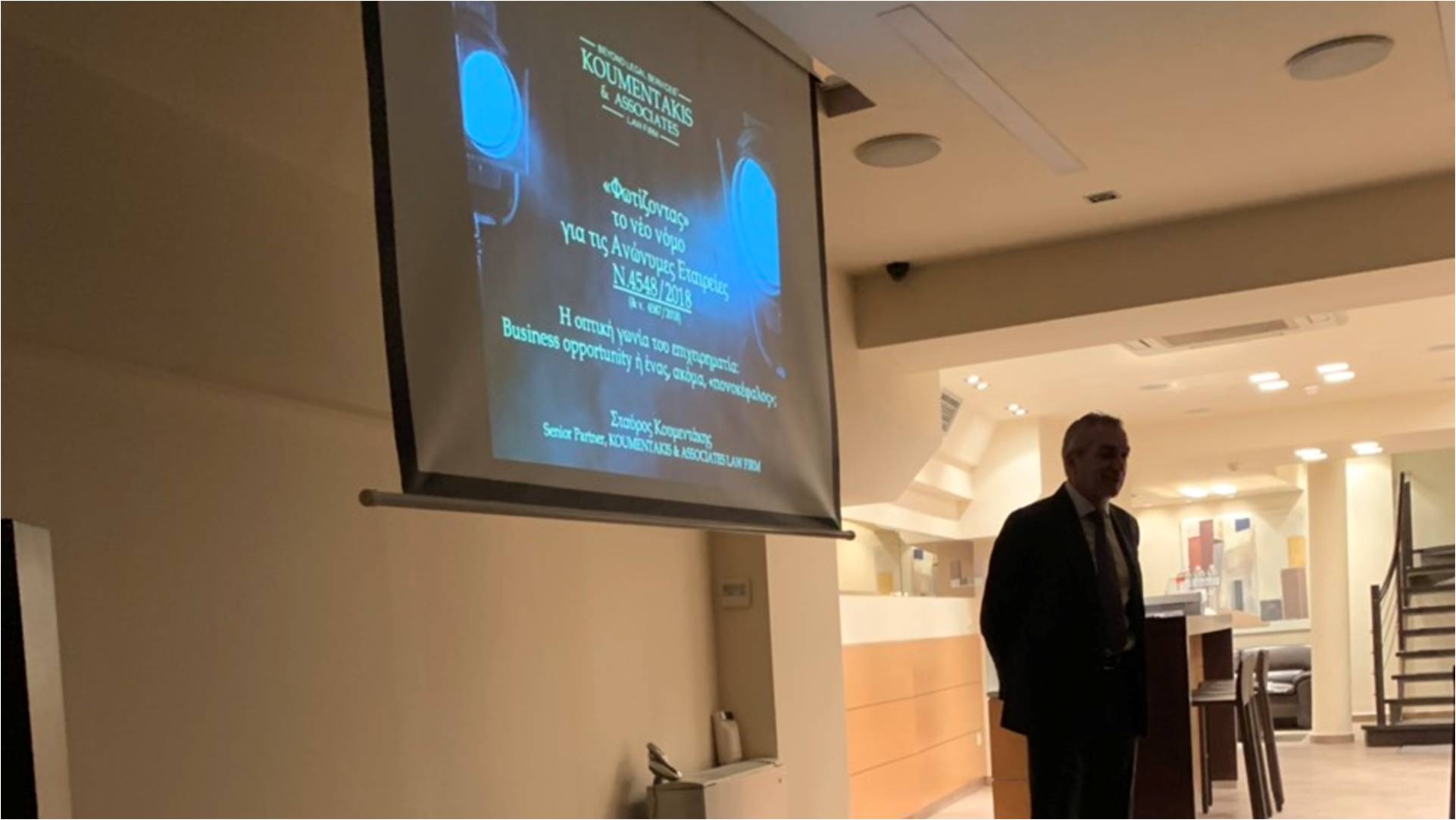
    [vc_row][vc_column][vc_column_text]KOUMENTAKIS & ASSOCIATES presented the new Act on Societe Anonyme to TELCO/WYLTOR. Mr. Stavros Koumentakis, Senior Partner, highlighted the business opportunities emerging after the changes introduced by the new Act on Société Anonyms, presented the new framework and referred in detail to specific provisions, ways on how to protect the client from “internal and external dangers” and on how to utilize the options offered by Act 4548/2019 regarding:

    • Minimizing expenses
    • Attracting and maintaining capable executives
    • Attracting investors
    • Making good use of technology.

    As Mr. Koumentakis put it: “The new Act on Société Anonyms is a great opportunity, one that businesses must take advantage of. Act 4548/2018 broadens the responsibilities and exposure of the Board of Directors to civil, penal and administrative sanctions, a fact that may end up being a serious problem if there are no relevant insurance provisions in place.” Mr. Koumentakis also highlighted that “introducing relevant statutory provisions is deemed necessary”.

    The Administration and Executives of TELCO/WYLTOR partook in the presentation, which was an excellent opportunity to exchange views on extremely important aspects of the Act.[/vc_column_text][/vc_column][/vc_row][vc_row][vc_column][vc_text_separator title=”Gallery” border_width=”3″][/vc_column][/vc_row][vc_row][vc_column][vc_images_carousel images=”38080,38078″ img_size=”” speed=”6000″ slides_per_view=”6″ hide_pagination_control=”yes”][/vc_column][/vc_row]

  • Presentation of the new act on S.A.s in TIF, at the Stand of the University of Macedonia

    Presentation of the new act on S.A.s in TIF, at the Stand of the University of Macedonia

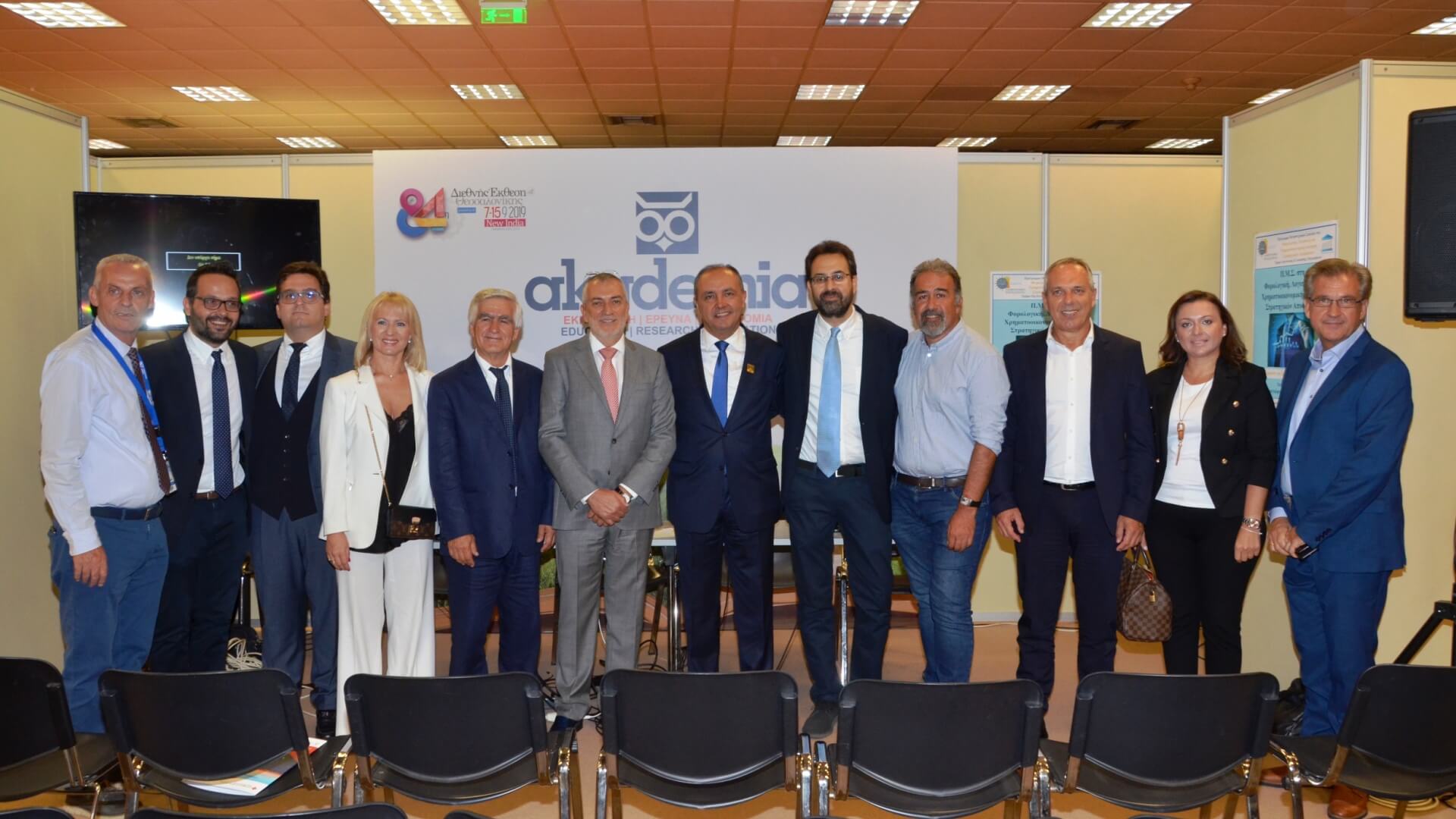
    [vc_row][vc_column][vc_column_text] In the Thessaloniki International Fair, and as part of the presentation of the Master in Taxation and Financial Management of Strategic Decisions  of the University of Macedonia, Stavros Koumentakis, Senior Partner of Koumentakis & Associates, made a presentation titled: “Shedding light into the new Act on Société Anonyme”.

    The Master’s Program was presented by the Program’s Executive Director, professor Karagiorgos Theofanis, and was attended by students and alumni of the university.

    The presentation was also attended by the former Rector of the University of Macedonia and former President of the Department of Business Administration, professor Ioannis Chatzidimitriou, and by professors teaching in the program, Dimitrios Soumbeniotis, Iordanis Eleutheriadis, Georgios Drogalas. It was also attended by teachers of the Master’s Program and Executives of the Independent Authority for Public Revenue, Ms. Marina Grigoraki and Mr. Anastasios Partalis and Doctors Alkiviadis Karagiorgos and Ioannis Kroustalis.

    Lastly, the Regional Director of Northern Greece’s Tax Authority, Mr. Nikolaos Turovouzis, and the Head of the Audit Authority of Large Enterprises of the Independent Authority for Public Revenue and teacher in the Master’s Program, Mr. Grigoriow Lazos greeted the audience and speakers.

    The presentation graced with his presence the Minister of Macedonia – Thrace, Mr. Theodoros Karaoglou.


    The new act on Société Anonyme

    In his presentation, Stavros Koumentakis, Senior Partner of KOUMENTAKIS & ASSOCIATES, highlighted the multiple business opportunities arising from the changes introduced by the new act on Société Anonyme.

    In Mr. Koumentakis’ words: “The new act 4548/2018 is a significant opportunity to get to know a bit better how our own Société Anonyme works, to better secure its founders, shareholders and the investment, to re-design and minimize operational costs, attract new and maintain our most capable executives, create those conditions that will allow access to cheap capital, utilize modern technology and, lastly, prepare our business for the next day”.


    The Master in Taxation and Financial Management of Strategic Decisions

    The Master in Taxation and Financial Management of Strategic Decisions aims to specialize university graduates in a way that they will be able to contribute to the promotion of knowledge relating to the field, as well as and to develop capable executives, able to efficiently respond in a professional business or public administration environment, and to promote the development of research and its applications in the relevant fields. [/vc_column_text][/vc_column][/vc_row][vc_row][vc_column][vc_text_separator title=”Gallery” border_width=”3″][/vc_column][/vc_row][vc_row][vc_column][vc_images_carousel images=”37767,37769,37771,37773,37775,37777,37779,37781,37783″ img_size=”full” speed=”6000″ slides_per_view=”5″ hide_pagination_control=”yes”][/vc_column][/vc_row]

  • Presentation of the new Act on S.A.s to Mamaras and Partners

    Presentation of the new Act on S.A.s to Mamaras and Partners

    [vc_row][vc_column][vc_column_text] One more presentation on the new Act on Société Anonyms took place, as part of the presentations and seminars organized and held by KOUMENTAKIS & ASSOCIATES. To be more precise, the resent presentation was made for Mamaras and Partners, the well-established company of Financial Advisors.

    Mr. Stavros Koumentakis, Senior Partner, highlighted the business opportunities emerging after the changes introduced by the new Act on Société Anonyms, presented the new framework and referred in detail to specific provisions, ways on how to protect the client from “internal and external dangers” and on how to utilize the options offered by Act 4548/2019 regarding:

    • Minimizing expenses
    • Attracting and maintaining capable executives
    • Attracting investors
    • Making good use of technology.

    As Mr. Koumentakis put it: “The new Act on Société Anonyms is a great opportunity, one that businesses must take advantage of. Act 4548/2018 broadens the responsibilities and exposure of the Board of Directors to civil, penal and administrative sanctions, a fact that may end up being a serious problem if there are no relevant insurance provisions in place.” Mr. Koumentakis also highlighted that “introducing relevant statutory provisions is deemed necessary”.

    The Administration and Executives of Mamaras and Partners partook in the presentation, which was an excellent opportunity to exchange views on extremely important aspects of the Act.

    Mamaras & Partners was established in 1990, is based in Thessaloniki and is offering high quality consultancy services to businesses of all sectors.

    [/vc_column_text][/vc_column][/vc_row][vc_row][vc_column][vc_text_separator title=”Gallery” border_width=”3″][/vc_column][/vc_row][vc_row][vc_column][vc_images_carousel images=”37490,37484,37488″ img_size=”” speed=”6000″ slides_per_view=”6″ hide_pagination_control=”yes”][/vc_column][/vc_row]

  • Presentation given to the University of Macedonia

    Presentation given to the University of Macedonia

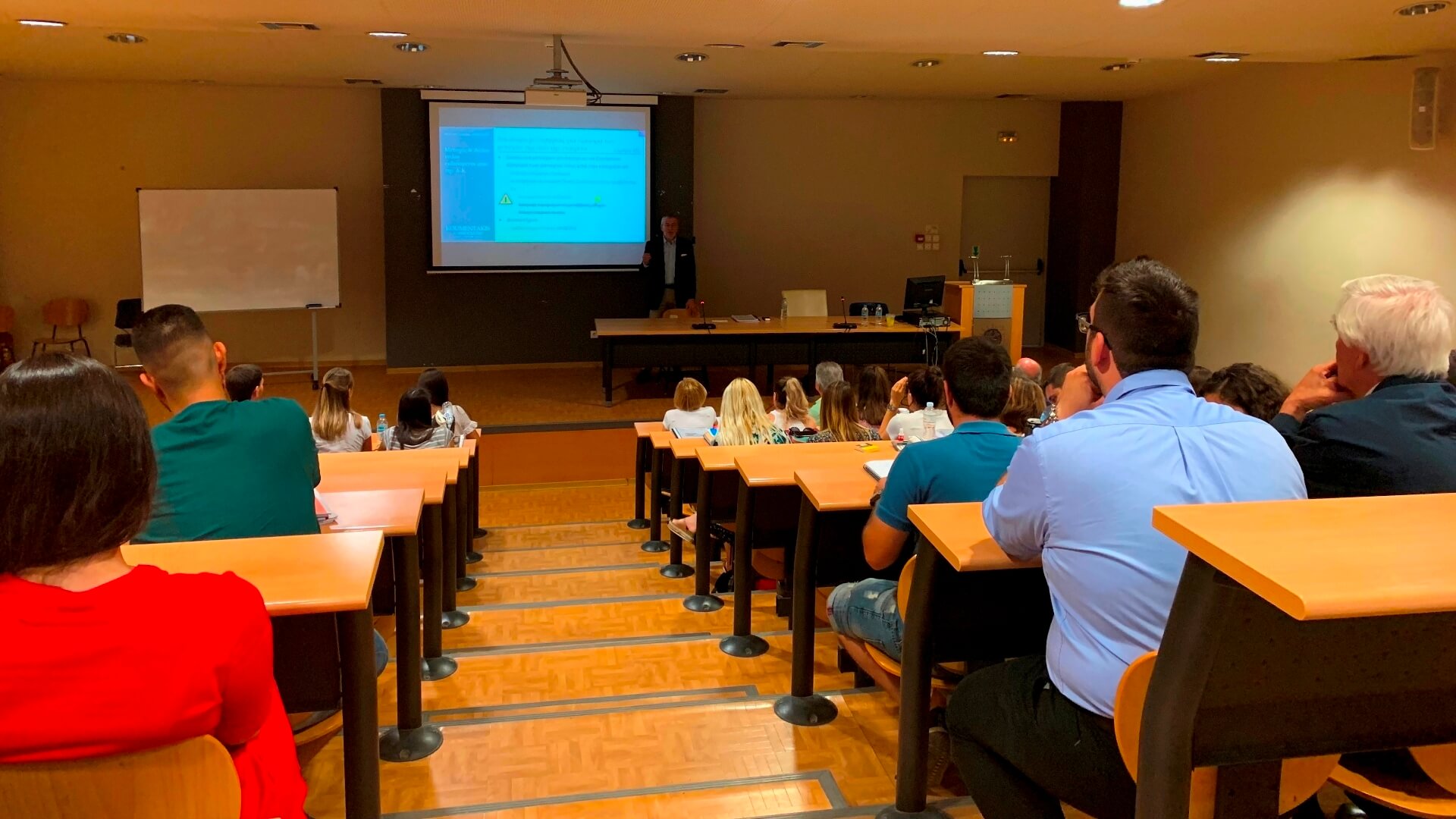
    [vc_row][vc_column][vc_column_text] As part of the series of presentations and seminars held by KOUMENTAKIS & ASSOCIATES, a presentation was given to one of the post graduate programs of the University of Macedonia, addressing the needs and opportunities emerging for companies, from the implementation of the newly introduced provisions of the new Act on Société Anonyms.

    Following an invitation of the director of the postgraduate program Tax and Financial Management of Strategic Decisions”, professor Theofanis Karagiorgou, and before a number of students of the program, Stavros Koumentakis, Senior Partner of the Law Firm, highlighted the multiple business opportunities emerging from the changes introduced by the new Act on Société Anonyms.

    As Mr. Koumentakis put it: “The new Act is a great opportunity to better familiarize with the functions of Société Anonyms, to better safeguard the company’s founders, its shareholders and the investment itself, to start planning from scratch and minimize operational costs, to attract new and keep the most capable executives, to create the right conditions for access to cheap funding, to make good use of modern technology and, finally, to prepare business for the next day”.

    During the presentation the most important pillars of Act 4548/2018 were analyzed, while the options offered were highlighted in the form of a DECALOGUE:

    (1) Fast and inexpensive establishment,
    (2) Attracting and maintaining executives,
    (3) Reduction of expenses,
    (4) Attracting investors,
    (5) Various ways of raising liquidity,
    (6) Managing the minority shareholders,
    (7) Making good use of technology,
    (8) Preparing for the succession,
    (9) Protecting the investment and
    (10) Protecting the natural persons.

    Mr. Koumentakis and the Legal Consultants of KOUMENTAKIS & ASSOCIATES continue to respond, as often as possible, to requests to give relevant presentations and hold relevant seminars all over Greece, as this Act has already started being implemented. In the present video one can find a brief mention of the most important changes introduced.

    [/vc_column_text][/vc_column][/vc_row][vc_row][vc_column][vc_text_separator title=”Gallery” border_width=”3″][/vc_column][/vc_row][vc_row][vc_column][vc_images_carousel images=”37496,37498,37500,37502,37504,37506,37508″ img_size=”full” speed=”6000″ slides_per_view=”5″ hide_pagination_control=”yes”][/vc_column][/vc_row]

  • Workshop on the New Law on the SAs At the Money Show 2019

    Workshop on the New Law on the SAs At the Money Show 2019

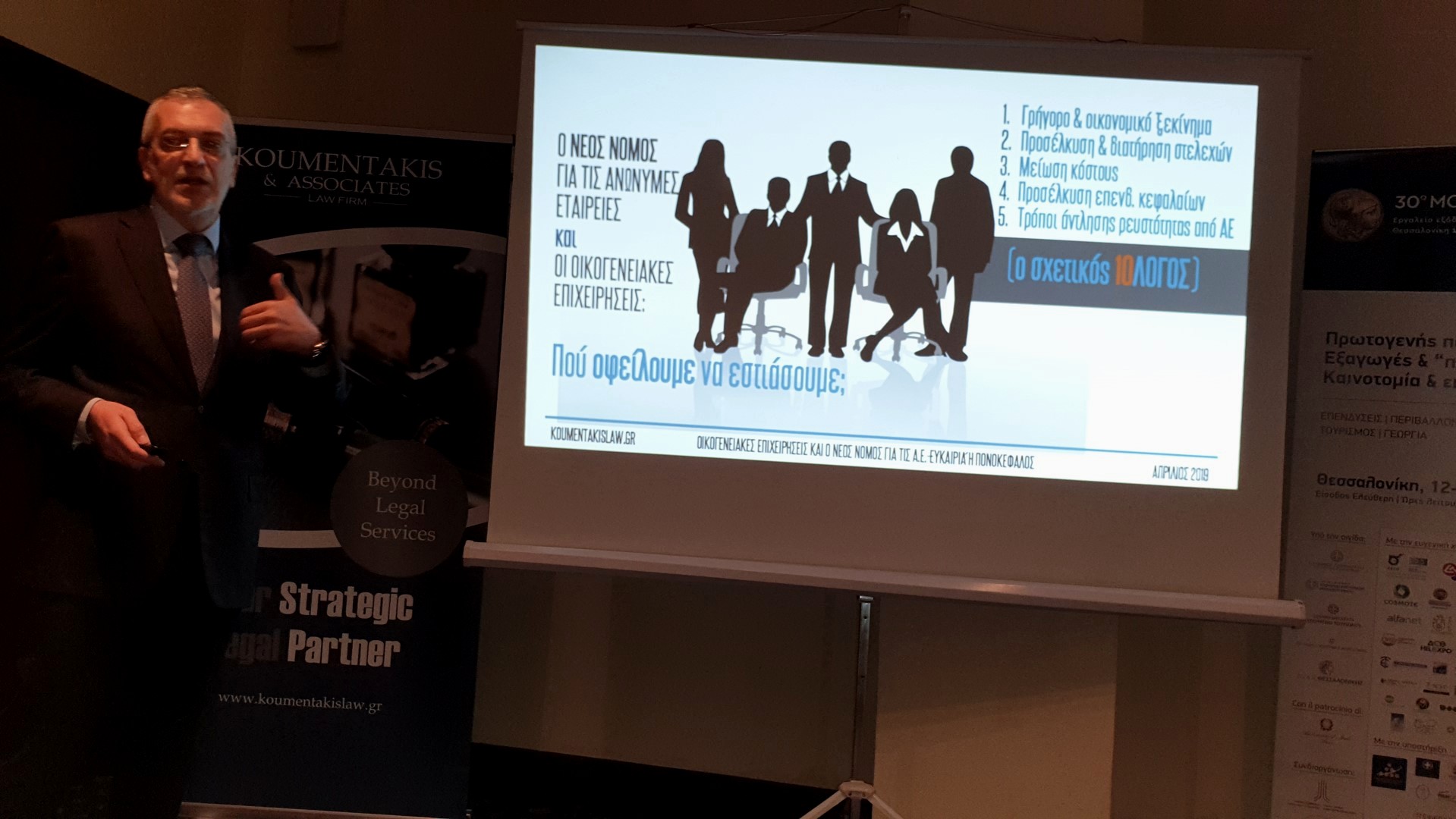
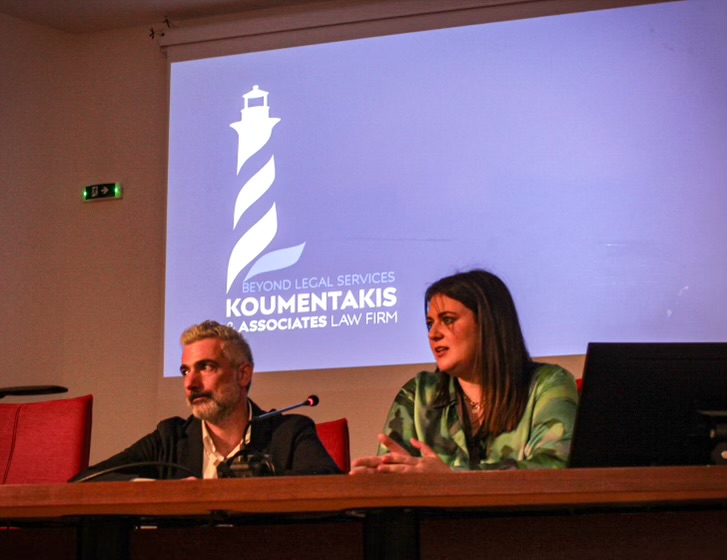
    [vc_row][vc_column][vc_column_text] On Saturday, April 13th, at the Hyatt Hotel, within the framework of the 30th Money Show 2019, a workshop on “Family Businesses in the New Business Environment” was held. The event was co-organized by Capital Markets Experts, the Institute of the Association of Greek Financial Managers (SEODI) and the law firm of KOUMENTAKIS & ASSOCIATES.

    In a packed room, those interested had the opportunity to listen to speeches on three different axes. More specifically, the President of SEODI referred to the role of the Ecumenical Director as part of a family business, Mr. Vasilios Margaris, founder and chief executive of Capital Markets Experts, referred to the necessity of entering a family business on the Stock Exchange, while Mr. Stavros Koumentakis, Senior Partner of KOUMENTAKIS & ASSOCIATES Law Firm briefly presented the new Law on Sociétés Anonymes and referred to its application in family businesses.

    Stavros Koumentakis highlighted the multiple business opportunities that the changes brought by the new Law on Sociétés Anonymes are making and noted that Law 4548/2018, which has already begun to be implemented, offers many benefits that we need to focus on. In the relevant DECALOGUE, Mr. Koumentakis stressed that the new Law on Sociétés Anonymes offers options for:
    (1) Quick and economic start;
    (2) Attracting & retaining executives;
    (3) Cost reduction;
    (4) Attracting investment funds;
    (5) Various ways of raising liquidity;
    (6) For managing small shareholders;
    (7) Exploiting technology;
    (8) The preparation of succession
    (9) Protection of investment and
    (10) Protection of persons.

    As Mr. Koumentakis characteristically mentioned: “The new law is an important opportunity to get to know the operation of our Société Anonyme. With proper guidance and implementation of the new law, we can ensure better protection for founders, shareholders and the investment, redesign on the right bases and reduce operating costs. We can also attract new people and maintain the most capable executives, create the conditions for access to “cheap” funds and use modern technology, and finally, we can better prepare for the next day of our business”.

    In the relevant presentation and video briefing, the most important of the changes were briefly described and a special emphasis was placed on the need to inform entrepreneurs who need to understand the new law and ensure that this knowledge exists among executives and close associates. Lastly, the urgent need for immediate adaptation of the articles of association has been highlighted not only as compliance with the new law but, in particular, to meet the needs of each entrepreneur and each company to adequately meet present and future requirements – particularly those relating to their safe development course.

    [/vc_column_text][/vc_column][/vc_row][vc_row][vc_column][vc_text_separator title=”Gallery” border_width=”3″][/vc_column][/vc_row][vc_row][vc_column][vc_images_carousel images=”37166,37164,37162,37160″ img_size=”full” speed=”6000″ slides_per_view=”5″ hide_pagination_control=”yes”][/vc_column][/vc_row]

  • Seminar At the Piraeus Chamber of Commerce and Industry On the New Law on the SAs

    Seminar At the Piraeus Chamber of Commerce and Industry On the New Law on the SAs

    [vc_row][vc_column][vc_column_text] Within the framework of the presentations and informative meetings organized by KOUMENTAKIS & ASSOCIATES LAW FIRM, a seminar was held at the Piraeus Chamber of Commerce & Industry on the needs as well as on the opportunities created for the entrepreneur regarding the regulations of the new Law on Sociétés Anonymes.

    With the participation of representatives from the PCCI and the co-organizers associations and federations (Association of Industries of Attica and Piraeus, Piraeus Trade Association, Pan-Hellenic Association of ship and exporter suppliers and Association of Piraeus Commercial Representatives and Distributors) Stavros Koumentakis, Senior Partner of the firm, enlightened the multiple business opportunities that constitute the changes brought by the new law on the SAs.

    As Mr. Koumentakis characteristically mentioned: “The new law is an important opportunity to become better aware of the operation of our Société Anonyme, to ensure the better protection for founders, shareholders and for the investment, to redesign on the right bases and to limit the operating costs, to attract new and to retain the most capable executives, to create the conditions for access to cheap capital, to make use of modern technology, and finally to prepare the next day of our business”.

    In the informative video presented as an introduction to the Seminar (you can see it below) the most important of the changes were briefly outlined, while the in the presentation that followed there were analyzed in depth the most important axes of Law 4548/2018. Particular emphasis was given on the need to inform entrepreneurs who need to understand the new law and ensure that this knowledge is available to their executives and to their close associates. Lastly, the urgent need for immediate adaptation of the articles of Association has been highlighted not only in compliance with the new law but, in particular, to meet the needs of each entrepreneur and each undertaking to adequately meet present and future requirements – particularly those relating to their safe growth course.

    At the event, besides Mr. Koumentakis, also participated with a presentation on the economic and tax issues of the new law, Mr. Panayiotis Papaspyrou, economist, Chairman of the Board of Directors. & Managing Director of “Financial Management Consultants S.A.”

    Mr. Koumentakis and the team of the Legal Advisors of KOUMENTAKIS & ASSOCIATES Law Firm continues to respond, as far as possible, to requests for relevant workshops and seminars throughout Greece. Next stop: The Money Show in Thessaloniki.

    [/vc_column_text][/vc_column][/vc_row][vc_row][vc_column][vc_text_separator title=”Gallery” border_width=”3″][/vc_column][/vc_row][vc_row][vc_column][vc_images_carousel images=”37018,37020,37022,37024″ img_size=”full” speed=”6000″ slides_per_view=”5″ hide_pagination_control=”yes”][/vc_column][/vc_row]

  • Day meeting for the New Law on SAs to Foroepilysis

    Day meeting for the New Law on SAs to Foroepilysis

    [vc_row][vc_column][vc_column_text] One more presentation, within the framework of the day meetings which are organized by KOUMENTAKIS & ASSOCIATES on the New Law on on Sociétés Anonymes, was successfully held in Heraklion, Crete. Specifically, a presentation was recently held at Foroepilysis, a rapidly growing company of Mr. Vassilakis that provides accounting, financial and tax services.

    Stavros Koumentakis, Senior Partner, has highlighted the business opportunity that is emerged by the changes brought by the new Law on on Sociétés Anonymes. He presented the general framework of the New Law and made an extensive reference on individual regulations of the new law and the use of the law’s options for businesses on aspects, such as:

    • reducing their operating costs
    • attracting investors and investment funds
    • exploiting technology
    • attracting and retaining competent, senior-level, executives
    • protecting the clients of the Law Firm against their “internal and external enemies”.

    Mr. Stavros Koumentakis mentioned in particular that “the New Law on Sociétés Anonymes is an important opportunity for enterprises which cannot be missed. Law 4548/2018 extends the responsibility and report of the members of the Board of Directors in terms of civil, criminal and administrative sanctions. This may be a potentially serious problem if there are no corresponding provisions and insurance coverage”. He has also mentioned that “there is a immediate need for the necessary and beneficial regulations to be adapted in the SAs’ articles of association”.

    The presentation of Mr. Koumentakis at Foroepilysis, was attended by the top management, executives and employees and it was an opportunity for a broad exchange of views on the specific, extremely important (for enterprises, businessmen and board members) aspects.

    [/vc_column_text][/vc_column][/vc_row][vc_row][vc_column][vc_text_separator title=”Gallery” border_width=”3″][/vc_column][/vc_row][vc_row][vc_column][vc_images_carousel images=”36883,36885,36887,36889,36891,36893,36895″ img_size=”” speed=”6000″ slides_per_view=”6″ hide_pagination_control=”yes”][/vc_column][/vc_row]

  • Presentation of the New Law on SAs to B. Karaoglou SA

    Presentation of the New Law on SAs to B. Karaoglou SA

    [vc_row][vc_column][vc_column_text] The series of presentations of KOUMENTAKIS and ASSOCIATES Law Firm on Law 4548/2018 are continued with great success. The presentations are addressed to Enterprises, Business Associations, Auditors Companies, significant Tax and Accounting Services Companies and so on.

    At a recent workshop held at B. Karaoglou SA – Accounting and Taxation Support, Mr. Stavros Koumentakis, Senior Partner, presented the general framework of the new Law on Societes Anonymes and extensively referred to its individual arrangements for protection of customers against “internal and external risks” as well as the utilization of the opportunities provided by Law 4548/2018 on behalf of businesses in aspects such as:

    • reduce their costs
    • attract and retain skilful executives
    • attract investors
    • exploit technology.

    As Mr. Koumentakis states, “the new Law on Societes Anonymes is an important opportunity for businesses that should not be lost. Law 4548/2018 extends the responsibility and report of the members of the Board of Directors in terms of civil, criminal and administrative sanctions, which can be a potentially serious problem if there are no corresponding provisions and insurance coverage”.  He also points out that “there is a direct need of regulations of the SAs’ articles of association”.

    The presentation of Mr. Stavros Koumentakis on the new Law to B. Karaoglou SA – – which was attended by senior management and executives – gave the opportunity for a broad exchange of views on the specific, extremely important (for businesses, entrepreneurs and members of the Board of Directors ) units.

    [/vc_column_text][/vc_column][/vc_row][vc_row][vc_column][vc_text_separator title=”Gallery” border_width=”3″][/vc_column][/vc_row][vc_row][vc_column][vc_images_carousel images=”36840,36842,36844″ img_size=”” speed=”6000″ slides_per_view=”6″ hide_pagination_control=”yes”][/vc_column][/vc_row]

This site is registered on wpml.org as a development site. Switch to a production site key to remove this banner.